tech
February 1, 2026
‘Coffee is just the excuse’: the deaf-run cafe where hearing people sign to order
In-person interactions break down barriers in east London, as AI startups also try to bridge communication divide
TL;DR
- New digital and AI-linked products are emerging to bridge communication gaps between deaf and hearing individuals.
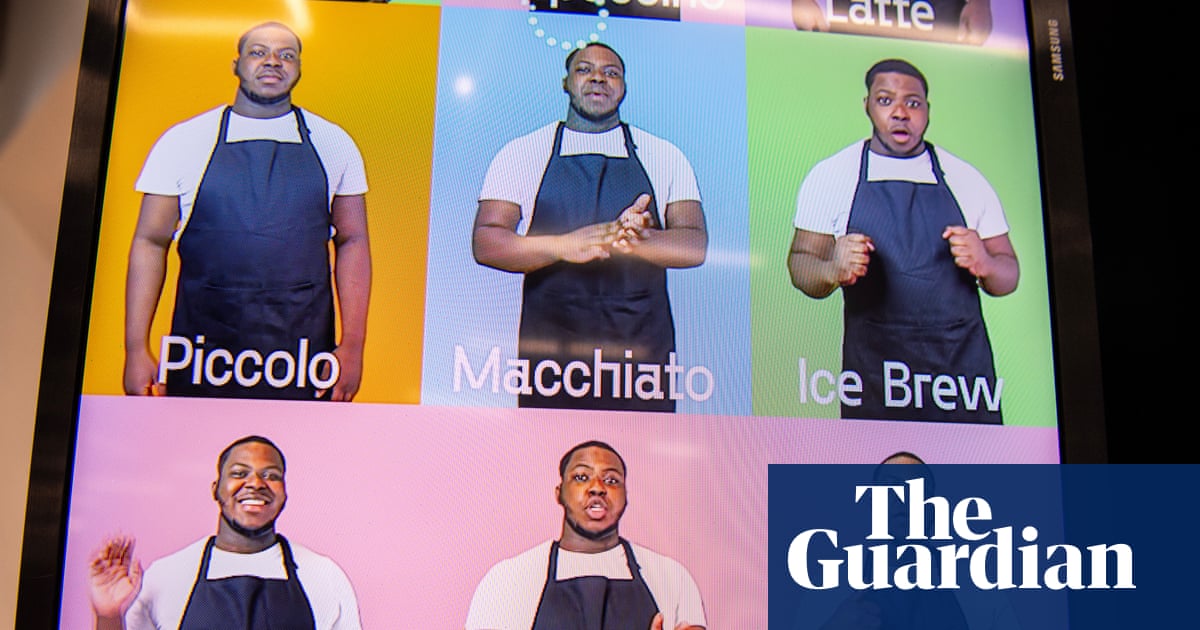
- Touchscreen menus with BSL video translations are aiding direct access for deaf BSL users.
- UK startups and research projects like Silence Speaks and SignGPT are developing avatar-based systems and datasets for sign language translation.
- Sign language AI research is becoming more international and collaborative, using natural deaf-to-deaf conversation data.
- Concerns exist that current AI tools struggle with linguistic nuance, regional variation, and context, particularly in critical settings like healthcare and law.
- Historically, technology designed for the deaf community has sometimes been poorly conceived due to a lack of understanding of sign languages and community input.
- Deaf individuals often face challenges with written and spoken English, making direct BSL access crucial.
- The rapid pace of AI development brings both immense potential and significant risks, including the possibility of profit-driven solutions that exclude the deaf community.
- Experts emphasize the importance of community involvement and ethical considerations in the development and deployment of AI for sign languages.
- Simple, human interaction, even when supported by technology, can be a powerful tool for breaking down communication barriers.
Continue reading the original article