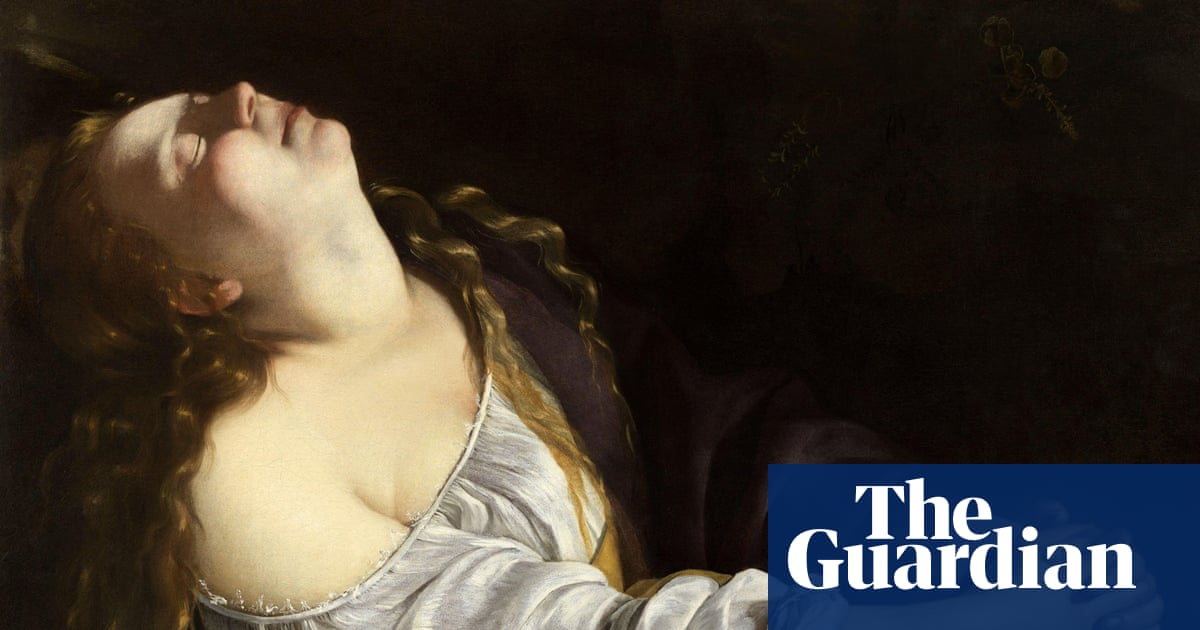
Neither saint nor sinner, Artemisia Gentileschi’s Mary Magdalene is electrifyingly alive
Soon to go on display at the National Gallery of Art in DC, it took a female artist to portray the biblical figure not as shamed and repentant but in the throes of ecstatic rapture
TL;DR
- Artemisia Gentileschi's painting "Mary Magdalene in Ecstasy" was recently acquired by the National Gallery of Art in Washington, DC.
- The painting depicts Mary Magdalene as "neither repentant nor suffering," but in a state of "ecstatic rapture," "passionately alive."
- For centuries, Mary Magdalene's image has been shaped by powerful men, often conflated with other biblical women, leading to her popular but inaccurate identification as a repentant prostitute.
- This traditional interpretation originated from a sermon by Pope Gregory the Great in the sixth century and was further elaborated by subsequent theologians and artists, establishing her dominant narrative as one of sexual fall and redemption.
- Artistic renderings, from Donatello to Titian, often sexualized Mary Magdalene or depicted her in suffering, serving as a warning against sexual transgression or a symbol of repentance.
- Gentileschi's portrayal offers an alternative perspective, presenting a woman "free from a patriarchal gaze," existing for herself, and experiencing a spiritual encounter.
- In 1969, the Catholic Church officially recognized Magdalene's canonical definition as a faithful follower, and in 2016, Pope Francis elevated her to "apostle to the apostles."
- The acquisition of Gentileschi's work is seen as significant in redressing gender imbalance and changing perspectives on female biblical figures and the female experience at large.