Talk is precious: in the age of communication collapse, Jürgen Habermas’s message remains vital
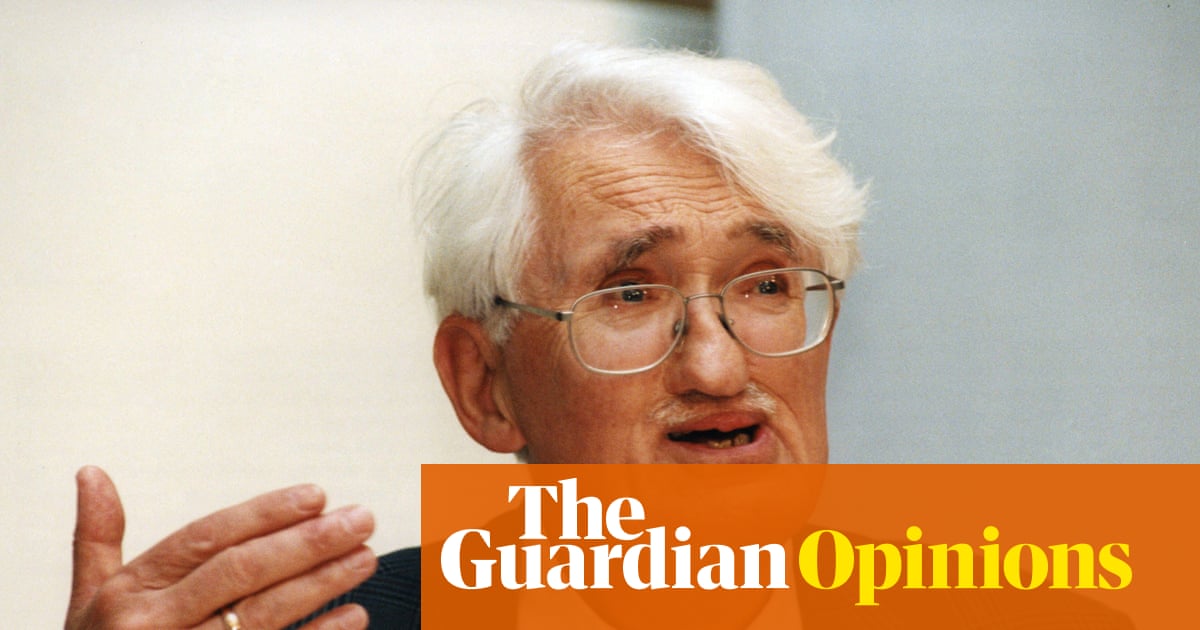
The philosopher, who has died aged 96, was often caricatured as a consensus-seeking liberal. But his belief in the need for shared understanding had a radical underpinning
TL;DR
- The Frankfurt School is described as a 'constellation' of thinkers, not a formal institution, dedicated to critique aimed at transforming reality.
- Jürgen Habermas, a prominent member of this constellation, died at 96 and significantly influenced generations of scholars.
- Habermas's work, though sometimes criticized for being too consensus-oriented or sidelined feminist research, was rooted in a Marxist endeavor to find progressive forces, shifting focus to communication rather than production.
- His concept of 'communicative reason' suggests a slow accumulation of progress through human history, despite inherent violence and oppression.
- Habermas's 'Theory of Communicative Action' detailed how systemic powers like markets can override the 'lifeworld,' which is organized communicatively.
- The Frankfurt School's project, as reconstructed by Habermas, involves successive critiques of reification, a concept echoed in the work of successors like Axel Honneth and Eva von Redecker.
- Habermas argued that communication inherently seeks shared understanding and non-coercive consensus, essential for its existence.
- Despite doubts about the relevance of the Frankfurt School, the article suggests that Habermas's work, particularly his emphasis on communication, offers valuable resources for contemporary challenges.
- Habermas's stance on the assault on Gaza being not genocide drew criticism, raising questions about the field's judgment but not necessarily diminishing the value of his core work.