health
Rechalking beloved Cerne Giant is a sticky process
Volunteers head to Dorset countryside to restore the figure, but increasing heat means techniques have had to be adapted
TL;DR
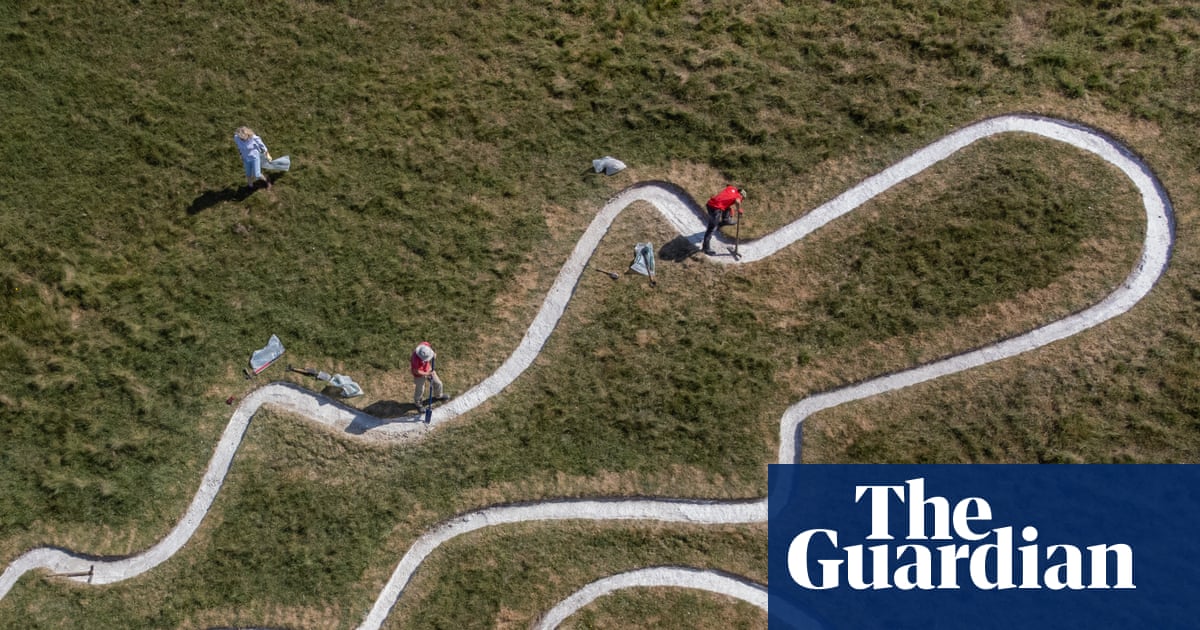
- Volunteers are rechalking the Cerne Giant in Dorset, a process traditionally done every 7-10 years.
- Climate change effects, such as increased algae growth and erosion from intense rainfall, are making the giant duller and potentially more fragile.
- Warmer, wetter conditions are thought to be contributing to algae growth, while milder winters and wetter summers create favorable growing conditions.
- The rechalking technique has been adapted from packing dry chalk to using a chalk and water paste for better adherence on the steep hill.
- Adaptations to the work schedule include cancelling afternoon shifts due to heat and providing shade.
- The National Trust recently acquired more land around the giant thanks to a nationwide fundraising appeal.
- Scientific analysis suggests the giant was likely created in the late Saxon period (AD700-AD1100).
- Rangers are monitoring the impacts of climate change and considering more frequent rechalking and landscape management strategies.