tech
January 2, 2026
What Dante Is Trying to Tell Us
A colloquial translation of Paradiso might make people actually read it.
TL;DR
- The *Inferno* section of Dante's *Divine Comedy* is more popular than *Purgatorio* and *Paradiso* due to its vividly flawed characters and horrific scenes.
- Dante's journey through hell, guided by Virgil, concludes with an exit to see the stars, but his spiritual journey continues through Purgatory and Paradise.
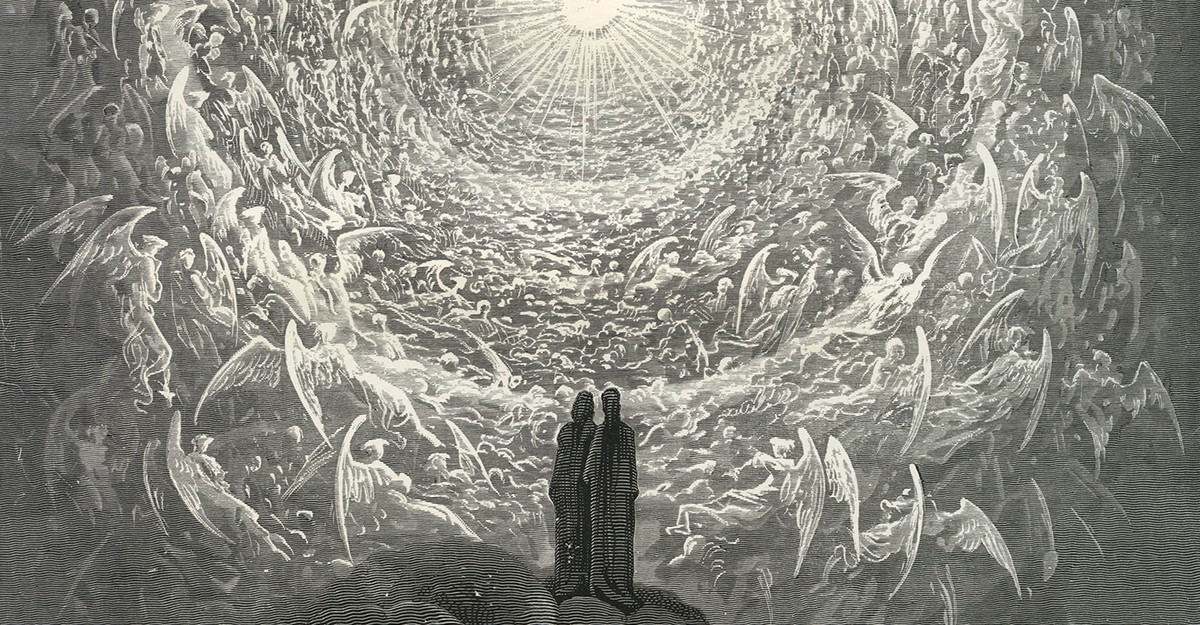
- *Purgatorio* involves climbing a mountain and enduring purifying flames before reaching Paradise, which requires traveling past planets to a rose-shaped empyrean.
- *Paradiso* describes Dante's ascent with Beatrice, involving dense theological discussions, vivid imagery like angels resembling bees, and increasing descriptions of Beatrice's beauty.
- Key moments in *Paradiso* include witnessing the Ascension of Jesus, the Annunciation, an eagle formed of souls, and the point of God's residence, described by T. S. Eliot as conveying experience remote from ordinary life concretely.
- Dante wrote the *Divine Comedy* during his exile from Florence, facing charges of corruption and the threat of execution, living as a wanderer.
- Henry Wadsworth Longfellow's American translation of the *Divine Comedy* in the 1860s, during the Civil War, was popular and aimed to use Dante's optimistic message for national restoration.
- Longfellow translated the poem into blank verse, which was more suitable for English than Dante's original terza-rima scheme.
- Mary Jo Bang is working on a contemporary translation of the *Divine Comedy*, following her *Inferno* and *Purgatorio*, aiming to make Dante's message of hope accessible during national turmoil.
Continue reading the original article