environment
Germany’s dying forests are losing their ability to absorb CO2. Can a new way of planting save them?
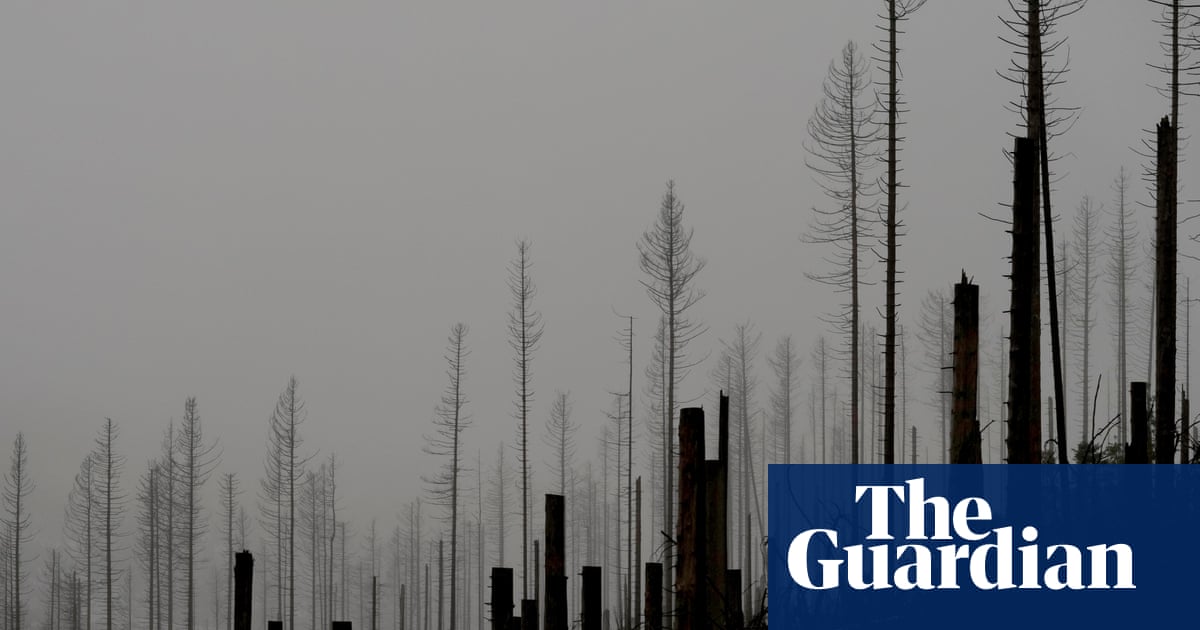
Vast swathes of the country’s trees have been killed off by droughts and infestations, in a trend sweeping across Europe. A shift towards more biodiverse cultivation could offer answers
TL;DR
- Successive droughts and heatwaves since 2018 have led to massive bark beetle outbreaks, killing large areas of spruce forests in Germany's Harz mountains.
- The decline of forests is a Europe-wide trend, affecting countries like the Czech Republic, Norway, Sweden, France, Finland, and Greece.
- The weakening of forests as carbon sinks has led to a significant downwards revision of carbon removal estimates in the EU, jeopardizing climate targets.
- Foresters are experimenting with more biodiverse cultivation, planting a mix of species like beech, firs, and sycamore alongside surviving spruce, to increase resilience.
- International research indicates that tree diversity is the best protection against drought die-offs and helps protect tree growth during prolonged dry seasons.
- There is a growing debate about how to incorporate land and nature's role into climate targets, with concerns that relying on carbon sinks might slow down decarbonization efforts.