tech
January 28, 2026
Investigators say deadly midair collision near Washington DC followed years of ignored traffic warnings
Crash that killed 67 was ‘100% preventable’, says NTSB chair at hearing that addressed history of missed opportunities
TL;DR
- Years of ignored warnings about helicopter traffic dangers contributed to a fatal mid-air collision near Washington D.C.
- A dangerous airspace was created by placing a helicopter route in the approach path of Reagan National Airport's secondary runway.
- The FAA denied a request to reduce air traffic at Reagan and failed to relocate the helicopter route or adequately warn pilots after a 2013 near-miss.
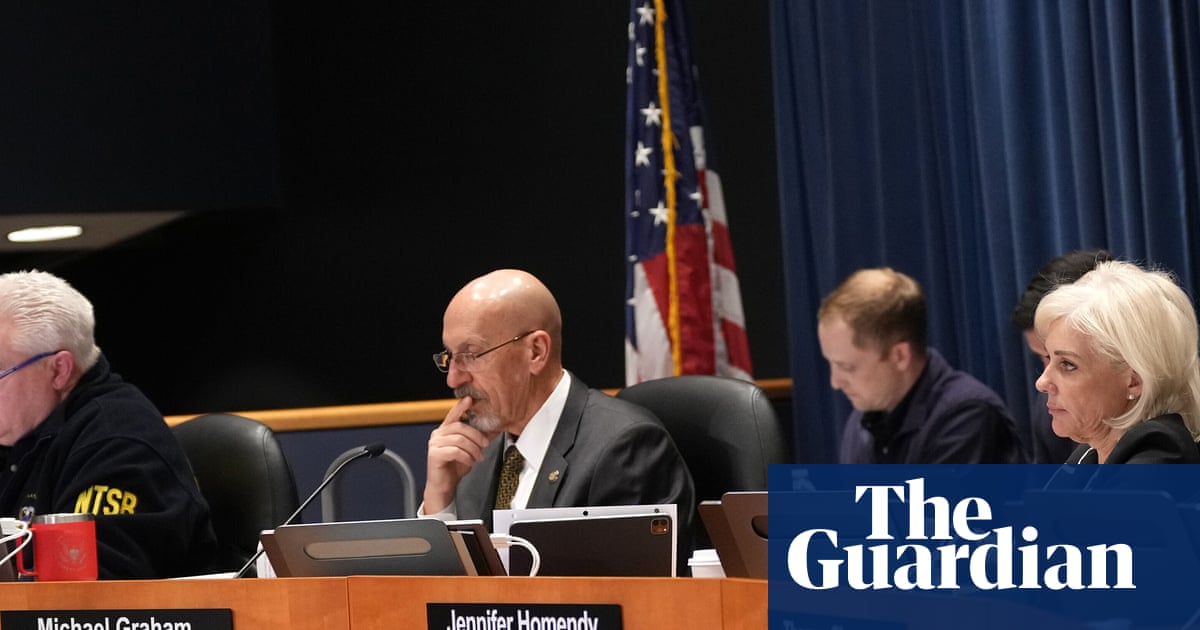
- NTSB Chairperson Jennifer Homendy called the situation "100% preventable" and "shameful."
- Victims' families expressed anger and hope for meaningful change through the NTSB's adopted recommendations.
- Animations showed the difficulty pilots had spotting each other and restricted visibility due to windshields and night vision goggles.
- Todd Inman cited "systemic issues across multiple organizations" as the cause, though individual mistakes were also highlighted.
- The crash was the deadliest plane crash on US soil since 2001, killing everyone aboard the jet and helicopter.
- The FAA has since made permanent changes to separate helicopter and plane airspace around the airport.
- Homendy criticized the FAA for not realizing the minimal separation between planes and helicopters and for concerns being "squashed" by bureaucracy.
- Mary Schiavo described the FAA's inaction as a "shocking dereliction of duty."
- Transportation Secretary Sean Duffy announced a plan to reorganize the FAA into a single safety office.
- NTSB investigators found that the army and FAA were not sharing all safety data, and army helicopter pilots were often unaware of near-misses.
- An air traffic controller was overwhelmed by increased traffic volume before the collision.
- The NTSB previously identified over-reliance on pilots spotting other aircraft as a key contributing factor.
- The FAA stated safety is its top priority, has reduced hourly plane arrivals, and is increasing tower staff.
- The total number of aviation crashes nationwide was the lowest since 2020, despite the Washington D.C. collision and subsequent incidents.
Continue reading the original article