health
February 12, 2026
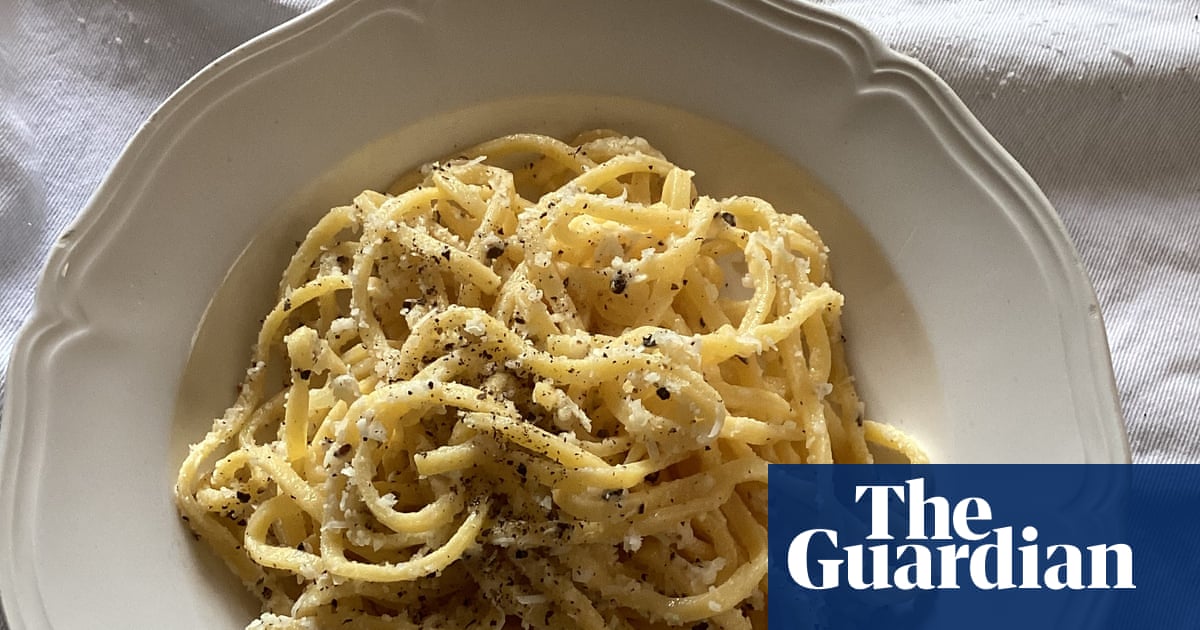
Rachel Roddy’s recipe for cacio e pepe, the old-fashioned way
Shaken and rubbed in a cloth, this simple Italian classic has never tasted better
TL;DR
- Rome's Monte Testaccio, an ancient dump hill made of amphorae, contains caves used for storing food and wine.
- Vincenzo Mancini uses a cave to age artisanal cheeses and cured meats, enhancing their flavor through the cave's microclimate and bacterial microflora.
- The article explores the etymology and history of 'cacio' and 'pecorino' cheeses, noting the evolution of specific regional pecorino names.
- Pecorino romano, historically significant in Rome and Lazio, is now primarily produced in Sardinia.
- A traditional method for making cacio e pepe involves shaking fresh pasta with grated pecorino romano and black pepper in a cloth.
- A recipe for cacio e pepe using tonnarelli, pecorino, and pepper, prepared in a cloth, is provided.
Continue reading the original article