health
February 28, 2026
The Most Misunderstood Concept in Psychology
Recently, I asked a group of adult children of immigrants from the former Soviet Union about attempts to enforce boundaries with their parents. (It’s a group of which I am a member: class of ’89, Leningrad to Texas.) Rarely have I received so many responses from sources so quickly.
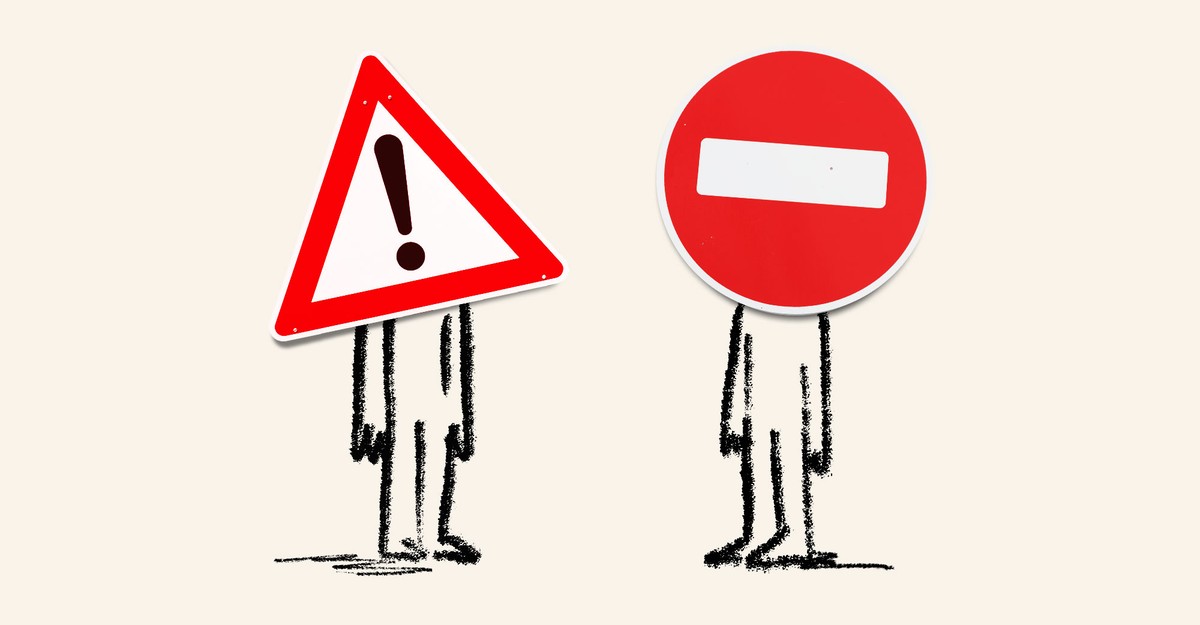
TL;DR
- Children of former Soviet immigrants often face challenges enforcing boundaries with parents due to cultural differences and differing perceptions of privacy.
- The concept of boundaries is widely misunderstood and misused, often conflated with controlling others or used as a therapeutic buzzword.
- Boundaries are best understood as internal rules for oneself about what one will tolerate and what actions one will take when those limits are crossed.
- Setting boundaries involves defining personal responsibility for one's own thoughts, feelings, and actions, rather than trying to control others.
- The true test of a boundary lies in the consequence the setter imposes when the boundary is violated, not in the hope that the other person will comply.
- Healthy boundaries can strengthen relationships, even if the other person dislikes them, and can lead to improved familial connections.
- Misconceptions about boundaries include believing they are solely for controlling others, that they should always lead to immediate and permanent relationship termination, or that they are absolute rules for others to follow.
Continue reading the original article