sports
January 16, 2026
The Question That the Lawyers Representing Trans Athletes Didn’t Answer
The oral arguments for Little v. Hecox and West Virginia v. B.P.J. were meandering and unsatisfying.
TL;DR
- Transgender participation in women's athletics is considered a highly difficult issue by sports journalists.
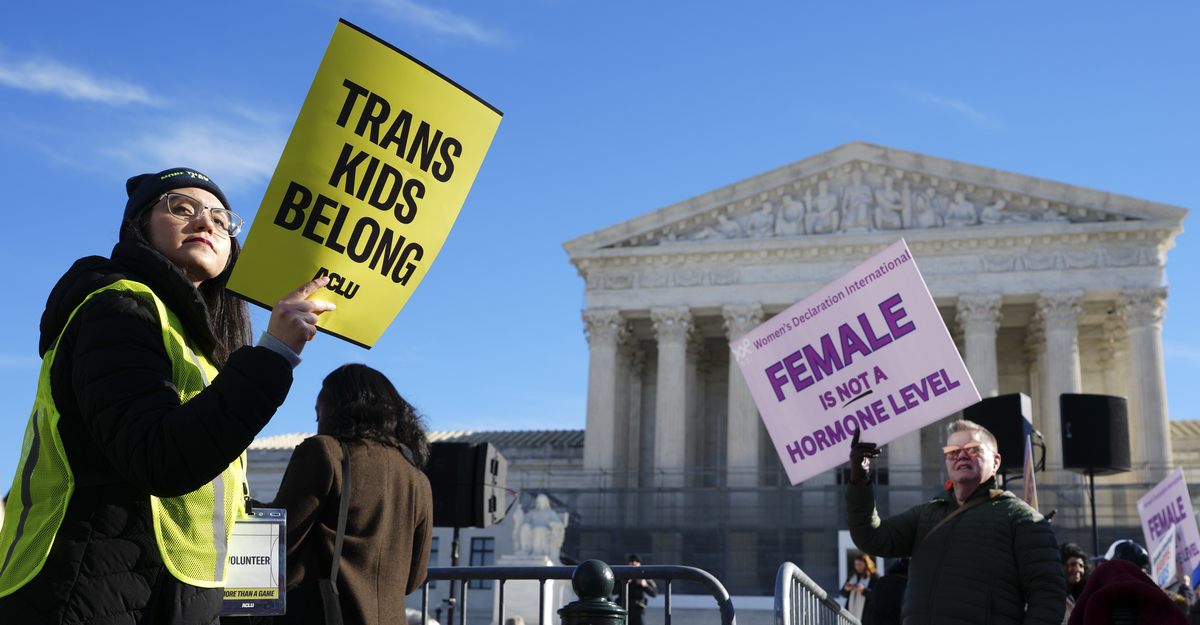
- Two Supreme Court cases, *Little v. Hecox* and *West Virginia v. B.P.J.*, challenge state laws banning transgender women from women's sports.
- A central dispute is whether transgender women athletes possess a lingering testosterone advantage, which is scientifically debated.
- The outcome of these cases is crucial for enforcing Title IX, a law prohibiting sex discrimination in education.
- The NCAA reports fewer than 10 transgender students competed among 500,000 collegiate athletes in 2024.
- Oral arguments revealed the justices' uncertainty and a potential inclination to allow states to resolve the issue locally.
- Amicus briefs presented conflicting medical opinions on whether males have inherent athletic advantages over females.
- Legal arguments for transgender athletes struggled to effectively address the potential harm to cisgender athletes.
- Justices expressed concerns that a ruling on sex differences in sports could have broader implications.
- There is a lack of scientific consensus and public consensus on transgender inclusion in sports.
Continue reading the original article