environment
‘Six lanes of tarmac and vehicles doing 70mph’: can ‘green bridges’ help animals cross the UK’s motorways in safety?
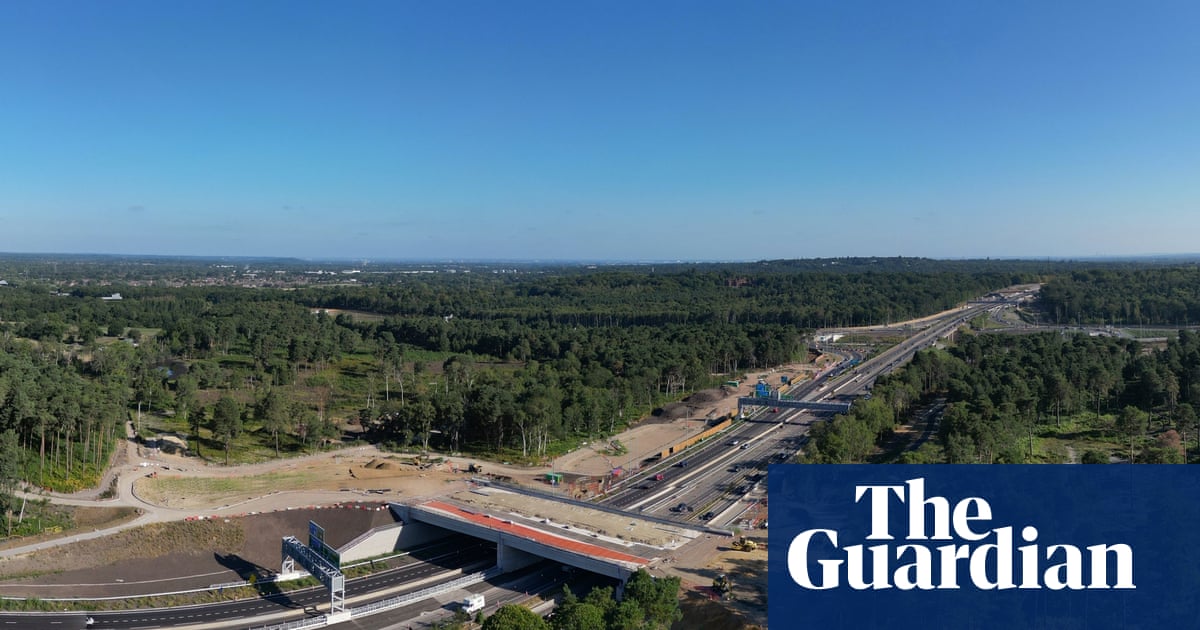
Cockrow Bridge in Surrey will open in the coming weeks to provide wildlife, including lizards and insects, with the ability to move between fragmented habitats
TL;DR
- Cockrow Bridge in Surrey is a new 'green bridge' designed to allow wildlife to move between fragmented habitats separated by the A3 motorway.
- The A3 has significantly impacted the Wisley and Ockham commons, rare lowland heath habitats, by fragmenting them and isolating species.
- The bridge, built by National Highways as a mitigation for the M25 improvement scheme, aims to restore ecological connectivity and help biodiversity recover.
- UK species are facing extinction threats, with habitat fragmentation from roads identified as a key contributor to biodiversity loss.
- Cockrow Bridge is planted with native heathland vegetation and includes features like sand piles for breeding reptiles and logs for thermal regulation.
- Wildlife, including foxes, deer, and adders, have already been observed using the bridge, which is not yet officially open.
- The UK lags behind continental Europe and North America in building green bridges, despite significant road network fragmentation.
- Experts advocate for increased investment in green bridges, with Cockrow Bridge costing £3.7 million, approximately 1% of the M25 project cost.
- Investing a small percentage of road scheme costs into green infrastructure could significantly aid nature restoration and biodiversity recovery.