economy
The ‘Vibecession’ Is Over. The ‘Permacession’ Is Here.
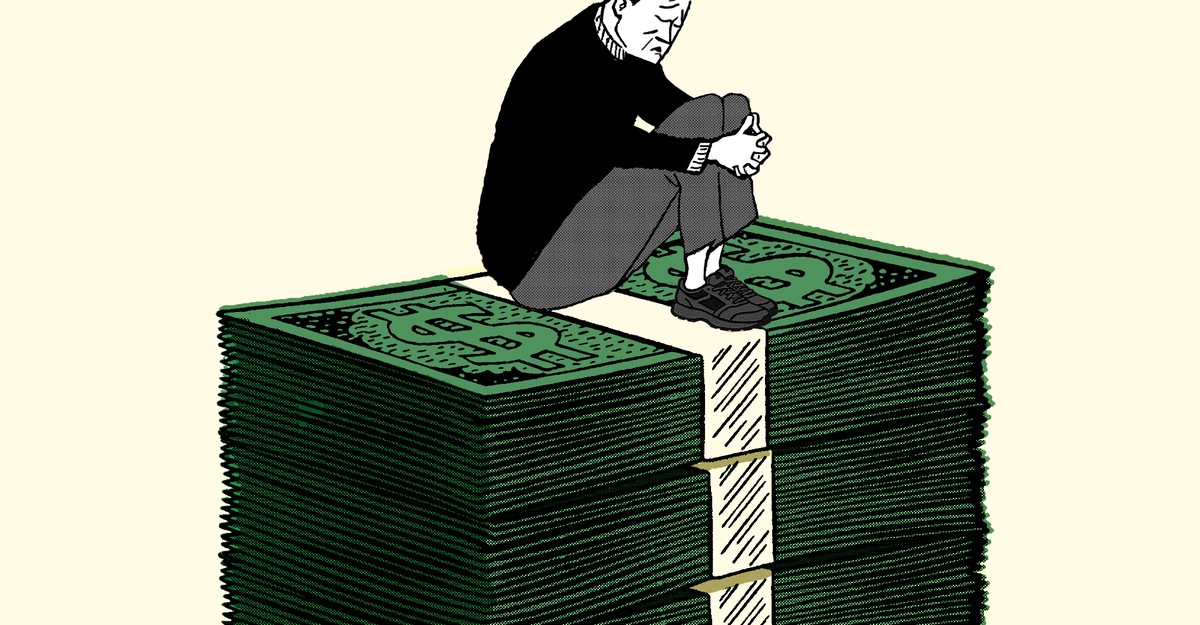
According to Americans, it is bad out there. Real bad. This month, the University of Michigan’s index of consumer sentiment dropped to its lowest point since 1952, when the survey started. A poll of potential Republican voters found that just 43 percent rated the economy as “excellent” or “good” and 55 percent as “fair” or “poor”; for potential Democratic voters, the shares were 5 percent and 94 percent, respectively. Low-income families are nervous, and so are high-income ones. Students and retirees are dour. Rural and urban voters are dissatisfied. People are worried about the present and future. They’re concerned for themselves and their neighbors.
TL;DR
- Consumer sentiment has hit its lowest point since 1952, with widespread dissatisfaction across demographics and income levels.
- Despite strong economic data, Americans express deep pessimism, leading the author to propose the term 'permacession' instead of 'vibecession'.
- Key drivers of this pessimism include income inequality, the increasing cost of essential services (childcare, healthcare, education, housing), and political polarization.
- Social media platforms are contributing to this sentiment by promoting negativity and a distorted view of financial well-being.
- The author argues that the current economic situation has delivered significant improvements in living standards for most Americans, a fact that is not reflected in consumer sentiment.
- A decline in institutional confidence and civic trust, exacerbated by the internet and reduced in-person social interaction, further fuels this pervasive unhappiness.