sports
'Treats its audience like adults': why Moneyball is my feelgood movie
The latest in our series of writers paying tribute to their favourite comfort films is an ode to Brad Pitt and Aaron Sorkin’s lovably human baseball drama
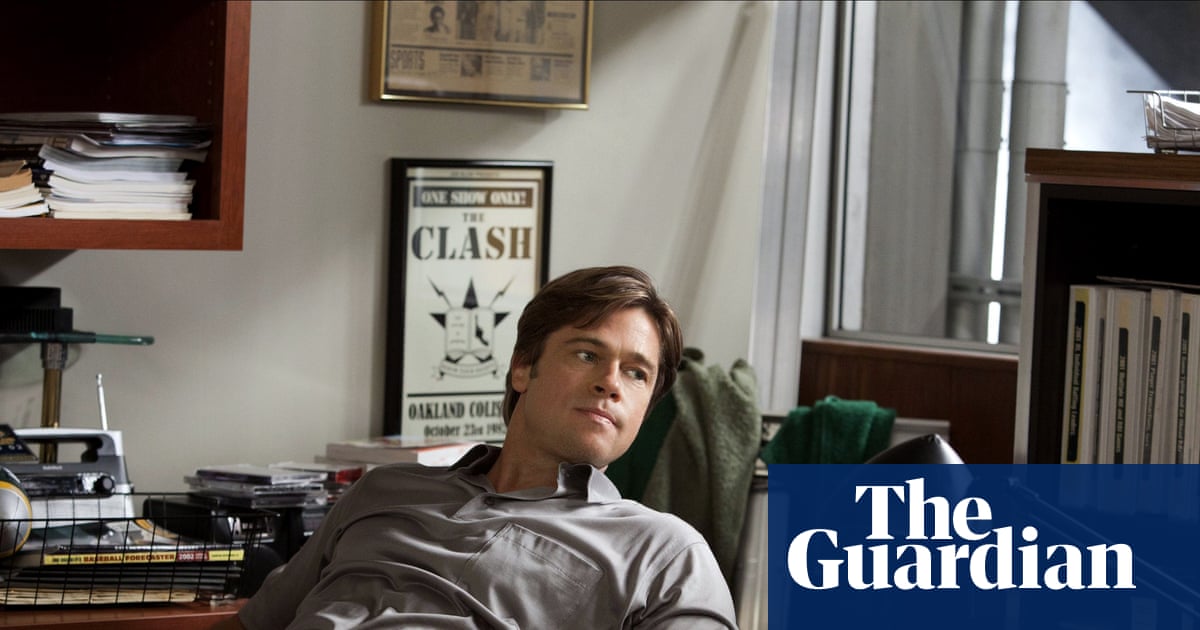
TL;DR
- Moneyball is seen as a 1970s-style film where an outsider challenges an established system, comparable to paranoid thrillers of that era.
- The film's success is attributed to good actors, a good script, and a competent director, focusing on dialogue and human interaction over flashy action.
- It explores how data analysis can identify undervalued baseball players to combat economic inequality between teams, focusing on the Oakland Athletics.
- Brad Pitt's performance as Billy Beane and Jonah Hill's as Peter Brand are highlighted as career-best, with Hill playing a composite character based on Paul DePodesta.
- The film is an adaptation of a Michael Lewis book, praised for making complex facts understandable without oversimplifying or misrepresenting the core issues.
- Unlike 'The Blind Side', Moneyball avoids a simplistic narrative, and unlike 'The Big Short', it doesn't center on characters who profit from economic suffering.
- Despite minor factual liberties and a saccharine subplot, the film maintains a human center, eliciting empathy for its characters.
- The absence of a happy ending, with the A's not winning the World Series and Beane turning down a major job offer, leaves room for interpretation and adds to the film's unique quality.