Life for 30-Somethings Is Getting More Stressful
Clare M. Mehta, an Emmanuel College psychology professor, was livid. She was on a committee for hearing graduate students defend their dissertations, and she had planned meticulously to accommodate their next Zoom. She had a two-month-old daughter, no child care, a working husband, and just enough time between his meetings to attend her own. Then, the day of, another professor dashed off a casual note: Could they start the meeting 15 minutes early?
TL;DR
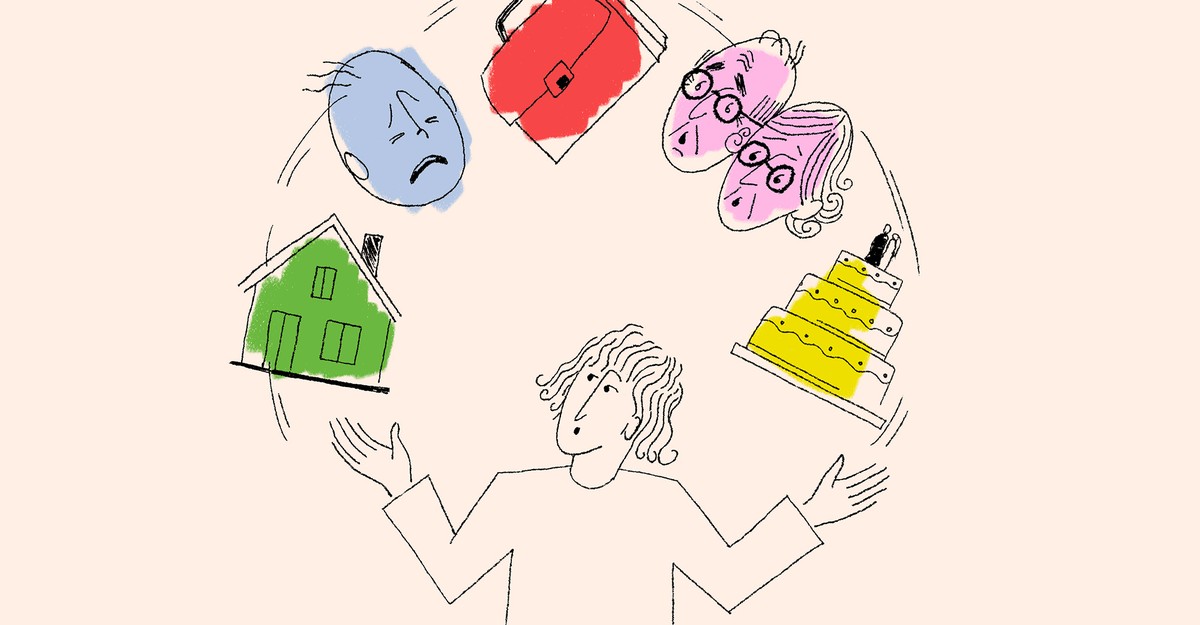
- Clare Mehta, a psychology professor, identified the life stage from 30-45 as 'established adulthood,' characterized by a 'hurricane' of major changes and responsibilities.
- Mehta argues that career, marriage, parenthood, and elder care milestones are increasingly compressed into a shorter, more intense period, especially for women juggling careers and families.
- The preceding 'emerging adulthood' phase (ages 18-29) is lengthening due to factors like debt and a difficult job market, pushing back traditional adulthood markers.
- While established adulthood typically brings 'ontological security' or predictability, the compressed timeline can make it feel chaotic.
- Global happiness trends show a U-shaped curve, with the lowest happiness around the 40s, potentially indicating a need for more societal support like paid leave and childcare subsidies.
- Recent data suggests emerging adulthood is becoming unhappier, making established adulthood a period of relative contentment in comparison.
- Despite the stress, many in established adulthood find meaning and purpose, accepting imperfect choices and adapting to evolving life circumstances.
- Life course predictability is decreasing, with fewer people relying on traditional rites of passage to guarantee an easier rest of life.