From bling and birds to ‘really fancy armour’
Medieval experts talk us through the fashion of the near-1,000-year-old embroidered work, and what it says about the characters wearing it
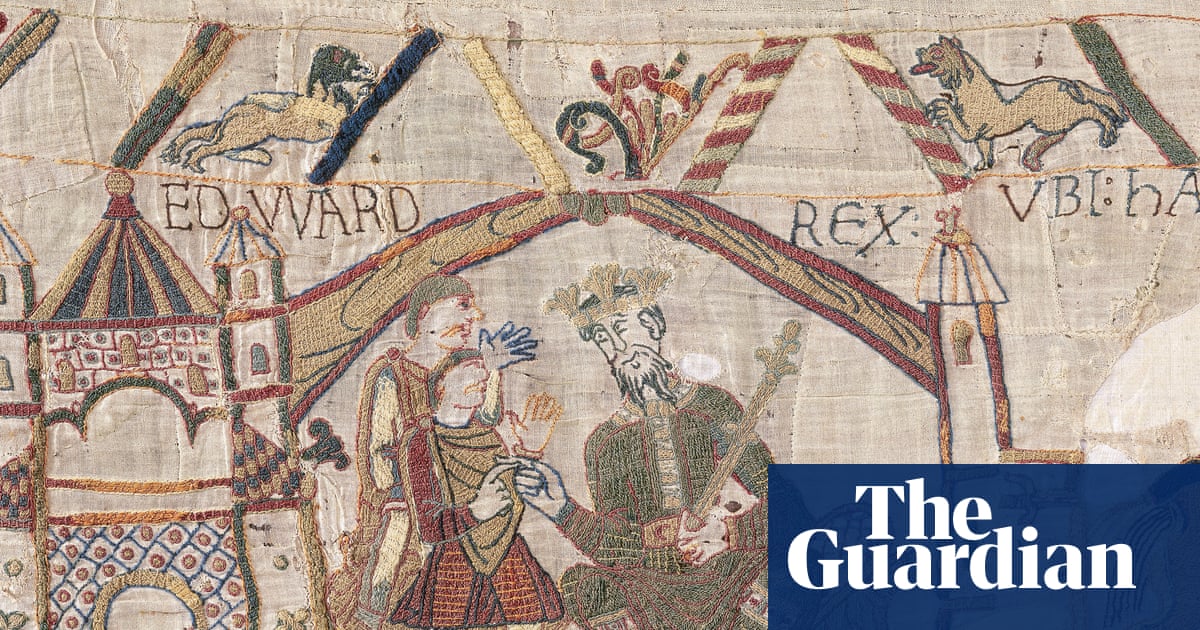
TL;DR
- The Bayeux Tapestry, an embroidered work from almost 1,000 years ago, offers insights into medieval fashion and its social significance.
- Experts interpret clothing, hairstyles, and accessories to understand characters' status, power, and wealth.
- King Edward is depicted in elaborate dress befitting the prosperity of England, while Harold Godwinson's hawk and stallion signify aristocratic status.
- Duke William of Normandy's attire, including ribbons and gold-trimmed cloaks, denotes his power and ambition.
- Count Guy of Ponthieu's unique outfit and Bishop Odo's elaborate armor are analyzed for their symbolic meanings, with Odo's likely commissioned by himself.
- Aelfgyva represents wealthy women through her voluminous sleeves, a symbol of conspicuous consumption.
- Hairstyles, such as the Anglo-Saxons' moustaches and the Normans' shaved backs, along with clerical tonsures, also served as distinguishing markers.