health
‘The start of the healing process’: the vital work to restore Britain’s peatlands
A project on Dartmoor to reprofile the landscape aims to return the springy bog – and carbon store – to its natural condition
TL;DR
- Human activities like mining, drainage, deforestation, burning, and military testing have degraded peat bogs on Dartmoor.
- Healthy peat bogs store twice as much carbon as all the world's forests and provide clean water, flood alleviation, and biodiversity support.
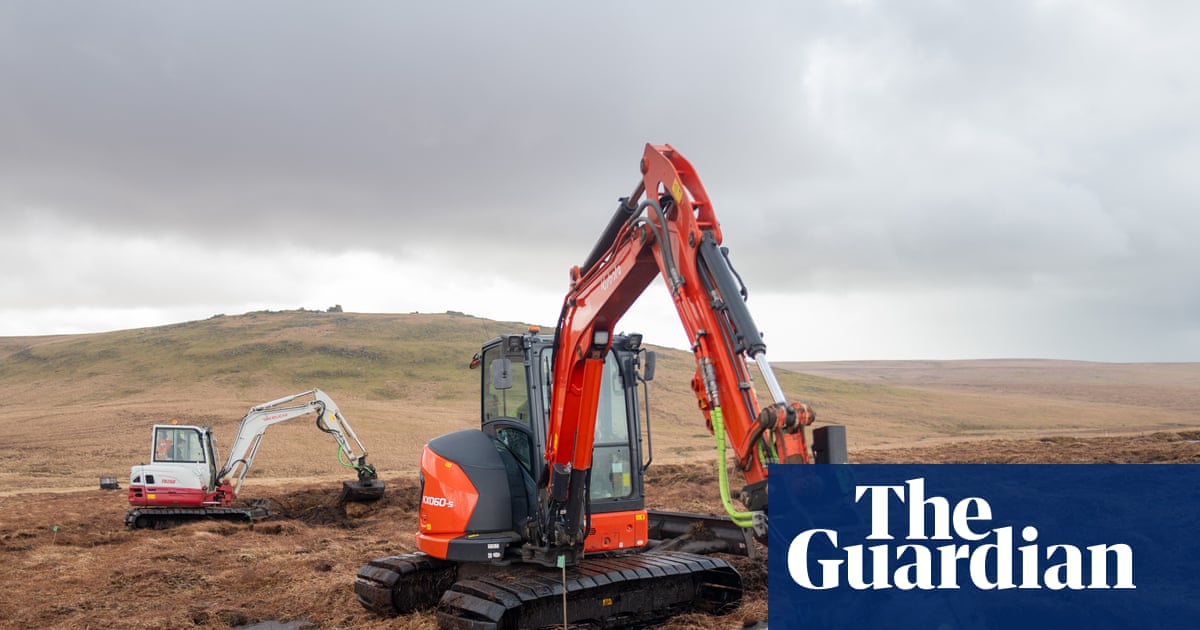
- Restoration projects involve building embankments to capture rainwater, raise the water table, and re-establish wet conditions for peat formation.
- Approximately 80% of the UK's peatland is degraded, with drained peatlands releasing significant greenhouse gases.
- The South West Peatland Partnership aims to restore 1,700 hectares of damaged peat bog, funded by various organizations.
- The restoration of peatlands is essential to meet UK climate policy targets and combat the climate crisis.
- The south-west peat bogs are considered a 'canary in the coalmine' for the rest of the UK, facing extinction by 2060 without intervention.
- Restoration efforts are already showing positive signs, such as an increase in dragonfly species, indicating the start of the healing process.
- Exeter University research highlights the urgent need to scale up peatland restoration, particularly in areas like Dartmoor, Flow Country, and the Peak District.