tech
Artemis II crew enters moon’s gravitational grip ahead of historic flyby
Nasa’s Orion capsule will be just over 4,000 miles above lunar surface, allowing astronauts to see both poles
TL;DR
- The Artemis II crew is set to perform the first flyby of the moon's far side in over 50 years.
- This mission will bring astronauts to the furthest point from Earth ever reached by humans.
- The crew entered the moon's sphere of influence, where its gravity is stronger than Earth's.
- The mission aims to capture thousands of pictures, including views of a total solar eclipse from behind the moon.
- The flyby is scheduled to beat the distance record set by Apollo 13 astronauts in 1970.
- Artemis crew will be over 4,000 miles above the lunar surface, enabling views of regions near both poles.
- The free-return lunar trajectory uses gravity to reduce fuel needs.
- The mission includes a planned 40-minute communications blackout as the spacecraft passes behind the moon.
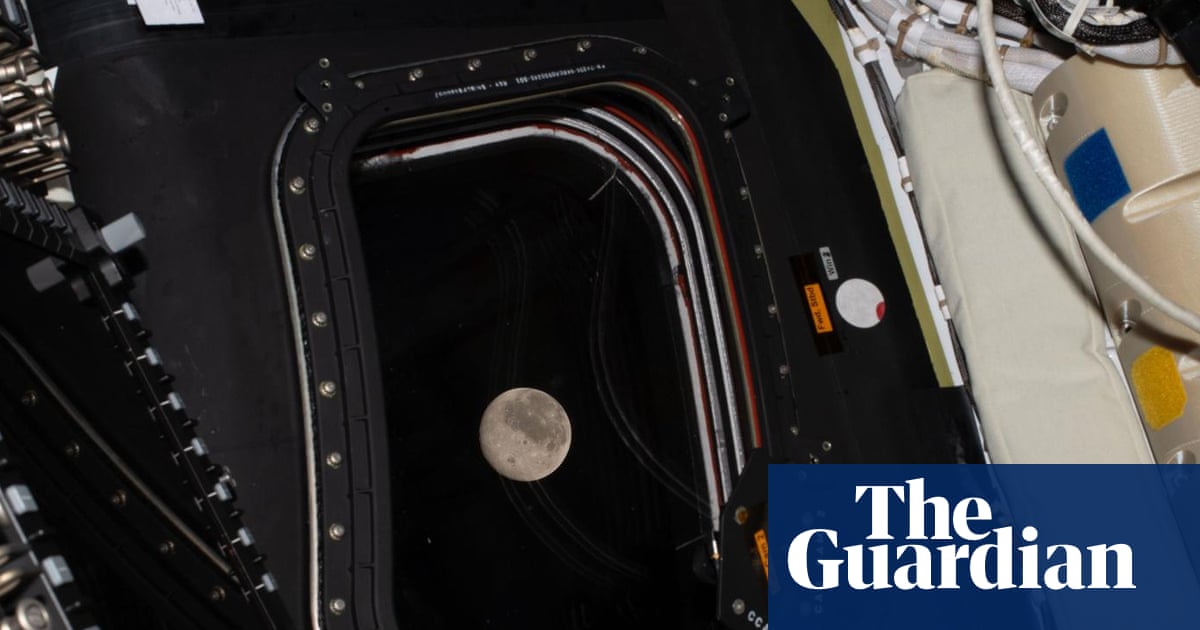
- The crew has already captured images of the moon's distant surface, including the Orientale basin.
- Charlie Duke, an Apollo 16 astronaut, delivered a wake-up call, encouraging the Artemis crew.
- Nasa is focused on gathering data from the Orion spacecraft's life support systems, as it's the first time astronauts have flown it.
- The mission's data is crucial for subsequent missions, including Artemis III and IV, aiming for a lunar landing by 2028.
- The multibillion-dollar Artemis program seeks to establish a long-term US presence on the moon and prepare for potential Mars missions.
- The Artemis II mission will conclude with a splashdown in the Pacific Ocean on Friday.