politics
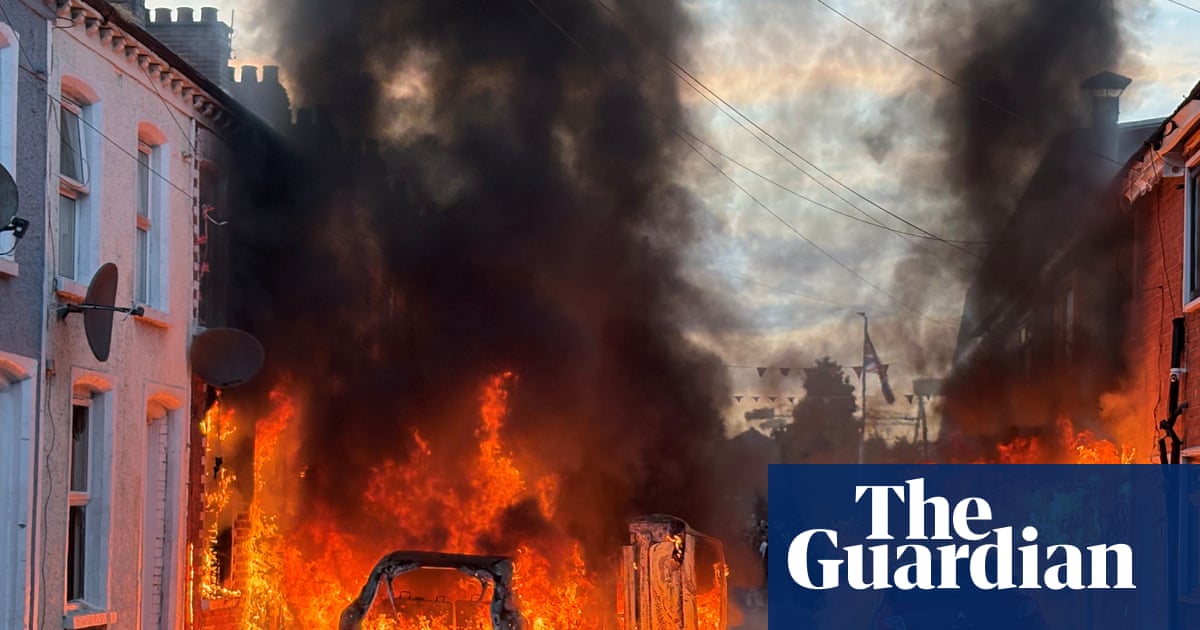
The night Belfast burned: how the Northern Ireland race riots unfolded
A horrific knife attack on a street in June sparked another summer’s night of racial violence, stoked by loyalist groups. How did the unrest erupt – and why do many fear it will happen again?
TL;DR
- A stabbing incident on June 8th in Belfast escalated into a night of widespread racist violence and rioting.
- Far-right figures amplified calls for protest, leading to organized gatherings and attacks on immigrant homes and businesses.
- Organizers used refined tactics, such as banning filming and coordinating online, to evade arrest and maximize impact.
- The riots targeted families from various ethnic backgrounds, including Romanian, Sudanese, Ukrainian, Ethiopian, Chinese, Ugandan, and Nigerian individuals.
- Critics argue that authorities and political parties have been slow to address the root causes of xenophobia and racism, despite repeated incidents.
- Paramilitary groups are believed to have played a role in orchestrating some of the violence, with factions urging restraint while others instigated attacks.
- The Northern Ireland 'model' of such unrest is a unique mix of historical context, xenophobia, social media, and state acquiescence.
- Polls indicate significant public support for intimidating or driving out migrants, suggesting a broader societal issue.
- Authorities are criticized for failing to update anti-racism legislation and for a lack of urgency in addressing hate crimes.
- Despite ongoing attacks and a lack of prosecutions, some migrants remain optimistic about finding safety and acceptance in Northern Ireland.