Scientists warn of ‘regime shift’ as seaweed blooms expand worldwide
Study links rapid growth of ocean macroalgae to global heating and nutrient pollution
TL;DR
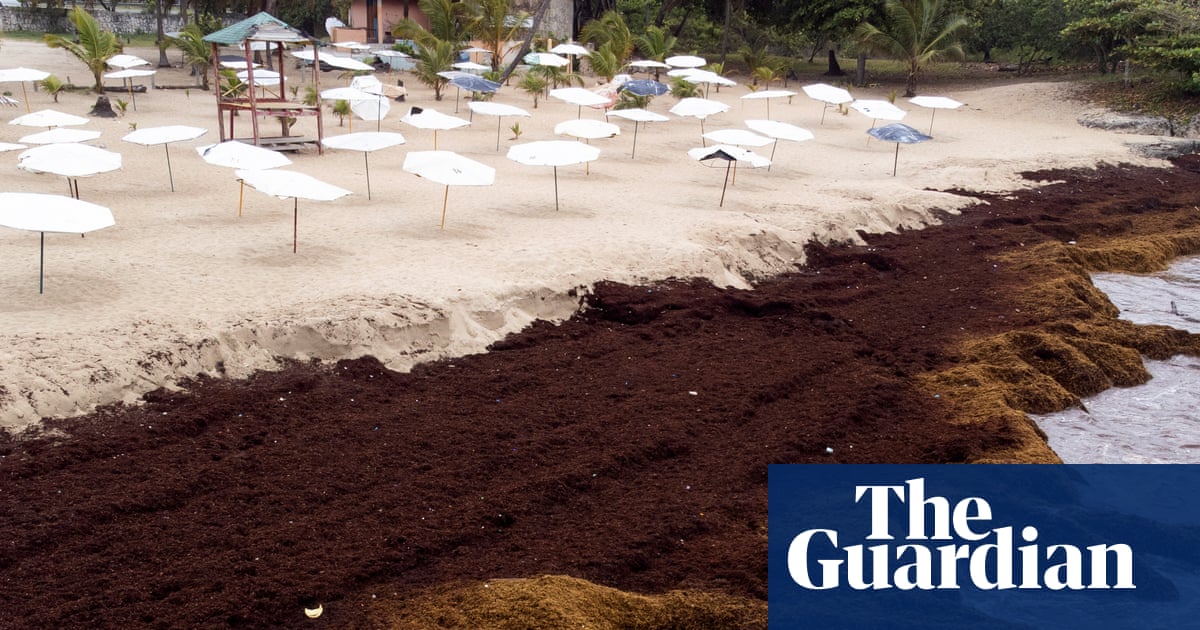
- Global seaweed blooms have increased by 13.4% annually over the last two decades.
- This expansion is attributed to global heating and nutrient runoff from farming and other pollutants.
- The "regime shift" is moving from a macroalgae-poor to a macroalgae-rich ocean.
- The Great Atlantic Sargassum Belt is a prominent example, visible from space.
- Artificial intelligence and satellite imagery were used to analyze 1.2 million ocean pictures from 2003-2022.
- Microalgae blooms also increased, but at a slower rate of 1% per year.
- Most increases in both macroalgae and microalgae occurred in the last decade, aligning with accelerated ocean warming.
- Potential impacts include changes to radiative forcing, light availability, carbon sequestration, and ocean stability.