'They are disturbing the dead': reconstructing the site of the forgotten first genocide of the 20th century
At least 3,000 Herero and Nama people died in a German concentration camp at Shark Island, Namibia. A new forensic exhibition in Berlin is using digital technology to unearth how colonisers scarred a landscape, and a community
TL;DR
- The 'Fractured Lifeworlds' exhibition in Berlin uses forensic research to investigate the first genocide of the 20th century in Namibia.
- The exhibition focuses on the Shark Island concentration camp where at least 3,000 Herero and Nama people died between 1905 and 1907.
- Forensic Architecture, a research agency, uses visual reconstructions, oral testimonies, and geological research to investigate human rights abuses.
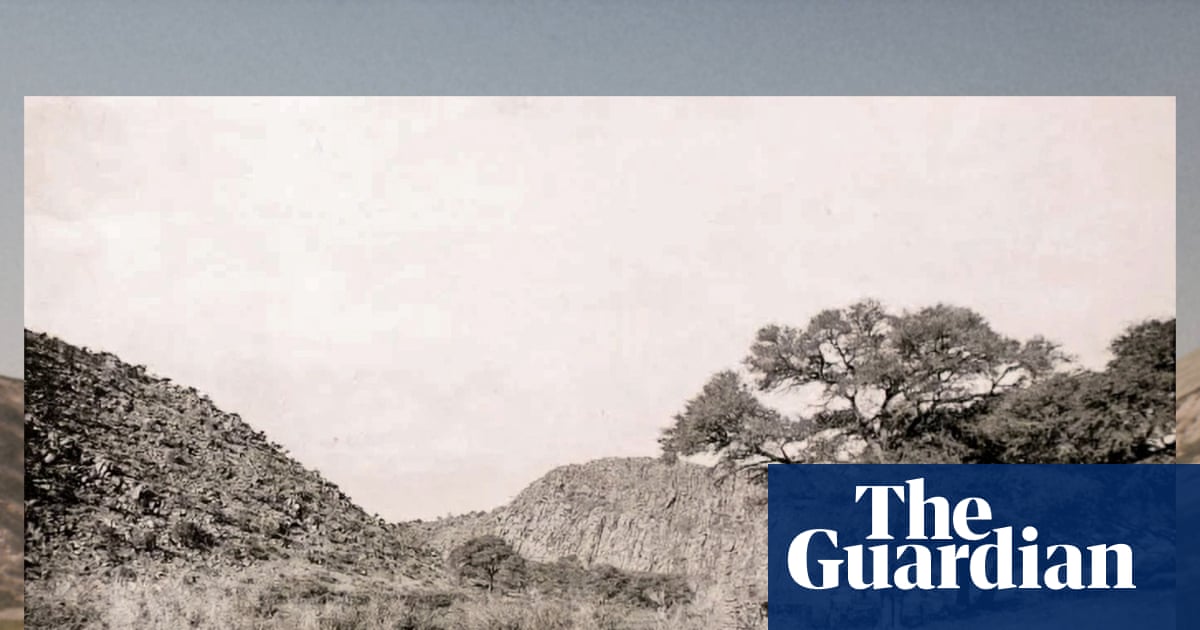
- The exhibition explores how colonial violence has been inscribed into Namibia's landscape, examining events like the Hornkranz massacre.
- Descendants of genocide victims and human rights groups criticize Germany's refusal to pay reparations and its development aid approach.
- The Hyphen green hydrogen project in Namibia raises concerns among Nama and Herero descendants about land rights, participation, and the disturbance of burial grounds.
- The exhibition aims to provide evidence and counter historical denial by reconstructing erased histories through landscape analysis and digital modeling.