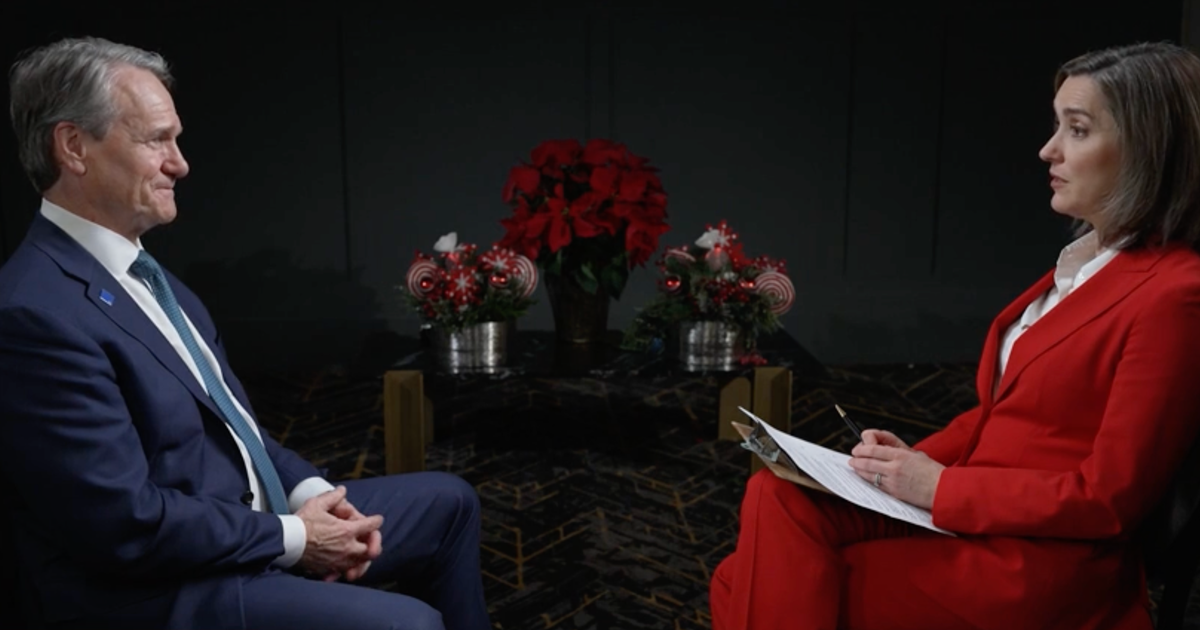


Bank of America CEO Brian Moynihan has recently expressed optimism about the trajectory of the U.S. economy, telling interviewers that overall economic fundamentals remain solid even as sentiment indicators soften. Across both liberal- and conservative-leaning coverage, there is agreement that he expects continued growth rather than an imminent recession, that Bank of America’s broad consumer and corporate customer base gives him visibility into spending trends, and that those data still show resilient demand. Both sides note that Moynihan distinguishes between hard data and consumer mood, stressing that job markets, spending patterns, and credit performance remain comparatively strong despite surveys showing weaker confidence.
Liberal and conservative reports also agree on the broader institutional context: Moynihan is speaking as head of one of the largest U.S. banks, which is closely tied to monetary policy, credit conditions, and consumer health. They similarly frame his remarks against a backdrop of post-pandemic adjustments, elevated but moderating inflation, and a Federal Reserve that is balancing rate cuts with inflation risks. Both acknowledge that banks like Bank of America serve as bellwethers for the real economy because they see payment flows, borrowing, and savings behavior in real time, and they concur that his comments are meant to signal stability and continuity rather than a dramatic shift in outlook.
Areas of disagreement
Tone and framing of optimism. Liberal-aligned coverage tends to present Moynihan’s optimism in a measured, interview-driven tone, emphasizing nuance, caveats, and his acknowledgment that many households still feel under pressure. Conservative coverage more often highlights the optimism itself as a headline takeaway, using his confidence as evidence that gloomy narratives about the economy may be overstated. While liberal sources treat his remarks as one expert datapoint within a complex economic picture, conservative outlets are likelier to frame them as a counterweight to pessimistic polling and media coverage.
Consumer sentiment versus economic data. Liberal sources focus on the disconnect between Moynihan’s positive read of the data and the fact that consumers remain skeptical or anxious, giving weight to lived experience such as prices and housing costs. Conservative outlets acknowledge that consumers are downbeat but lean harder on Moynihan’s claim that the underlying numbers are strong, suggesting sentiment may be unduly negative. Liberal coverage tends to treat consumer unease as a substantive warning sign policymakers must heed, whereas conservative coverage tends to characterize it more as a perception gap that does not fully align with current indicators.
Policy implications and political subtext. Liberal-leaning coverage generally connects Moynihan’s comments to questions about whether more targeted support or structural reforms are needed to make growth feel inclusive, hinting that optimism from Wall Street can coexist with persistent inequality. Conservative outlets are more inclined to read his outlook as validation of current market-driven dynamics and to downplay the need for new interventionist policies, sometimes implying that political narratives are out of step with actual performance. Where liberals see his remarks as a prompt to scrutinize who benefits from a “strong” economy, conservatives see them as evidence that broad conditions are sound and that excessive criticism of the economy may be politically motivated.
Risk assessment and forward-looking cautions. Liberal coverage tends to stress the uncertainties around Moynihan’s optimism, highlighting potential risks such as rate paths, global instability, or consumer debt that could still derail growth. Conservative coverage gives those risks less narrative weight, foregrounding his baseline expectation of ongoing strength and the capacity of the economy to weather headwinds. Liberals portray his outlook as cautiously optimistic within a fragile environment, while conservatives present it more as a confident forecast that undercuts recession fears.
In summary, liberal coverage tends to treat Moynihan’s optimism as a nuanced, conditional signal that must be weighed against ongoing consumer strain and structural risks, while conservative coverage tends to spotlight his confidence as proof that the U.S. economy is fundamentally strong and that prevailing pessimism is overstated.