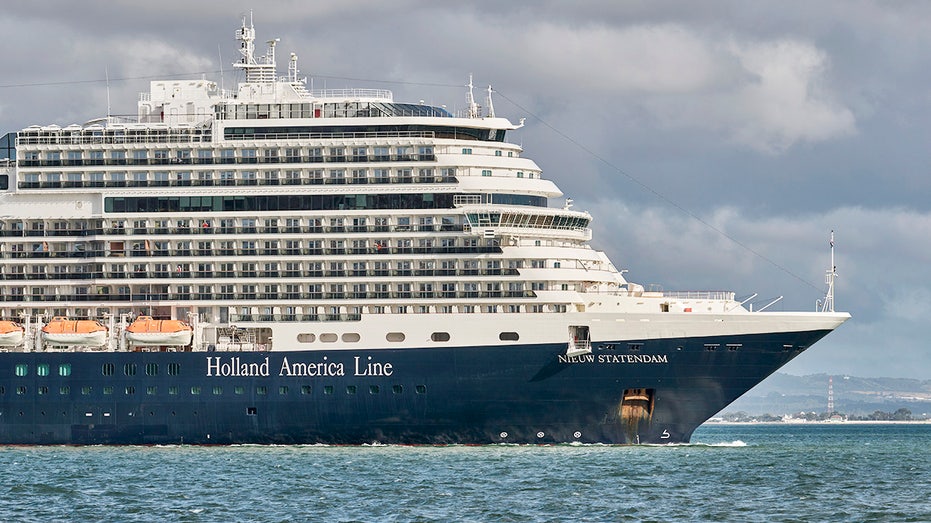



A 77-year-old woman went overboard from the Holland America Line cruise ship Nieuw Statendam on New Year’s Day while the vessel was sailing about 40 miles northeast of Sabana, Cuba. Both liberal and conservative outlets report that the U.S. Coast Guard conducted an intensive search by air and sea covering roughly 690 square miles over several hours before suspending operations, that no trace of the passenger was found and her identity has not been released, and that the ship subsequently canceled its scheduled stop in Key West as a result of the incident and response.
Coverage from both sides notes that Holland America acknowledged the incident, confirmed that a guest had gone overboard, and said its family assistance team is supporting the woman’s relatives. Across outlets, the context emphasizes standard Coast Guard search-and-rescue protocols, the difficulty of locating a person lost at sea under such conditions, and the routine—but distressing—nature of overboard incidents in the cruise industry, while avoiding speculation about the specific cause in this case or broader systemic reforms.
Areas of disagreement
Emphasis and tone. Liberal-aligned outlets tend to frame the event more as a humanitarian tragedy and institutional response, focusing on the search details, geography, and the cruise line’s family support measures, while keeping the language restrained. Conservative outlets use more concise, incident-driven framing that highlights the fact that the search has been concluded and subtly centers the closure of official efforts. Both sides avoid sensationalism, but liberal coverage leans into empathetic context, whereas conservative coverage is slightly more transactional and update-oriented.
Details and transparency. Liberal sources emphasize the specific location off Cuba, the timing on New Year’s Day, and operational specifics such as the canceled Key West stop and the Coast Guard’s search radius and duration, portraying a transparent timeline of events. Conservative sources also report the key operational facts but sometimes omit smaller contextual details, such as the exact reference point near Sabana, Cuba, or the precise hours searched, foregrounding instead the bottom line that the rescue effort has been suspended. Both note that the woman’s identity and the precise circumstances remain undisclosed, but liberal outlets more clearly stress the absence of information as a limiting factor, while conservative ones simply state it without further framing.
Speculation and circumstances. Liberal coverage is notably cautious about the circumstances of the woman going overboard, explicitly refraining from hypothesizing about whether it was accidental or intentional and largely deferring to official statements. Conservative outlets similarly avoid direct speculation but are more likely to underline that the circumstances "remain unstated," subtly inviting reader curiosity about unanswered questions. Where liberal stories tend to fold this uncertainty into the broader challenge of overboard cases at sea, conservative stories more crisply separate the unknown cause from the confirmed operational facts.
Institutional focus. Liberal-aligned reports give slightly more space to the role and procedures of the Coast Guard and the cruise line, highlighting the scale of the search, cooperative efforts, and post-incident support teams as examples of institutional response. Conservative coverage, while acknowledging those same institutions, is more inclined to treat them as background actors and keep the narrative centered on the discrete incident and its operational conclusion. Both perspectives accept the Coast Guard’s decision to suspend the search as standard practice, but liberal outlets frame it in terms of difficult trade-offs in search-and-rescue work, whereas conservative outlets frame it as the definitive endpoint of the story.
In summary, liberal coverage tends to present a more context-rich, humanitarian framing that foregrounds institutional response and the emotional weight of the tragedy, while conservative coverage tends to deliver a concise, incident-focused account that underscores the closure of the search and leaves more interpretive space around the unknown circumstances.
Story coverage