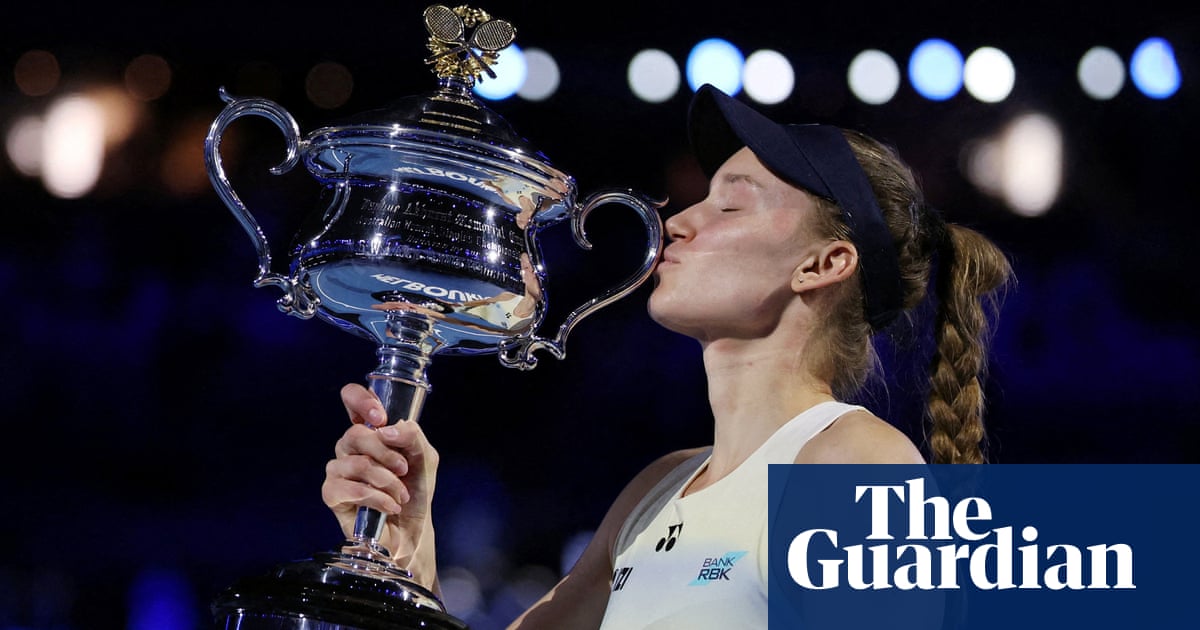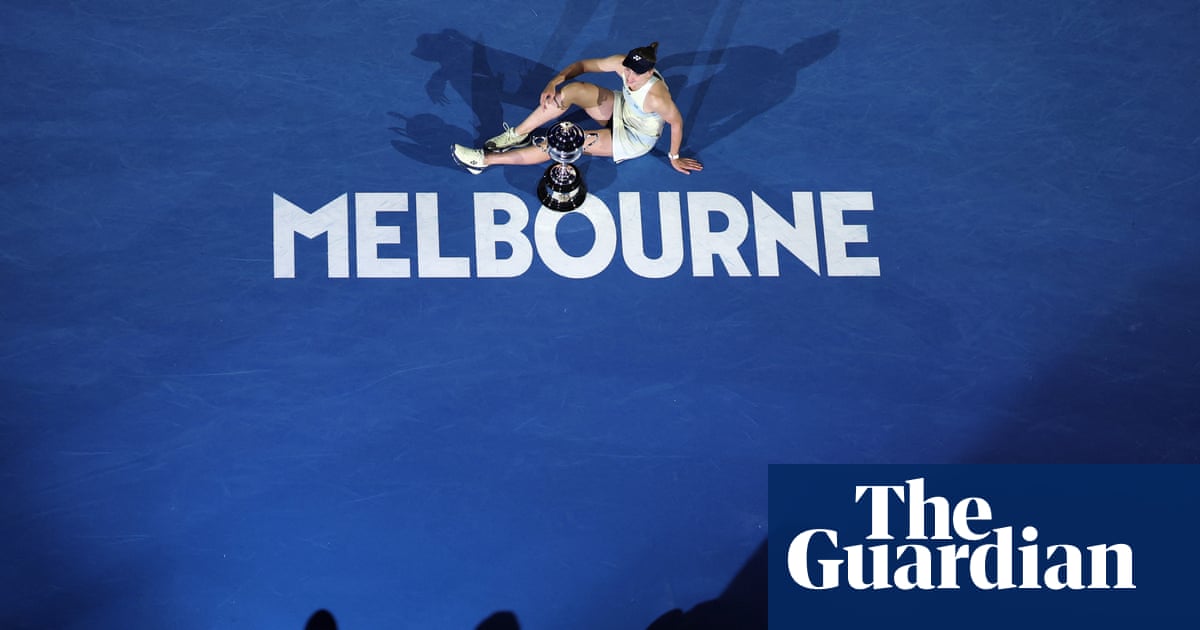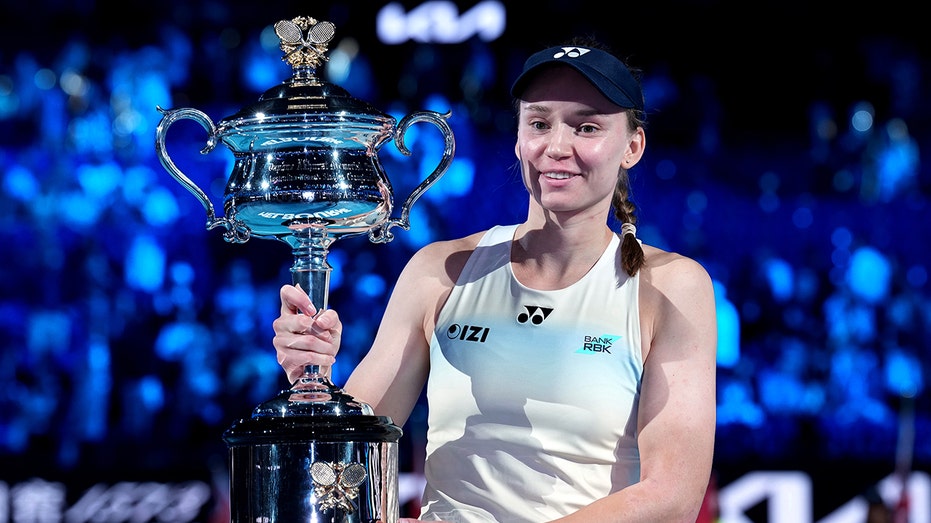


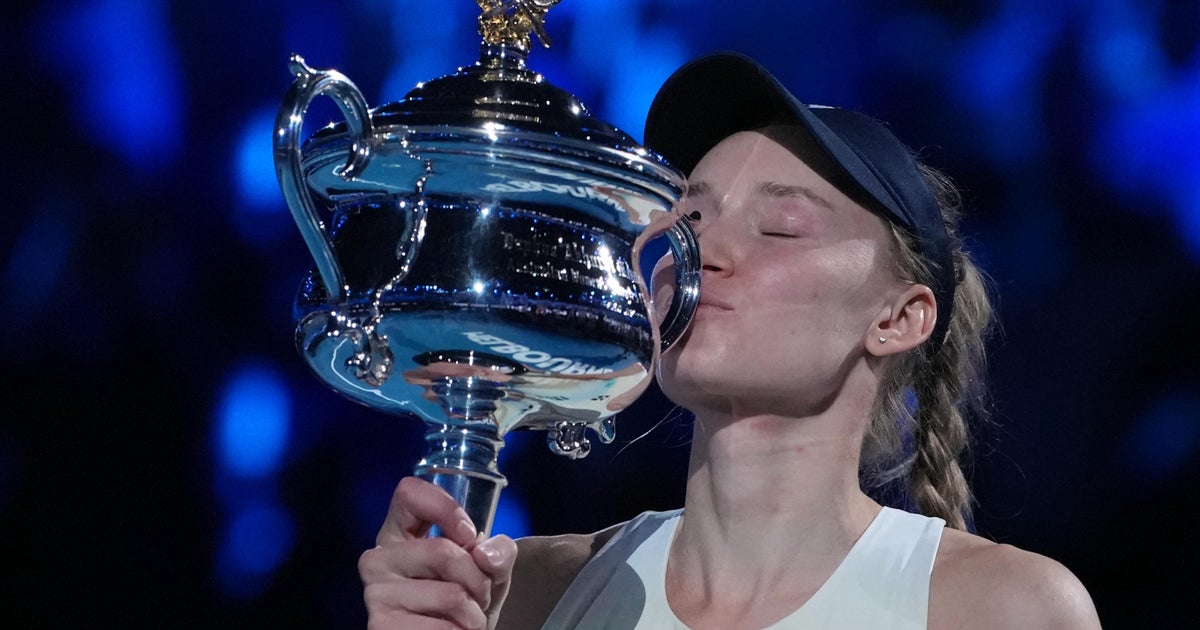
Elena Rybakina defeated world No. 1 Aryna Sabalenka in the Australian Open women’s final, winning 6-4, 4-6, 6-4 in a tense three-set match at Rod Laver Arena. Both liberal- and conservative-leaning outlets agree that Rybakina, already a Wimbledon champion, captured her first Australian Open crown and second Grand Slam overall, overturning a deficit in the deciding set with powerful serving and composed baseline play. Coverage across the spectrum notes that this result reverses their 2023 Australian Open final outcome, when Sabalenka prevailed, and that Sabalenka briefly seized momentum in the second set and early in the third before Rybakina broke back and closed out the match.
Liberal and conservative sources alike emphasize that this victory consolidates Rybakina’s position at the top tier of women’s tennis and caps a broader resurgence after an uneven spell outside the very top rankings. They concur that her success builds on a strong recent run, including a WTA Finals title and a renewed sense of confidence, supported by a stable team and training environment. Both sides also highlight Sabalenka’s acknowledgment that Rybakina’s sustained aggression and calm under pressure were decisive, framing the match as a high-quality contest between two of the game’s most powerful and mentally resilient players, with implications for an ongoing rivalry at future majors.
Areas of disagreement
Framing of Rybakina’s arc. Liberal-aligned outlets tend to cast Rybakina’s win as a narrative of quiet resilience and long-term perseverance, stressing her “return to the top table” after being underestimated and slipping outside the top 10. Conservative-leaning coverage, while acknowledging her comeback, more tersely frames the story as a straightforward sporting achievement: a second major secured by capitalizing on an opportunity against the top-ranked player. Liberal reports bring in richer human-interest details, such as her belief in hard work and reliance on her team, whereas conservative reports focus on the scoreboard and statistical milestones.
Characterization of Sabalenka. Liberal sources often emphasize Sabalenka’s emotional intensity, the crowd’s support for her, and the drama of her swings in momentum, framing her as a fiery foil to Rybakina’s composure. Conservative coverage acknowledges her disappointment at losing a lead but tends to describe her role more functionally, as the top seed who let an advantage slip in a big match. Liberal outlets are more likely to quote Sabalenka’s gracious post-match comments and underline the respect between the players, while conservative pieces use her reaction primarily to highlight the significance of Rybakina’s comeback.
Context and symbolism. Liberal-leaning reporting places the match in a wider narrative about the current women’s game, stressing how Rybakina, Sabalenka, and a small group of peers are reshaping the top tier and referencing her past Wimbledon title, WTA Finals success, and earlier under-recognition. Conservative outlets largely strip away broader institutional or reputational debates, treating the final mainly as a marquee sporting event where the favorite was beaten by a rising rival. Liberal pieces also linger on atmospheric details, like the bird’s chirping under the closed roof, to symbolize Rybakina’s “quiet resolve,” while conservative reports stick closely to match flow and rankings.
Impact on rankings and status. Liberal coverage tends to argue that this victory “reinforces her status as the top female player,” using the title and recent surge to position Rybakina as a de facto standard-bearer on tour. Conservative sources, while acknowledging that this is her second major and a landmark win, frame her more cautiously as one of several contenders challenging the current No. 1 rather than the singular new leader. As a result, liberal articles more readily portray a power shift at the summit of the women’s game, whereas conservative reports portray a tightening rivalry without declaring a clear new hierarchy.
In summary, liberal coverage tends to use Rybakina’s win to craft a richer narrative of resilience, evolving hierarchy, and personality contrast in the women’s game, while conservative coverage tends to present the match more narrowly as a notable upset in which a composed challenger capitalized on her chances against the top seed.
Story coverage