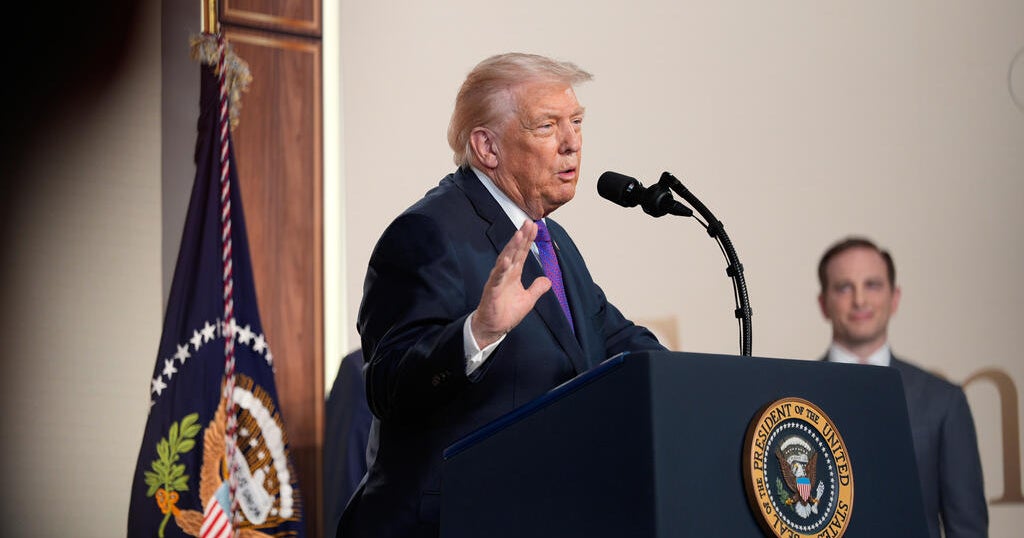
The White House has unveiled a new prescription drug platform called TrumpRx (often referenced as TrumpRx.gov), a government-backed website intended to connect patients directly with discounted medications from participating pharmaceutical manufacturers. Coverage across both liberal and conservative outlets agrees that the site functions as a hub rather than a pharmacy, directing users to drugmaker-run discount programs where certain drugs are offered at reduced cash prices. Reports note that some high-cost medications, such as Wegovy and Gonal-F, are being promoted with substantial list-price discounts, and that the primary target users are uninsured patients, those with high deductibles, or people whose needed drugs are not covered by their current insurance plans. Both sides also agree that the site launched as part of a broader White House push to address public concern over high prescription drug costs and to show tangible action on affordability.
Liberal and conservative outlets alike provide shared context that the U.S. prescription drug market is characterized by complex pricing structures involving insurers, pharmacy benefit managers, and manufacturers, and that many Americans, particularly those who are uninsured or underinsured, struggle with out-of-pocket costs. They concur that TrumpRx attempts to bypass some traditional intermediaries by facilitating more direct cash-pay transactions between patients and drugmakers, situating the effort within ongoing debates over drug pricing reform and access. Coverage acknowledges that existing private insurance and government programs like Medicare and Medicaid already negotiate prices for many patients, meaning TrumpRx sits alongside — rather than replacing — those channels. Both perspectives situate the launch in a larger pattern of policy and market experiments, including manufacturer coupons and discount programs, aimed at making at least some branded medications more affordable to specific patient groups.
Areas of disagreement
Effectiveness and scope. Liberal-leaning coverage tends to question how many Americans will actually see meaningful savings, emphasizing that most insured patients already rely on negotiated insurance rates that may be better than cash discounts and noting the platform’s narrow focus on select drugs. Conservative outlets portray TrumpRx as a broadly significant step toward lowering drug costs, highlighting advertised savings and framing the platform as an innovative solution with substantial potential reach. Liberal sources stress uncertainties about uptake and the limited evidence so far on system-wide impact, while conservative sources emphasize the promise of immediate price relief for eligible patients.
Role of insurers and intermediaries. Liberal-aligned reporting often underscores that TrumpRx operates outside the insurance framework and warns that bypassing insurers and pharmacy benefit managers might help some individuals while doing little to fix underlying structural pricing problems. Conservative coverage highlights the bypassing of insurance companies and intermediaries as a virtue, arguing that cutting out middlemen can reduce hidden markups and bureaucracy. Liberals describe the site as a marginal workaround layered on top of a flawed system, whereas conservatives depict it as a corrective to entrenched industry players that have long benefited from opaque pricing.
Motives and political framing. Liberal sources commonly situate TrumpRx within a political communications strategy, suggesting the launch allows the administration to showcase action on drug prices without undertaking deeper regulatory reforms or challenging pharmaceutical pricing power. Conservative outlets, by contrast, frame the move as a genuine policy achievement that reflects a sustained commitment to affordability and responsiveness to voter concerns about healthcare costs. Liberal coverage is more likely to highlight what the program does not do — such as systemic price controls or broad negotiation mandates — while conservative coverage focuses on the administration’s initiative and willingness to experiment outside traditional government programs.
Long-term policy implications. Liberal coverage tends to argue that TrumpRx is, at most, a stopgap or pilot that may ease costs for a subset of patients but does not substitute for comprehensive drug pricing reform tied to Medicare, Medicaid, or regulatory authority over list prices. Conservative coverage is more inclined to treat the platform as a model for market-based reforms that could be expanded, suggesting it demonstrates how choice and competition can be harnessed without heavy-handed regulation. Liberals raise concerns that reliance on voluntary manufacturer discounts entrenches high list prices and patchwork access, while conservatives see the voluntary, direct-to-consumer structure as evidence that innovation and flexibility can emerge outside traditional government mandates.
In summary, liberal coverage tends to treat TrumpRx as a limited, politically useful but structurally modest initiative that helps some patients while leaving core pricing problems intact, while conservative coverage tends to cast it as a meaningful, market-driven affordability reform that bypasses middlemen and showcases the administration’s commitment to lowering drug costs.