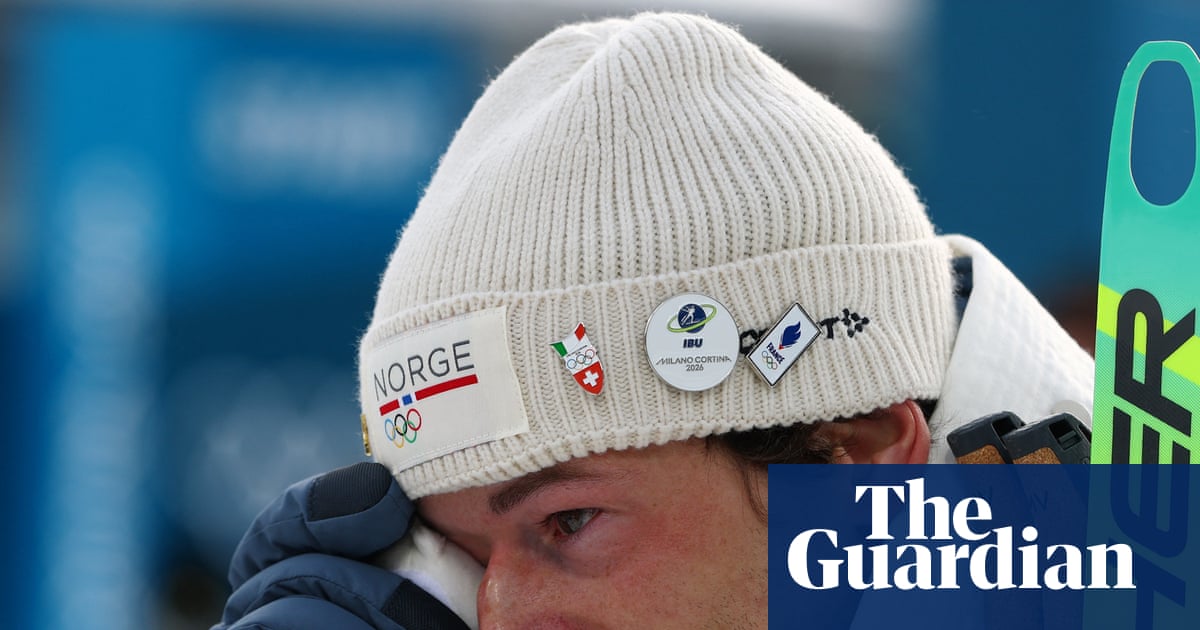
Norwegian biathlete Sturla Holm Lægreid won a bronze medal in the men’s biathlon at the Winter Olympics and then used his live post-race TV interview to tearfully confess that he had cheated on his girlfriend about three months earlier. In the emotional exchange, he described the on-air admission as a form of “social suicide,” emphasized that the affair was a one-time lapse, and expressed deep regret along with a desire to repair the relationship; the woman’s identity has not been disclosed and she has not publicly responded. Liberal-leaning outlets that covered the incident agree on the basic chronology of events, his medal result and the timing of the affair, and note that his confession immediately followed one of the biggest athletic achievements of his career.
Across the coverage, there is shared acknowledgment that Lægreid framed the confession as an act of personal responsibility and an attempt at transparency, saying he wanted to be honest rather than let rumors fester. Reports also consistently highlight that his teammate Johan-Olav Botn won gold in the same event and dedicated his victory to their late friend and teammate Sivert Guttorm Bakken, with Lægreid himself expressing concern that his revelation might overshadow Botn’s achievement. Both fact-focused and more interpretive accounts present the episode as part of a larger pattern in modern sports where elite athletes’ private lives are increasingly scrutinized alongside their performance, and note that national biathlon institutions and Olympic organizers have not taken any formal action because this is seen as a private moral matter rather than a sporting rules issue.
Areas of disagreement
Newsworthiness and emphasis. Liberal-oriented outlets that have reported on the story tend to frame it as an unusual but human moment that intertwines elite sport, vulnerability, and modern media spectacle, often pairing the confession with discussion of mental health, emotional authenticity, and the pressure on young athletes. In the absence of extensive conservative coverage, right-leaning commentary that does surface is more likely to treat the confession as an over-share or an unnecessary injection of personal drama into a sports broadcast, sometimes questioning why it merits news coverage at all. Where liberal sources highlight the emotional shock value but still foreground the Olympic results, conservative voices are inclined to see the whole episode as another example of a culture that blurs private and public boundaries for attention.
Moral framing and responsibility. Liberal-leaning coverage generally presents Lægreid’s admission as a flawed person’s attempt to take accountability, stressing his remorse, the voluntary nature of the confession, and the hope of reconciliation rather than moral condemnation. Conservative-leaning reactions, when they appear in opinion spaces or social commentary, more often stress the wrongdoing itself and question whether making the confession on live TV truly reflects responsibility or instead shifts emotional labor and pressure onto the girlfriend. Thus, liberal narratives tend to balance criticism of the cheating with empathy for his openness, while conservative narratives put relatively more weight on personal moral failure and the inappropriateness of using a global stage for private contrition.
Impact on sport and teammates. Liberal coverage underscores Lægreid’s own worry that his confession might overshadow Botn’s gold and Bakken’s memorial dedication, yet typically portrays this as an unintended consequence of a raw emotional moment, not a selfish grab for the spotlight. Conservative-leaning commentary is more prone to argue that, intention aside, he made a choice that predictably hijacked the narrative of the race and disrespected his teammate’s moment and the solemn tribute to Bakken. In this telling, the interview becomes a cautionary example of personal drama undermining the collective nature of Olympic competition and national representation.
Cultural implications and media norms. Liberal-leaning sources that analyze the story often situate it within broader themes of evolving norms around vulnerability, suggesting that public confessions can foster more honest conversations about relationships, accountability, and the emotional lives of male athletes. Conservative-aligned punditry is more apt to fold the incident into criticism of reality-TV-style confessional culture, arguing that such displays erode traditional boundaries of privacy and reduce serious moral issues to entertainment content. Where liberals may see a complicated but potentially constructive moment in the trajectory of sports culture, conservatives are likelier to view it as symptomatic of a media environment that rewards spectacle over dignity.
In summary, liberal coverage tends to view the episode as a complex, emotionally charged moment where a young athlete’s public accountability and vulnerability deserve nuanced, somewhat empathetic treatment within the broader story of the race, while conservative coverage tends to question the appropriateness and motives of the public confession, emphasizing over-sharing, moral failure, and the way it distracts from sport and traditional norms of privacy.