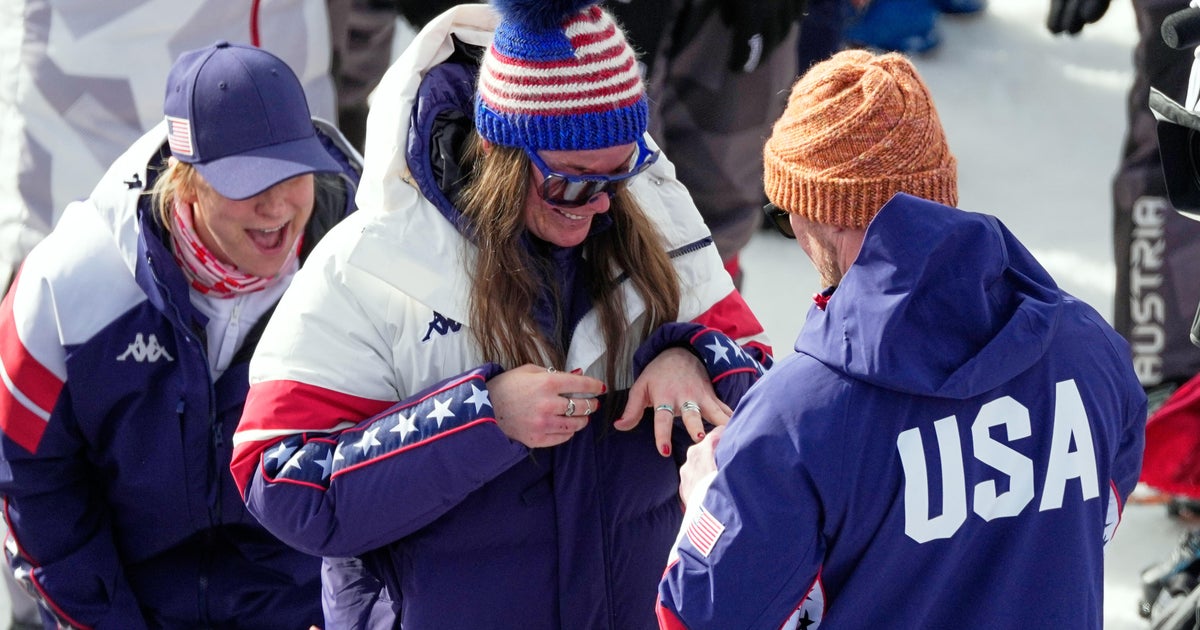

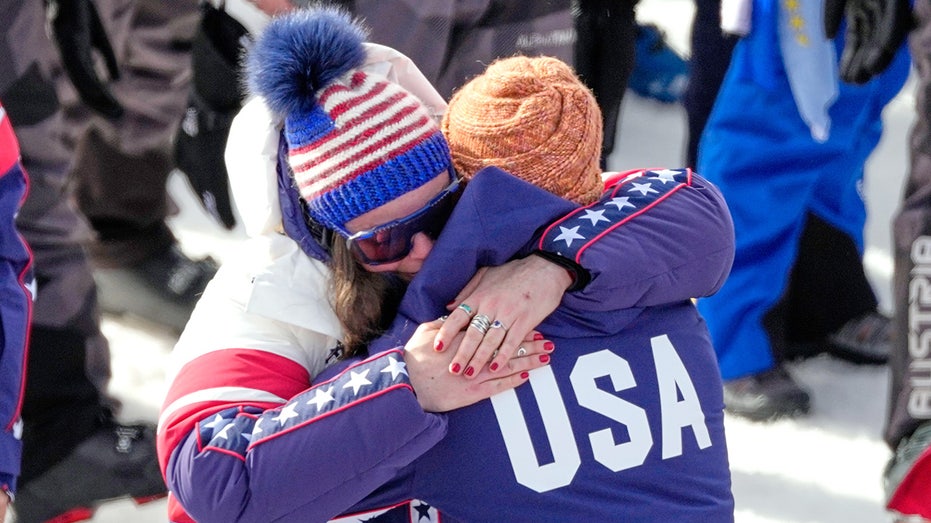
American skier Breezy Johnson crashed out of the women’s super-G race at the 2026 Milan-Cortina Winter Olympics in Cortina d’Ampezzo, Italy, after hitting a gate and failing to finish her run. Near the finish area, after the race, her boyfriend Connor Watkins proposed to her; she accepted, and coverage in both liberal and conservative outlets notes the emotional contrast between the disappointment of the crash and the celebratory engagement, including mention of the blue sapphire engagement ring. Liberal and conservative sources agree that Johnson had already secured an Olympic gold medal in the women’s downhill event earlier in the Games, and that this personal milestone occurred in the same Olympic venue where the super-G was held.
Both sides also agree on broader competitive context: the super-G race was won by Italy’s Federica Brignone, who captured her first Olympic gold less than a year after a serious leg injury, and several top skiers struggled on the course, with multiple athletes encountering difficulties or crashing. Coverage from across the spectrum situates Johnson’s engagement within a narrative of resilience and high-stakes sport, highlighting the demanding nature of alpine skiing, the pressure of Olympic competition, and the way athletes’ personal lives sometimes intersect dramatically with major sporting moments.
Areas of disagreement
Emphasis of the story. Liberal-aligned outlets tend to present the crash and the race itself as co-equal with the engagement, giving more space to Johnson’s DNF, Brignone’s victory, and course difficulty, so the proposal reads as a poignant coda to a tough event. Conservative outlets, by contrast, frame the piece much more as a feel-good human-interest story, foregrounding Johnson’s status as an American gold medalist and the romantic proposal, with the crash treated as a brief setup rather than a central competitive storyline.
Sporting context and international angle. Liberal sources devote more attention to the broader field, stressing Brignone’s comeback from injury, the number of other athletes who struggled on the course, and the overall challenge posed by the super-G, which adds an international and technical dimension to the piece. Conservative sources focus predominantly on Johnson as an American figure and on the symbolism of her earlier downhill gold, downplaying the international competitive landscape and offering relatively little detail about other racers or course conditions.
Tone toward risk and adversity. Liberal coverage leans into the theme of risk in elite alpine skiing, implicitly linking Johnson’s crash and Brignone’s recent injury recovery to questions of athlete safety, the inherent dangers of speed events, and the emotional volatility of the Olympics. Conservative coverage generally treats the crash as routine adversity in high-level sport and pivots quickly to a celebratory, upbeat tone around personal triumph, emphasizing perseverance and patriotic pride rather than systemic or safety-focused angles.
Portrayal of personal vs. professional identity. Liberal-leaning outlets tend to balance Johnson’s athletic identity with her personal life, explicitly juxtaposing her competitive disappointment, the rise of another champion in Brignone, and her engagement to show multiple dimensions of her story. Conservative outlets more often cast her primarily as an American Olympic champion whose romantic engagement serves as the latest highlight, reinforcing a narrative where her professional achievements and personal milestone blend into a continuous success story rather than a mix of highs and lows.
In summary, liberal coverage tends to situate Johnson’s engagement within a nuanced narrative of Olympic risk, international competition, and emotional complexity, while conservative coverage tends to highlight a patriotic, feel-good story that emphasizes Johnson’s status as an American gold medalist and her romantic happy ending.
Story coverage