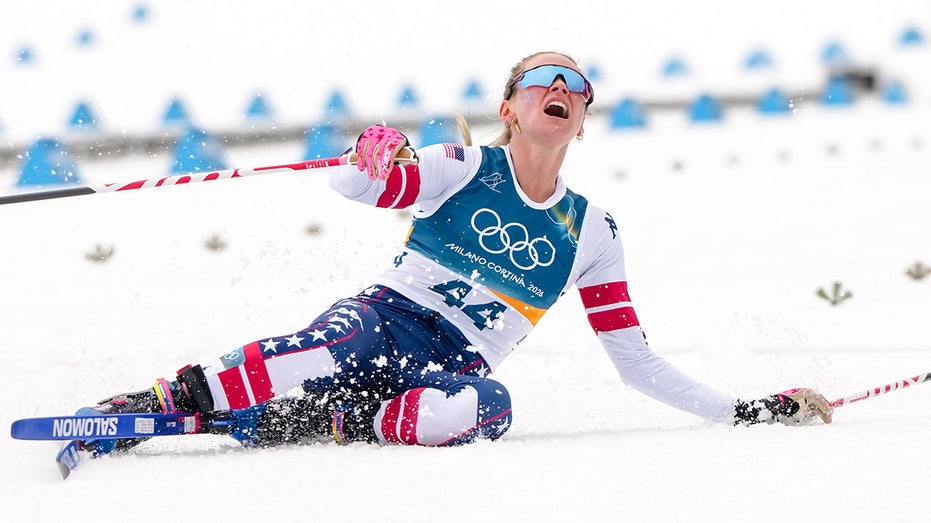

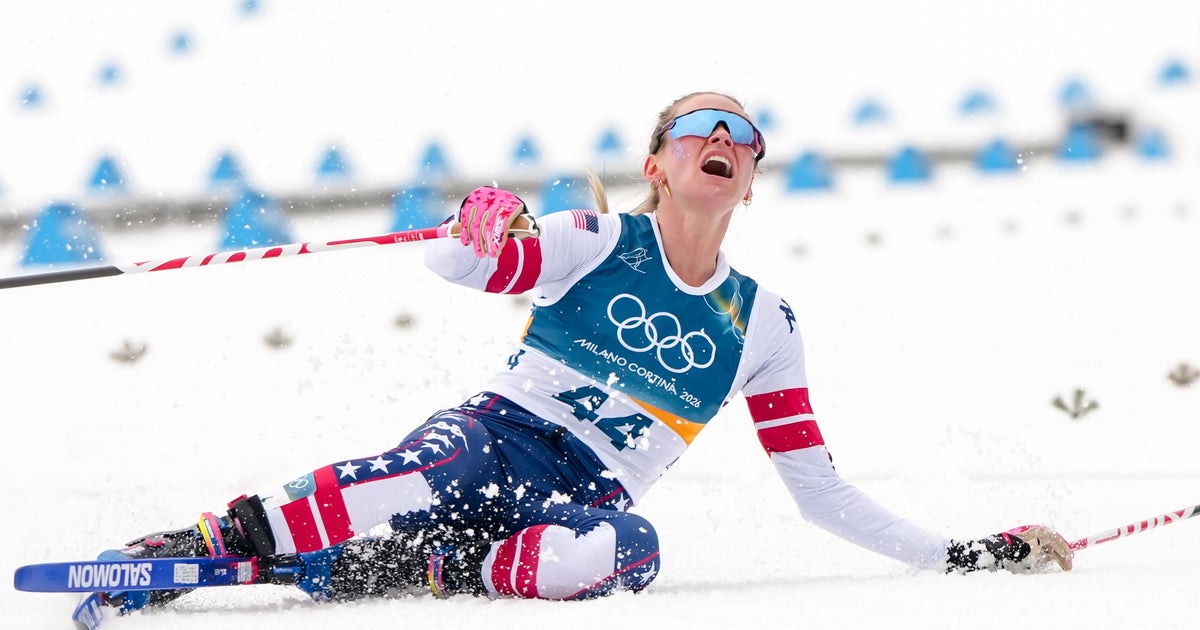
Jessie Diggins of the United States won the bronze medal in the women’s 10-kilometer freestyle cross-country skiing event at the Winter Olympics, finishing behind two Swedish skiers led by gold medalist Frida Karlsson and ahead of Norwegian Astrid Oeyre Slind. Both liberal and conservative outlets agree she raced with bruised ribs, completed the course in intense pain, collapsed after crossing the finish line, and that the medal added to her previous Olympic achievements and contributed to Team USA’s medal tally for the day.
Coverage from both sides highlights Diggins’ reputation as a top American cross-country skier, emphasizing the difficulty of the sport and the significance of an Olympic podium in a discipline long dominated by Nordic countries such as Sweden and Norway. They describe the race format as an interval-start 10-kilometer freestyle, note the physically punishing nature of elite cross-country skiing, and frame her performance as a testament to elite conditioning, mental toughness, and the broader competitive strength of Scandinavian teams in the discipline.
Areas of disagreement
Framing of heroism and sacrifice. Liberal-leaning sources emphasize the emotional and human side of Diggins’ performance, focusing heavily on her collapse, pain, and quotes about “skiing out of my body,” presenting the medal as a deeply personal triumph over adversity. Conservative outlets also frame her as heroic but lean more into traditional themes of grit and toughness, casting her effort as a classic example of American resilience and competitive spirit. The liberal framing tends to center her vulnerability and gratitude, while conservative coverage more explicitly celebrates stoicism and endurance.
National pride and symbolism. Liberal coverage treats the medal primarily as an individual accomplishment in a global field, foregrounding the international context and Sweden’s dominance more than overt patriotic messaging about the United States. Conservative outlets more clearly situate the bronze as a proud moment for Team USA, calling attention to it as the first medal of the day for the American team and linking Diggins’ race to broader narratives of American success at the Games. As a result, liberal stories read more like profiles of an elite athlete in a world sport, while conservative stories resemble a national achievement highlight.
Health and risk narrative. Liberal sources give more space to the severity of Diggins’ bruised rib injury and the visible aftermath of the race, implicitly raising questions about the physical cost of pushing through pain without directly criticizing decision-makers. Conservative outlets acknowledge the injury but present racing through pain mainly as an inspiring choice, focusing less on potential long-term health concerns and more on her competitive determination. This leads liberal coverage to carry a subtle undertone of concern for athlete welfare, whereas conservative coverage leans into celebrating risk-taking as part of elite competition.
Emotional tone and focus. Liberal-aligned reporting often foregrounds Diggins’ quotes about struggle, gratitude, and the mental stress of competing injured, giving the story a more introspective and empathetic tone. Conservative reporting is somewhat more clipped and results-oriented, spotlighting her time, placement, and medal count while using her quotes primarily to underscore perseverance. The liberal tone invites readers to connect with her as a person under strain, while the conservative tone invites admiration of her performance metrics and toughness.
In summary, liberal coverage tends to spotlight Jessie Diggins’ emotional journey, vulnerability, and welfare within a global athletic context, while conservative coverage tends to emphasize her toughness, patriotic symbolism, and results-driven grit as an emblem of American resilience.