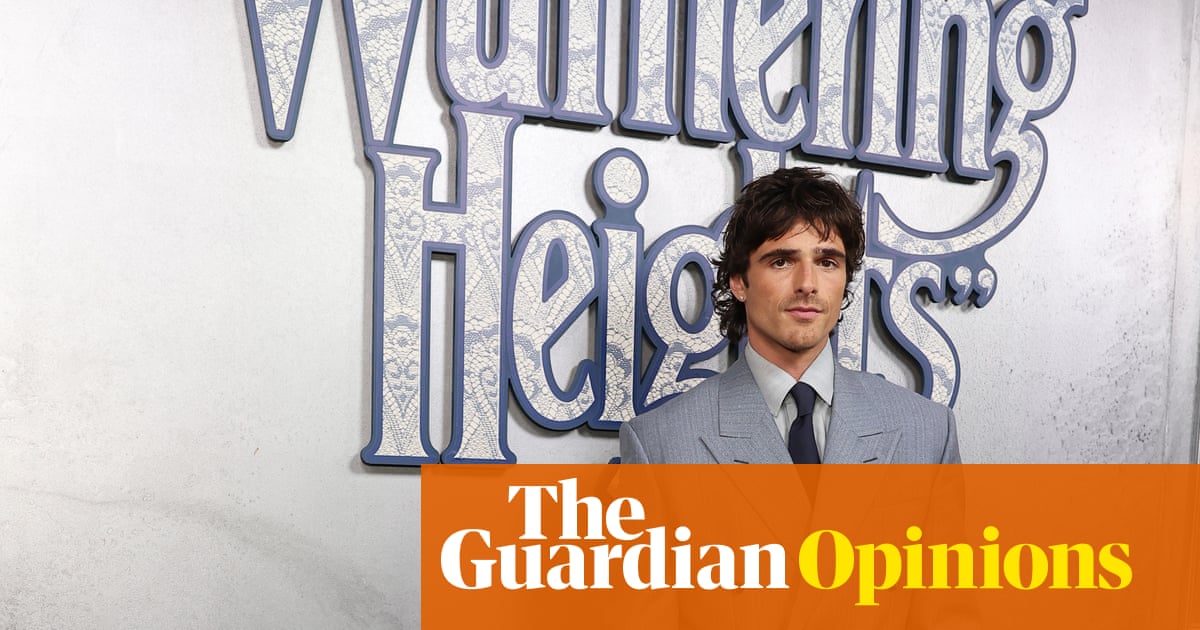
Emerald Fennell’s new feature-film adaptation of Emily Brontë’s Wuthering Heights, a stylized, R-rated gothic romance set on the Yorkshire moors, premiered on Friday, February 13, just ahead of Valentine’s Day weekend and stars Margot Robbie as Catherine Earnshaw and Jacob Elordi as Heathcliff. Across both liberal- and conservative-leaning coverage, there is consensus that the film takes significant liberties with the source material, that critical reaction is sharply divided, and that Fennell leans into a sensual, contemporary, pop-infused interpretation of the central relationship while retaining the novel’s harsh, windswept setting as a visual anchor.
Outlets on both sides also agree that this adaptation arrives in the context of a long and uneven history of Wuthering Heights on screen, where prior versions have often struggled commercially or critically when straying from audience expectations. They note that the Brontë Parsonage Museum and Brontë scholars are engaged with the release, that the film is expected to boost interest in the original novel and related tourism, and that casting and tonal choices are being debated partly because of a broader industry conversation about fidelity to classics, marketability, and how far reinterpretations of canonical literature can go while still claiming continuity with their source.
Areas of disagreement
Artistic merit and tone. Liberal-aligned outlets tend to frame the film as a bold, “exciting” and “amazing” reinterpretation, quoting museum staff and sympathetic scholars who see its racy, pop-saturated approach as capturing an emotional truth of Brontë’s novel despite looseness with plot details. Conservative-leaning coverage more often emphasizes that critics are split, highlighting the R rating, sexual content, and tonal excess as potential liabilities rather than virtues. While liberal pieces treat the lack of strict fidelity as part of the fun and creative license of adaptation, conservative reports lean into the idea that the film may have gone too far in sensationalizing a gothic classic, leaving audiences and reviewers divided.
Fidelity to the source material. Liberal sources generally argue that authenticity lies in channeling the novel’s intensity, cruelty, and passion rather than reproducing every narrative beat, praising Fennell for distilling the “essential truths” of Wuthering Heights. Conservative coverage stresses the extent of deviation from the book, presenting this as a main reason why some critics are skeptical and suggesting that the film’s contemporary soundtrack and heightened eroticism may overshadow Brontë’s original themes. Where liberal writers describe the adaptation as an enjoyable, self-aware departure that invites fresh readings, conservative accounts more often position it as a risky rebranding that could alienate purists and confuse viewers expecting a traditional period romance.
Casting and representation. Liberal-aligned commentary scrutinizes the choice of Jacob Elordi, a white Australian actor, to play the ethnically ambiguous, “dark” Heathcliff, situating it within a broader pattern of whitening a character whose outsider status may imply nonwhite or mixed heritage, and contrasting this with Andrea Arnold’s 2011 casting of a Black Heathcliff. They raise questions about whether commercial pressures and fears of box office failure discourage more racially adventurous casting in prestige literary adaptations. Conservative coverage, by contrast, largely treats casting as uncontroversial, foregrounding Elordi and Robbie as star power draws and focusing on audience appeal and chemistry rather than racial or historical accuracy debates.
Cultural impact and institutional response. Liberal outlets highlight the enthusiastic defense from Brontë Parsonage Museum staff and a recent Brontë biographer, framing institutional support as evidence that guardians of the canon welcome provocative reinterpretations that drive visitor numbers and book sales. Conservative pieces acknowledge interest around the release but more often center on the split among professional critics, giving less weight to museum endorsements and more to fears that the film’s polarizing style may not translate into durable cultural respect. Thus, liberal reporting portrays the adaptation as a lively catalyst for renewed engagement with Brontë, whereas conservative reporting emphasizes uncertainty over whether this divisive experiment enhances or dilutes the legacy of the novel.
In summary, liberal coverage tends to celebrate the film as a daring, enjoyable, and commercially savvy reimagining that uses star power and a racy, pop-inflected tone to revitalize Brontë’s classic, while conservative coverage tends to frame it as a polarizing, heavily altered adaptation whose eroticism, stylization, and casting choices raise doubts among traditionalists and contribute to sharply divided critical reviews.
Story coverage