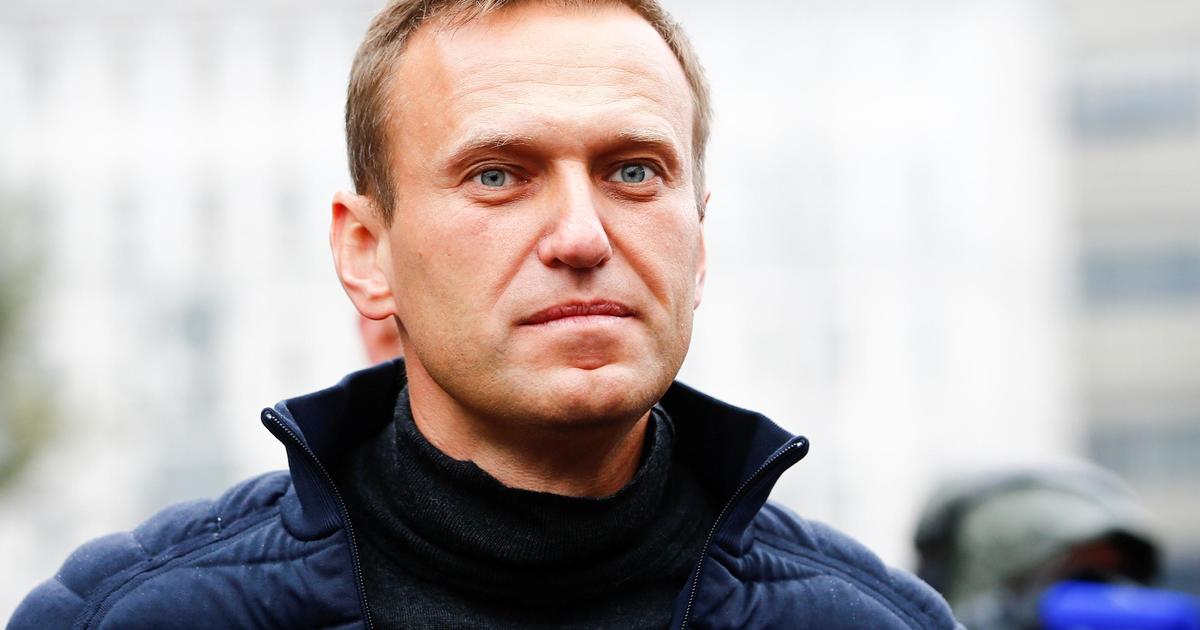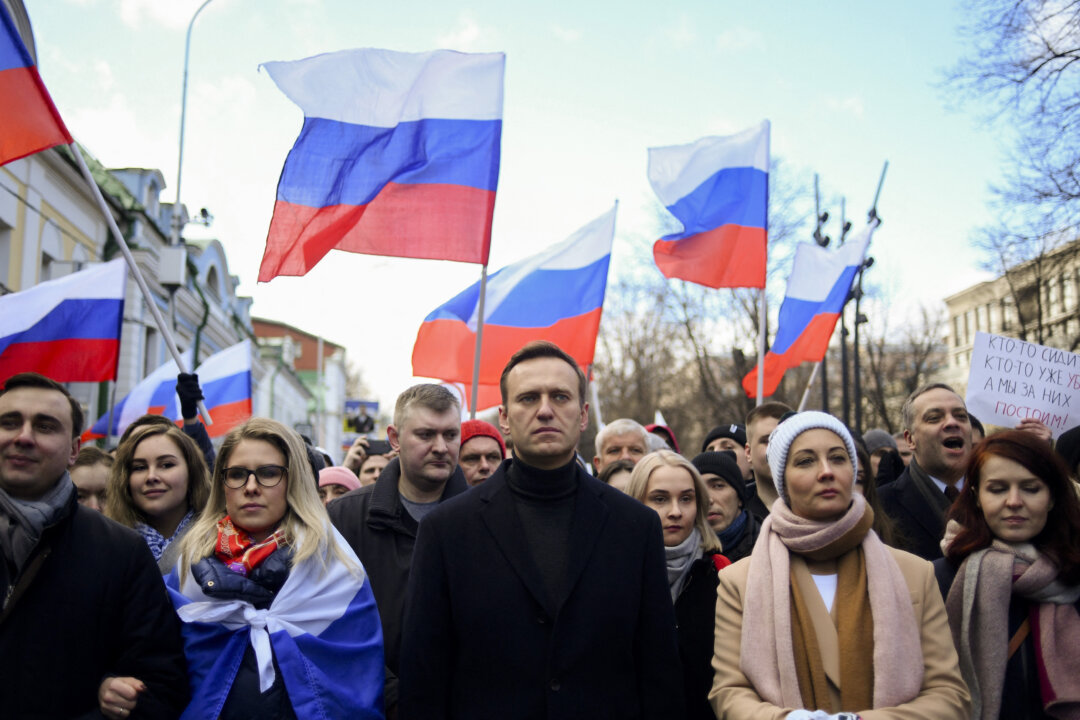



European and British intelligence services, along with governments from the UK, France, Germany, Sweden, and the Netherlands, are reported by both liberal and conservative outlets as jointly alleging that Russian opposition leader Alexei Navalny was poisoned with epibatidine, a rare and highly lethal toxin derived from South American poison dart frogs. Coverage across the spectrum agrees that laboratory analysis of Navalny’s samples detected epibatidine, a substance not naturally present in Russia, and that these findings underpin official European statements that Navalny was fatally poisoned in a Russian prison in 2024 and that the Kremlin is being directly blamed by these governments. Both sides note that Navalny’s widow publicly embraced the poison finding, stating she is certain the Russian state, and ultimately President Vladimir Putin, is responsible for his death, echoing the formal language from the five European countries that explicitly attribute the poisoning to the Kremlin.
Liberal and conservative sources also converge on contextual elements: Navalny’s long-standing role as Russia’s most prominent opposition figure, the broader pattern of suspected Kremlin poisonings of dissidents, and the use of sophisticated chemical agents as tools of political repression. They similarly highlight that epibatidine’s potency, method of action (blocking nicotinic receptors and causing respiratory paralysis), and rarity suggest deliberate, state-level procurement and application rather than an accident or local criminal act, raising questions of compliance with international chemical and weapons conventions that Russia has signed. Both sides frame the joint statement by European governments as part of a continuing diplomatic and geopolitical confrontation with Moscow over human rights abuses and political assassinations, positioning the alleged use of dart frog toxin as a high-profile example of state-directed extrajudicial killing.
Areas of disagreement
Certainty and evidentiary weight. Liberal coverage tends to treat the European intelligence findings and toxicology results as conclusive, frequently describing Navalny’s poisoning by the Russian state as a proven or science-backed fact. Conservative coverage more often echoes the phrasing of official communiqués, stressing that five European countries "allege" or say he was "highly likely" killed with the toxin, preserving some rhetorical distance from definitive judgment. While both report the same lab result—epibatidine in Navalny’s samples—liberal outlets lean into detailed scientific explanation to reinforce certainty, whereas conservative outlets keep the focus on the claim as a political and diplomatic accusation.
Framing of Kremlin responsibility. Liberal outlets typically present Kremlin culpability as the logical and almost unavoidable conclusion, stressing Russia’s means, motive, and opportunity and explicitly tying responsibility to Putin personally. Conservative outlets acknowledge that the European governments blame the Kremlin, but tend to emphasize that this is a joint allegation rather than an independently verified fact, sometimes centering the story on what Western governments "say" rather than on definitive attribution. As a result, liberal coverage reads as a direct indictment of the Russian state apparatus, while conservative coverage more often frames it as a significant but still contested charge within an international dispute.
Legal and international implications. Liberal coverage underscores potential violations of international chemical and weapons conventions, portraying the alleged use of epibatidine as part of a pattern of Russia’s disregard for international norms and as grounds for stronger sanctions or accountability mechanisms. Conservative outlets mention the chemical weapon angle and the rarity of the toxin but devote less attention to legal architecture, focusing instead on the geopolitical weight of five European states making a coordinated accusation. Thus, liberals elevate the story as evidence for systemic rule-breaking requiring formal international response, whereas conservatives treat it more as a high-stakes development in ongoing East–West tensions.
Characterization of Navalny and domestic Russian politics. Liberal sources often portray Navalny in heroic or martyr-like terms, emphasizing his role as the leading democratic opposition figure and casting his death as emblematic of authoritarian repression in Russia. Conservative outlets still identify him as a key opposition leader but generally offer less emotional or valorizing language, centering instead on the fact of his death and the diplomatic fallout. This leads liberal coverage to integrate the poisoning more tightly into a narrative of internal Russian dissent and regime brutality, while conservative coverage situates it primarily within the realm of foreign policy and security news.
In summary, liberal coverage tends to treat the epibatidine findings and Kremlin culpability as effectively proven and to embed the story in a broader narrative of Russian authoritarianism and treaty violations, while conservative coverage tends to emphasize that these are serious but still "alleged" actions by Moscow, foregrounding the diplomatic claims of European governments and the geopolitical context over definitive legal or moral judgments.
Story coverage