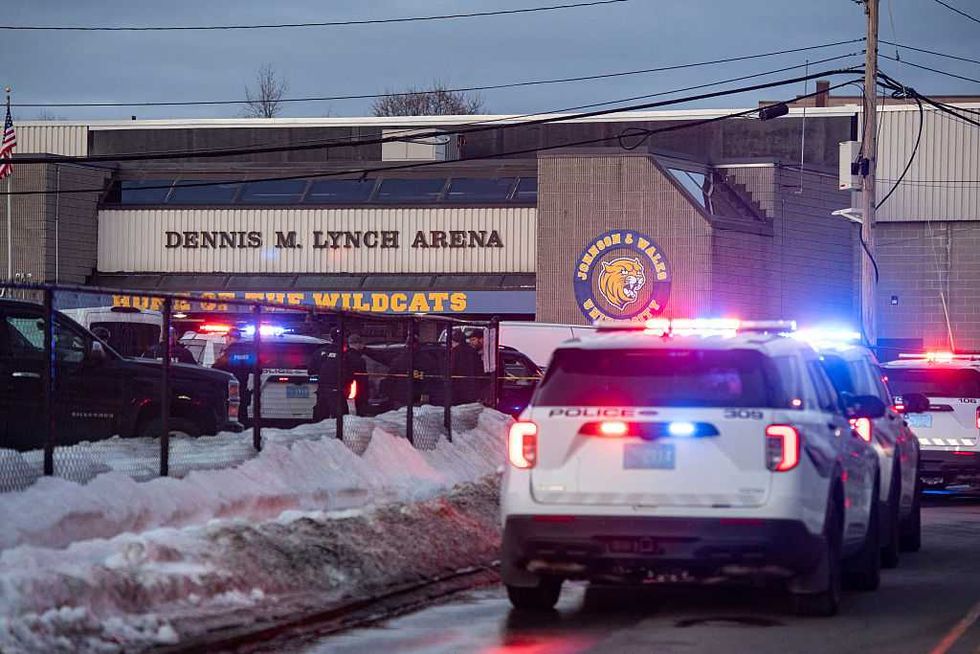

A shooting at the Dennis M. Lynch Arena in Pawtucket, Rhode Island, during a youth/boys’ high school hockey game left multiple people dead and several others injured, with reports across outlets converging on roughly two to three fatalities and three to four additional wounded spectators. Both liberal- and conservative-aligned sources agree that the shooter was 56-year-old Robert Dorgan, that the attack was quickly contained inside the rink, that the suspect died from what appears to have been a self-inflicted gunshot, and that a bystander’s intervention played a key role in stopping further bloodshed. Coverage consistently notes that the victims included members of the shooter’s family, that children and families were present in the stands at the time of the attack, and that police and first responders rapidly secured the scene and transported victims to area hospitals.
Across the spectrum, reports describe the incident as a targeted shooting rather than a random mass attack, with officials indicating that an ongoing family dispute lay at the center of the violence. Both liberal and conservative outlets reference preliminary statements from Pawtucket law enforcement that emphasize the domestic and relational context, as well as emerging information about Dorgan’s troubled history, including family conflict and possible mental health struggles. There is shared attention to institutional responses: the role of local police and school- or league-related authorities, the credit given to a spectator who intervened, and early discussions about rink and youth sports security, emergency response protocols, and how community institutions might better identify and address warning signs in high-conflict families.
Areas of disagreement
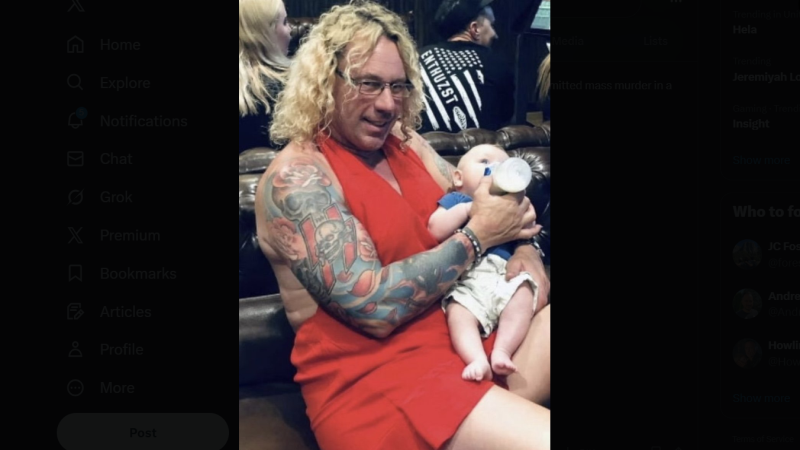
Identity framing and language. Liberal-aligned outlets either omit or downplay the shooter’s gender identity and focus on Dorgan as a middle-aged man and family member, treating the case primarily as a domestic, targeted shooting in a public venue. Conservative sources, by contrast, heavily foreground that Dorgan was transgender or “dressed as a woman,” repeatedly using this as a defining descriptor in headlines and ledes. While liberal coverage largely avoids tying the violence to any broader identity group, conservative coverage often treats the shooter’s trans identity as central to understanding the event and sometimes as part of a wider pattern.
Ideology and online activity. Liberal coverage, where mentioned, confines motive to a family dispute and possible personal instability, steering clear of the shooter’s online political arguments or culture-war rhetoric. Conservative outlets highlight posts allegedly made by Dorgan on X, including clashes with right-wing commentators and statements blaming conservatives for transgender people “going berserk,” using these to frame the attack within ideological and cultural conflict. This leads liberal sources to characterize the case as private tragedy spilling into a public space, while conservatives sometimes frame it as ideologically charged violence connected to social media radicalization and identity politics.
Causation and broader lessons. Liberal sources tend to situate the shooting within familiar themes of domestic violence, mental health, and gun access, stressing how family disputes and untreated psychological issues can escalate when firearms are present in already tense households. Conservative coverage more often emphasizes individual responsibility, perceived instability associated with the shooter’s identity and personal history, and the role of cultural permissiveness toward what they describe as extreme behavior. Where liberals point to systemic gaps in support and prevention around family conflict and guns, conservatives tend to stress moral agency and cultural drift as driving factors.
Portrayal of the intervention. Liberal-aligned outlets mention that a bystander or “person at the game” intervened to help end the incident, generally framing this as part of the broader emergency response that limited casualties. Conservative sources amplify this element, repeatedly describing a “Good Samaritan” whose actions, alongside police response, are cast as decisive evidence that armed or assertive civilians can stop active shooters. As a result, liberal coverage folds the intervention into a narrative about community resilience and rapid response, whereas conservative coverage leverages it more explicitly to support arguments for self-defense and armed citizen involvement in public safety.
In summary, liberal coverage tends to frame the shooting as a domestically driven, targeted act of family violence intensified by mental health stresses and access to guns, while conservative coverage tends to foreground the shooter’s transgender identity, online ideological conflicts, and the role of an armed or assertive bystander as part of a broader culture-war narrative.
Story coverage