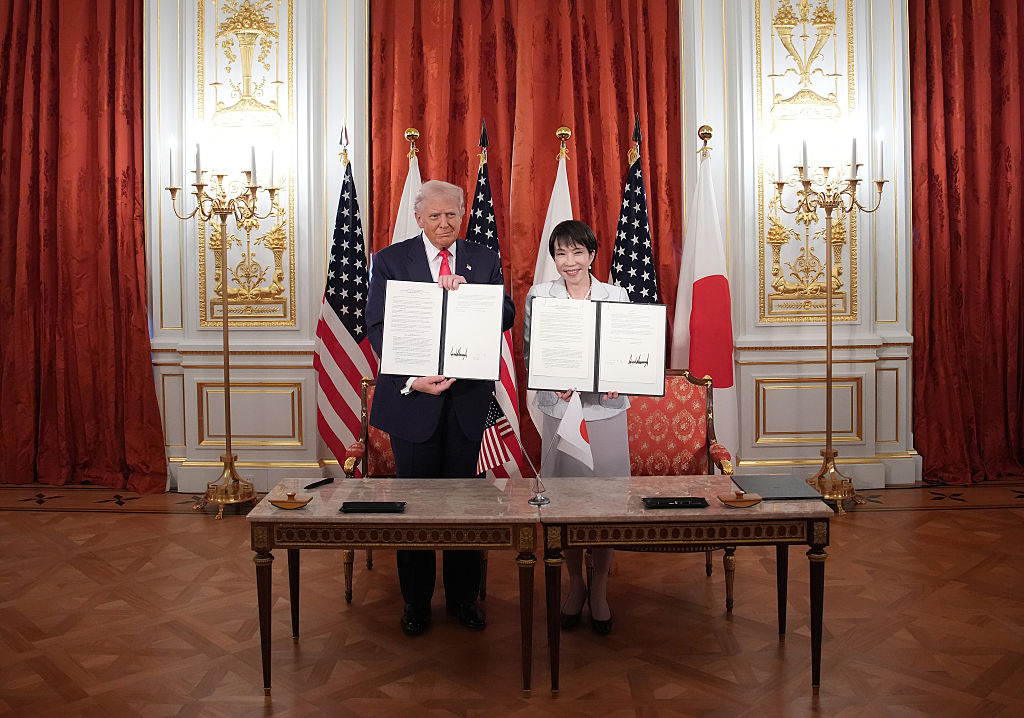

Japan has agreed to invest about $36 billion in three large U.S. energy‑related projects under a new trade framework with Washington, with both liberal and conservative outlets emphasizing the headline numbers and basic structure. Coverage converges on the specifics: a roughly $33 billion natural gas facility in Ohio, a $2.1 billion crude oil export terminal off the Texas coast, and a $600 million synthetic diamond grit or industrial diamond manufacturing facility in Georgia. Both sides report that these are among the first concrete investments flowing from a broader U.S.–Japan trade deal, that Japan is supplying capital while the United States hosts the projects and gains productive capacity, and that the package is framed by leaders in both countries as mutually beneficial. They also agree that the deal links energy infrastructure, critical minerals, and advanced materials to national and economic security priorities for both allies.
Liberal and conservative outlets alike situate the announcement within a larger U.S.–Japan economic arrangement worth around $550 billion or “over half a trillion dollars,” designed to deepen trade ties and prevent new tariffs. They agree that the investments are strategically significant as part of a long‑term shift toward securing supply chains for oil, gas, and critical minerals, and that they represent a key early test of how the trade deal will work in practice. Both sides highlight the role of state‑backed Japanese financing institutions and trade policy tools, and they describe the projects as emblematic of ongoing efforts by Washington and Tokyo to coordinate on energy security, high‑tech manufacturing inputs, and allied industrial capacity. There is also consensus that the investments are intended to generate substantial U.S. employment, bolster industrial regions like Ohio and Georgia, and signal to other partners that the United States remains open to large‑scale, strategic foreign investment.
Areas of disagreement
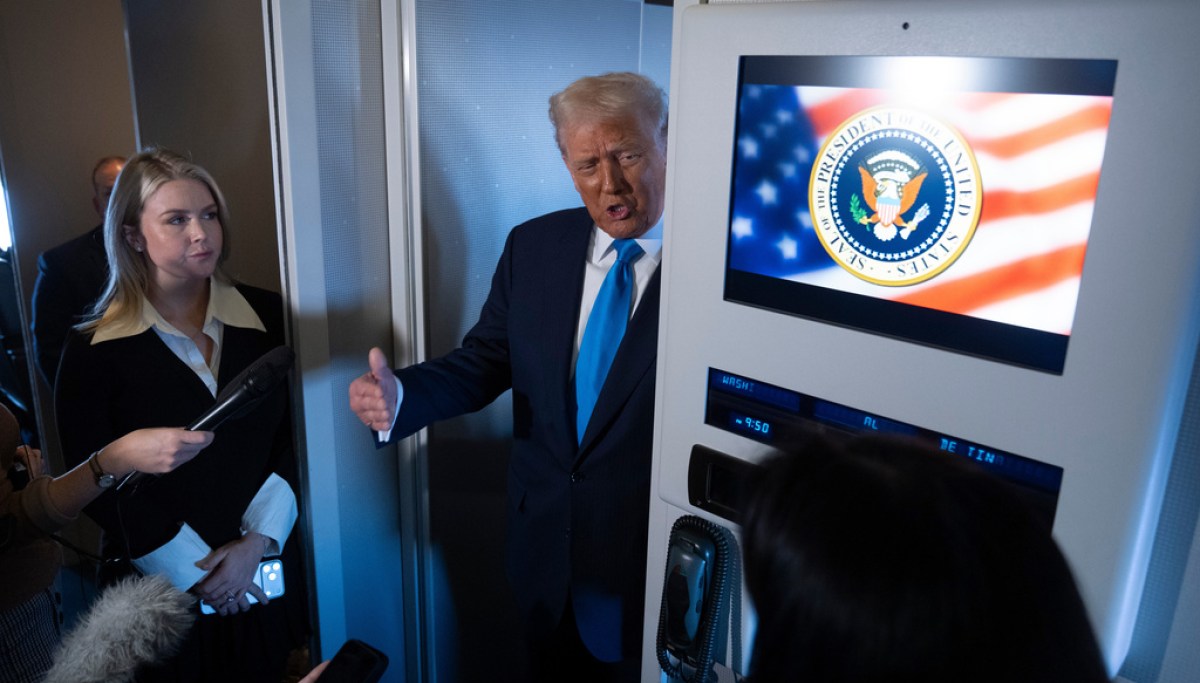
Framing of Trump’s role. Liberal‑aligned coverage acknowledges that the investments were announced under a trade deal associated with Donald Trump but tends to treat his role as one factor among many, emphasizing bureaucratic trade negotiations, institutional agreements, and Japan’s strategic calculations. Conservative coverage, by contrast, foregrounds Trump personally, crediting his negotiating style and tariff threats with unlocking Japan’s capital and portraying the deal as proof that his approach delivers tangible wins for American workers.
Economic impact and beneficiaries. Liberal outlets generally frame the projects as a mixed but significant economic development story, highlighting promised job creation while also noting that Japanese investors will gain secure returns and influence over U.S. energy assets. Conservative outlets frame the same figures in more triumphalist terms, stressing hundreds of thousands of potential jobs, revitalization of the U.S. industrial base, and portraying the United States as the clear winner that successfully leveraged market access to extract favorable investment commitments from Japan.
Energy and climate implications. Liberal coverage is more likely to underline that these are oil, gas, and critical mineral projects, raising or at least implying questions about long‑term climate goals, environmental risks of a crude export terminal off Texas, and whether locking in new fossil‑related infrastructure squares with broader energy transitions. Conservative coverage instead presents the energy focus as an unambiguous positive, emphasizing energy dominance, reliability of supply, and reduced dependence on geopolitical rivals, while largely sidelining or dismissing environmental or climate‑related concerns.
Strategic and security narrative. Liberal‑leaning sources place the investments within a broader multilateral context of allied cooperation, stressing institutional partnerships, shared democratic values, and diversification away from overreliance on China as a supplier of critical materials. Conservative sources stress national strength and sovereignty, casting the deal as bolstering American national and economic security, showcasing Japan’s alignment with a tougher U.S. posture, and validating an America‑first negotiating stance that compels allies to contribute more to U.S. security and prosperity.
In summary, liberal coverage tends to see the Japan–U.S. energy investments as a significant but complex part of institutional trade and security cooperation, with mixed economic, environmental, and geopolitical trade‑offs, while conservative coverage tends to present them as a clear-cut victory for Trump-era dealmaking, American workers, and U.S. energy and national security.
Story coverage