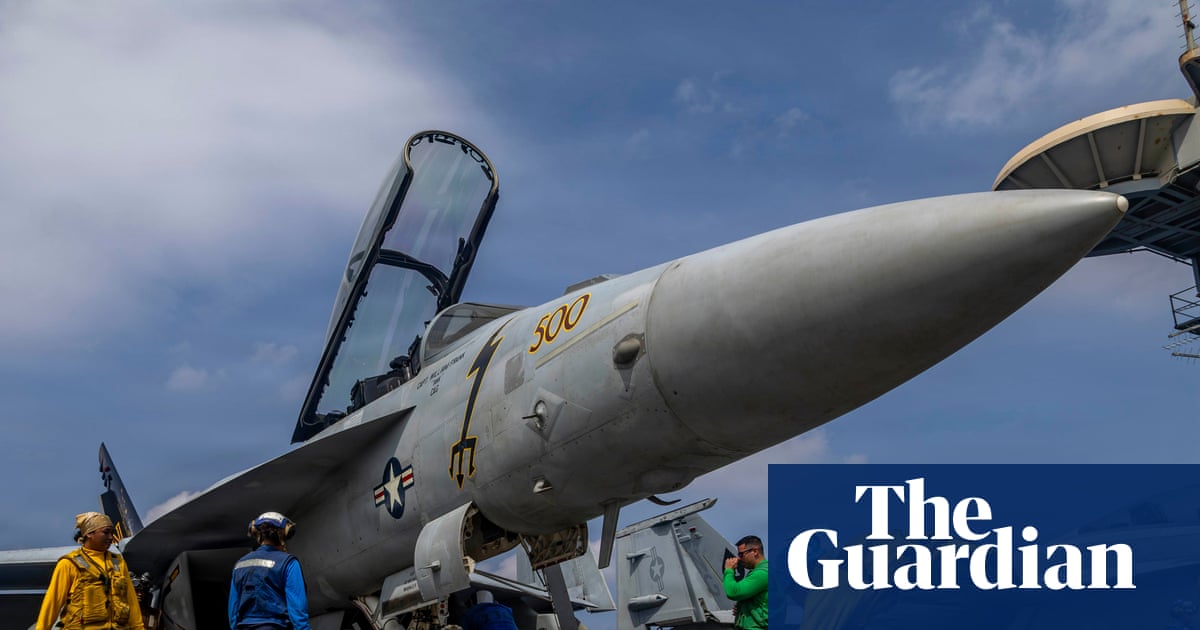



President Donald Trump has publicly stated that he is considering a limited military strike on Iran aimed at pressuring Tehran into accepting a new nuclear deal, with a decision window repeatedly described as around 10 to 15 days. Both liberal and conservative sources agree that this discussion is occurring against the backdrop of a significant U.S. military buildup in the Middle East, including at least one and likely two carrier strike groups and expanded air and naval assets. Coverage on both sides notes that U.S. and Iranian representatives have been engaged in talks, including meetings in Geneva, and that Washington is demanding Iran curb or abandon uranium enrichment. Outlets across the spectrum also acknowledge that oil markets and global shipping are on alert because any conflict could affect the Strait of Hormuz, an essential chokepoint for world energy supplies.
Liberal and conservative reports concur that Trump is trying to use the credible threat of force, or an actual limited strike, as leverage to bring Iran back to the table for what the administration describes as a more “meaningful” or comprehensive nuclear agreement. They agree that this moment follows years of tensions surrounding Iran’s nuclear program and U.S. withdrawal from the previous nuclear deal framework, and that Russia is calling for restraint and a continued focus on diplomacy. Both sides describe a regional environment of heightened tension and an “unprecedented” escalation atmosphere driven by U.S. deployments and Iranian resistance. They also highlight that any military move—limited or otherwise—carries risks of regional spillover, economic disruption, and political consequences at home, where polling shows substantial public skepticism toward new Middle Eastern military engagements.
Areas of disagreement
Motives and strategic logic. Liberal-aligned outlets tend to frame Trump’s consideration of a limited strike as a dangerous escalation or brinkmanship tactic that risks war and global economic instability, questioning whether military pressure can genuinely yield a sustainable diplomatic outcome. Conservative outlets more often present the limited strike concept as a calculated tool to force a better deal and reassert U.S. deterrence, sometimes emphasizing that a single, targeted blow could avoid a longer, costlier conflict. While liberal coverage highlights fears of miscalculation and blowback, conservative coverage is more inclined to treat the threat of force as a necessary corrective after what they see as years of Iranian intransigence and weak prior agreements.
Risk assessment and consequences. Liberal sources emphasize worst‑case scenarios, warning that even a “limited” strike could spiral into a broader regional war, sharply disrupt oil flows through the Strait of Hormuz, and trigger a global economic shock. Conservative sources acknowledge risks but are more likely to frame them as manageable, suggesting that a tightly constrained operation could minimize disruption while signaling resolve. Liberal coverage often stresses the fragility of markets and the potential for long‑term instability, whereas conservative coverage tends to underscore that doing nothing may embolden Iran and ultimately produce even higher security and economic costs.
Domestic politics and public opinion. Liberal reporting highlights polling that shows broad opposition, particularly among Democrats and independents, to another U.S. military action in the Middle East, portraying Trump as out of step with a war‑weary public and his own past criticism of “endless wars.” Conservative coverage is more mixed: some pieces warn that public headwinds are real but focus on Trump’s leadership prerogatives and his base’s support for toughness, while others in more populist segments wrap the Iran discussion into a broader narrative about the “deep state,” courts, or national sovereignty. Liberals tend to link the strike talk to concerns about Trump’s judgment and electoral calculations, whereas conservatives more often frame it as a test of resolve in the face of external threats.
Media framing and peripheral issues. Liberal outlets generally keep a tight focus on the Iran file, nuclear diplomacy, and the economic repercussions of any strike, casting Trump’s approach as impulsive or inadequately reasoned. Conservative outlets, especially talk‑show and alternative platforms, sometimes bundle the Iran story with other grievances—such as Supreme Court decisions, trade disputes, or culture‑war topics—creating a narrative in which the potential strike is one piece of a larger struggle over national strength and sovereignty. While liberal coverage tends to invoke expert analysis and institutional warnings about escalation, conservative coverage more frequently features populist voices who interpret the Iran debate through a lens of resisting globalism and defending American power.
In summary, liberal coverage tends to portray Trump’s consideration of a limited strike as reckless brinkmanship with high risks for war, markets, and democratic accountability, while conservative coverage tends to depict it as a hard‑nosed, limited option to restore deterrence and leverage a stronger deal despite domestic and international criticism.
Story coverage