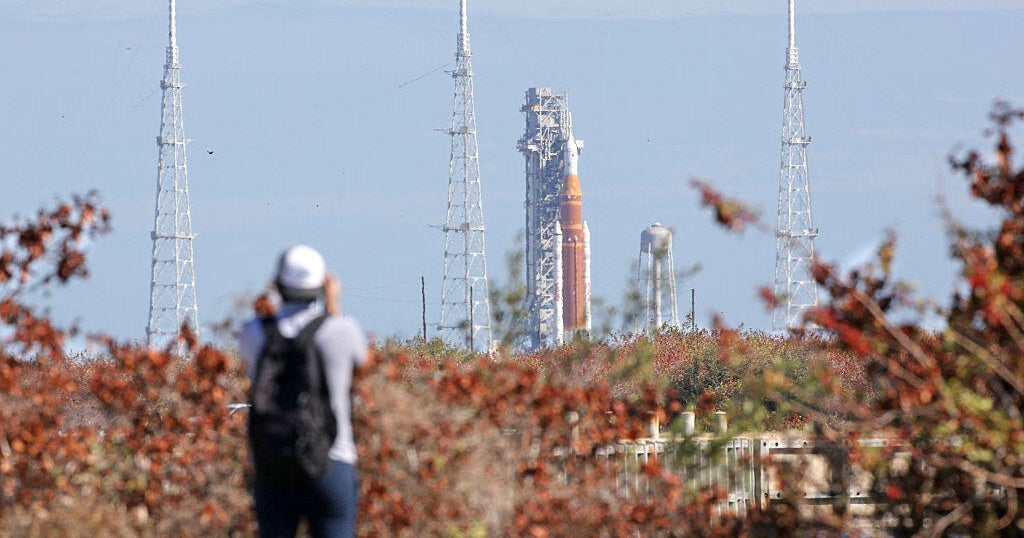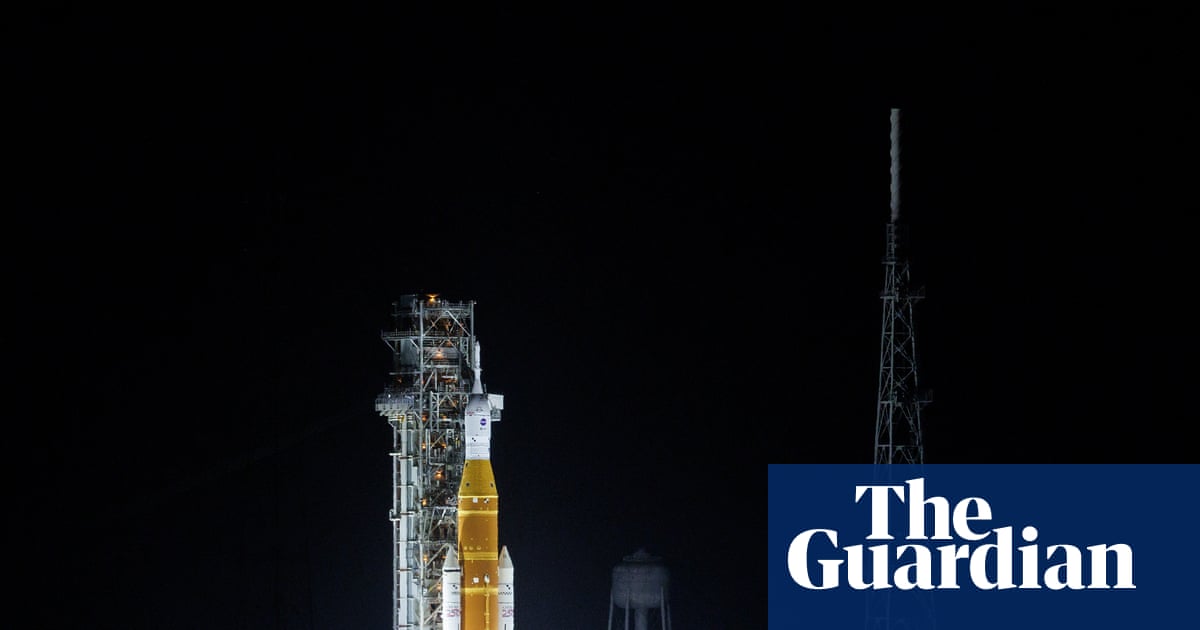


NASA and all outlets agree that the Artemis II mission, intended to send four astronauts on a roughly 10‑day flight around the moon and back, has been delayed again after engineers discovered a new problem with the Space Launch System moon rocket’s helium system in the upper stage. The issue, involving interrupted or faulty helium flow and repressurization in tanks needed for the interim cryogenic propulsion stage, forced NASA to scrub the March launch window and plan to roll the rocket and Orion spacecraft back from the launch pad to the Vehicle Assembly Building at Kennedy Space Center for troubleshooting and repairs. As a result, the earliest possible launch has slipped from March into early April, with astronauts now expected to wait at least several more weeks before any attempt to fly around the far side of the moon, in what would be the first crewed mission in the Artemis program following the uncrewed 2022 test flight.
Across both liberal and conservative coverage, Artemis II is presented as the next critical step in NASA’s broader Artemis program, designed to return humans to the moon and eventually enable a surface landing on a later mission, currently targeted around 2028. Outlets on both sides describe the helium-system problem as distinct from prior hydrogen leak issues and emphasize that NASA’s safety culture prioritizes resolving technical glitches on the ground before putting astronauts at risk. There is shared acknowledgment that delays are not unusual in complex spaceflight programs, that the giant moon rocket remains a work in progress, and that mission timelines for Artemis II and the subsequent Artemis III landing are sensitive to technical hurdles, launch window constraints, and the readiness of supporting systems.
Areas of disagreement
Significance of the delay. Liberal-leaning outlets tend to frame the schedule slip as a manageable, if frustrating, technical setback in a long, inherently complex test campaign, often noting the relatively short shift from March to April and stressing continuity of the broader Artemis roadmap. Conservative-leaning outlets are more likely to cast the delay as a major or symbolic setback, highlighting that this is "another" postponement and emphasizing uncertainty over when astronauts will finally fly. While both sides accept the basic facts of the delay, conservative coverage often leans into the language of jeopardized timelines and rising doubts, whereas liberal coverage more frequently contextualizes the delay within the normal rhythms of big space programs.
Tone toward NASA’s competence. Liberal sources generally pair the news with explanations of the engineering challenges, portraying NASA as cautious and methodical and using the episode to underline the importance of rigorous testing to protect the crew. Conservative sources more often imply questions about NASA’s execution, describing repeated technical problems as evidence that the program is struggling and that the rocket is not yet reliable enough. Where liberal reporting emphasizes the agency’s safety-first decision to roll back the rocket, conservative reporting tends to underscore the optics of an expensive system that keeps returning to the hangar instead of the launchpad.
Program narrative and stakes. Liberal coverage tends to situate the delay within a forward-looking narrative about eventual lunar return and scientific and technological ambition, treating Artemis II as a stepping stone toward future landings and longer-term exploration. Conservative coverage more frequently draws attention to the stakes in terms of national prestige and the perception of slipping schedules, sometimes hinting at concerns over whether the United States can meet its own deadlines in a competitive global space race. As a result, liberal stories are more likely to stress resilience and incremental progress, while conservative stories stress the cumulative impact of setbacks on confidence in the program.
Political and institutional framing. Liberal-leaning outlets usually keep the focus narrowly on NASA and its contractors, avoiding broader partisan blame and instead highlighting institutional processes, engineering reviews, and safety protocols. Conservative-leaning outlets are more inclined—sometimes implicitly—to link recurring delays to government-run or heavily government-directed programs, suggesting that bureaucracy, cost overruns, and slow decision-making may be contributing factors. Thus, while liberals frame Artemis delays as technical hurdles for a complex public mission, conservatives more often use them as examples in a wider critique of government efficiency and large federal projects.
In summary, liberal coverage tends to present the Artemis II delay as a normal, safety-driven adjustment within a challenging but ultimately promising moon program, while conservative coverage tends to emphasize the delay as part of a troubling pattern that raises questions about NASA’s reliability and the effectiveness of large, government-led space efforts.
Story coverage