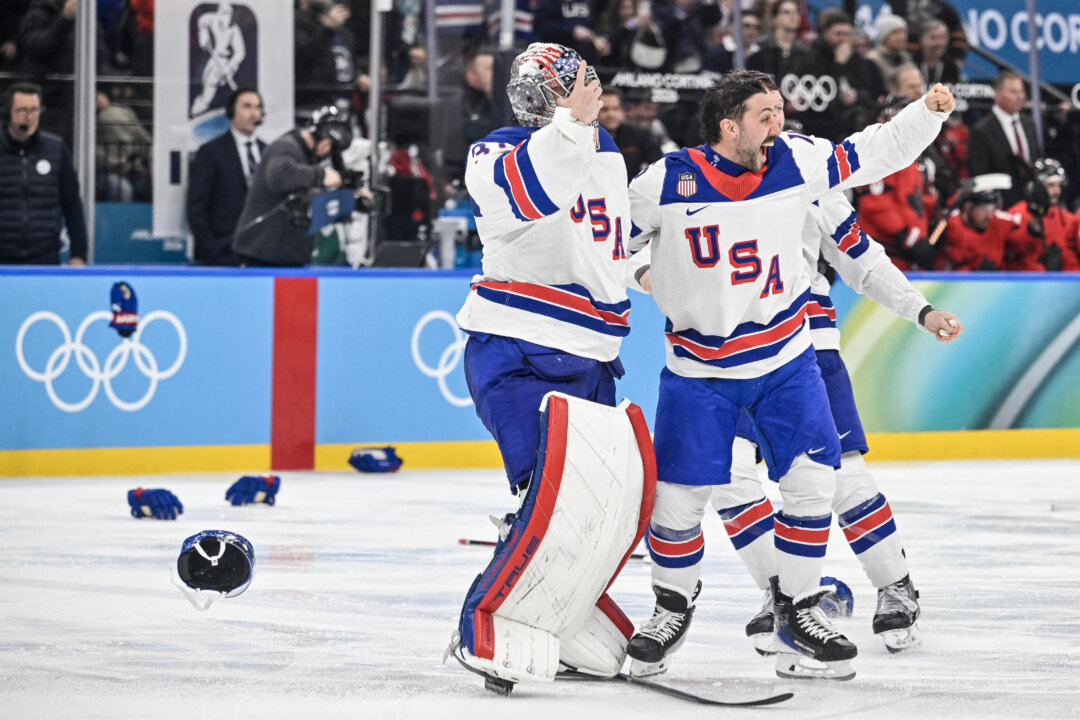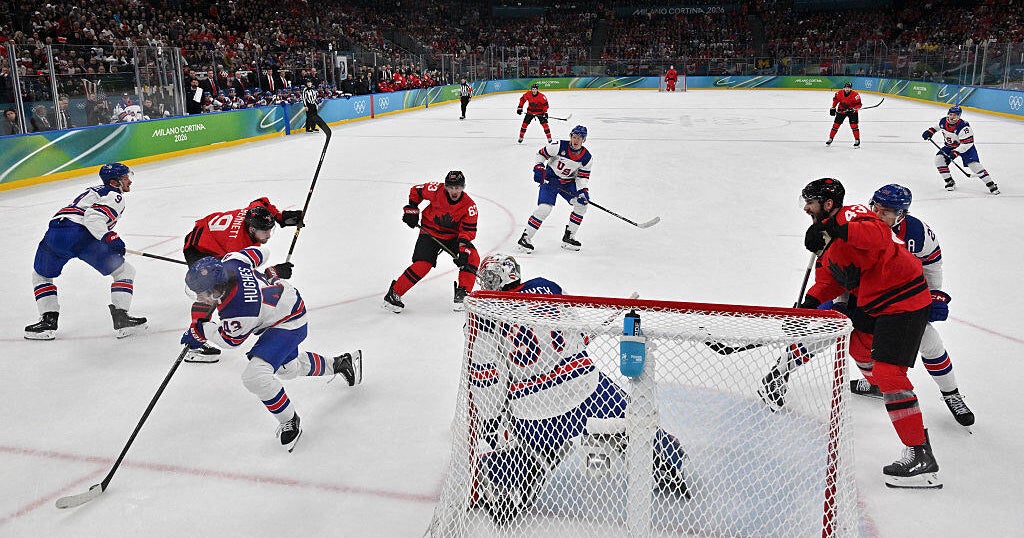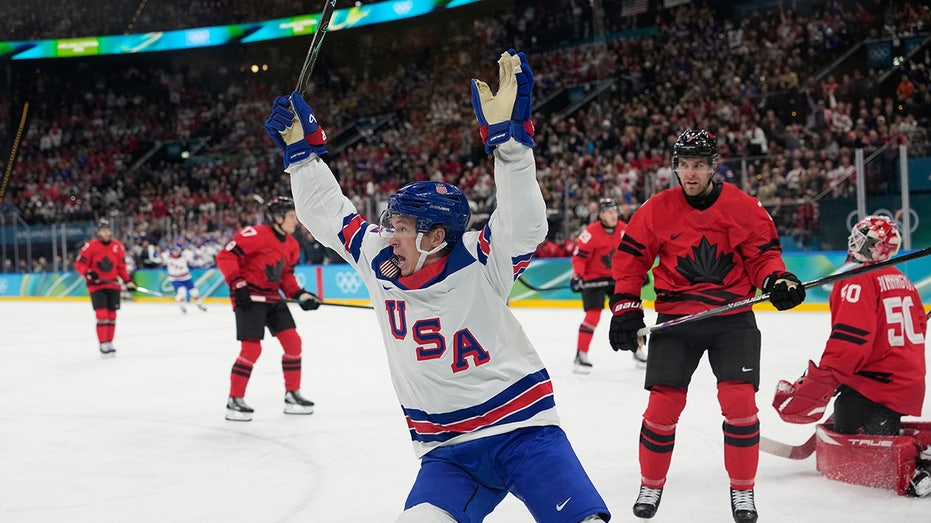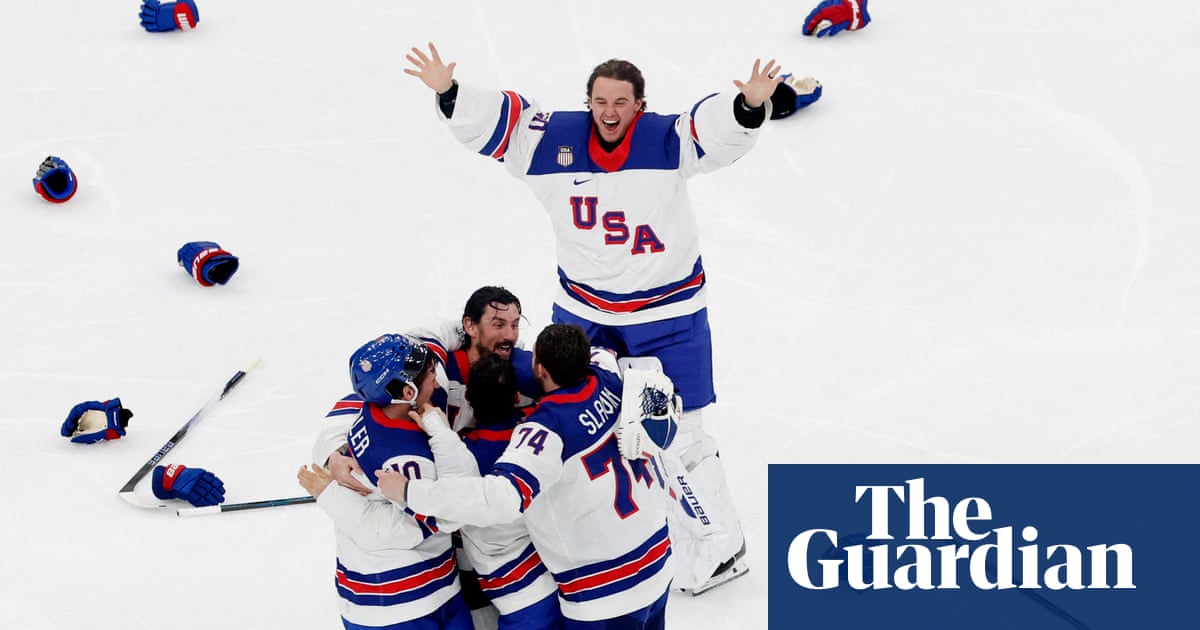





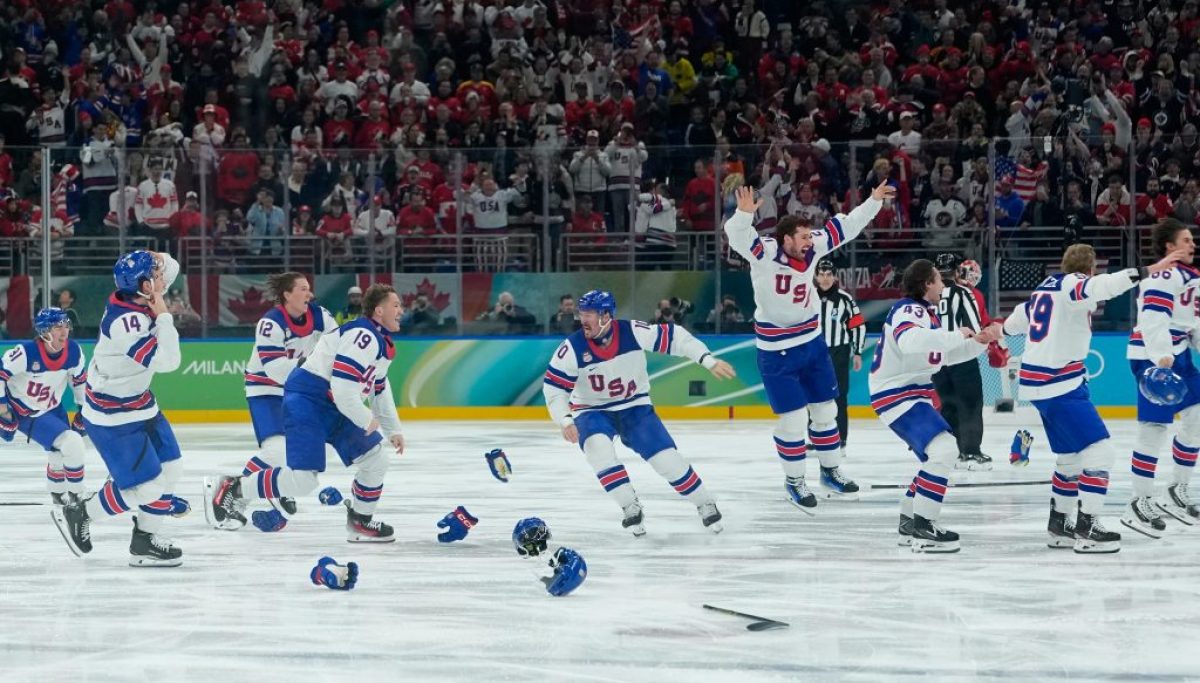
The U.S. men's hockey team defeated Canada 2-1 in overtime to win Olympic gold in Milan-Cortina, Italy, securing the program's first Olympic title since 1980 and third overall. Both liberal- and conservative-leaning outlets agree that Matt Boldy opened the scoring for the United States in the first period, Cale Makar tied the game for Canada in the second, and star forward Jack Hughes delivered the sudden-death winner in overtime after an intense, tightly contested match widely described as a nail-biter and an instant classic. Coverage on both sides highlights goaltender Connor Hellebuyck's standout performance, making around 40–41 saves on 42 shots, and notes that the American team went undefeated throughout the tournament while Canada entered the final shorthanded, including the absence of Sidney Crosby. Both camps emphasize the emotional scene on the ice and in locker rooms and watch parties, underscoring the significance of the victory for players, fans, and the wider hockey community in both countries.
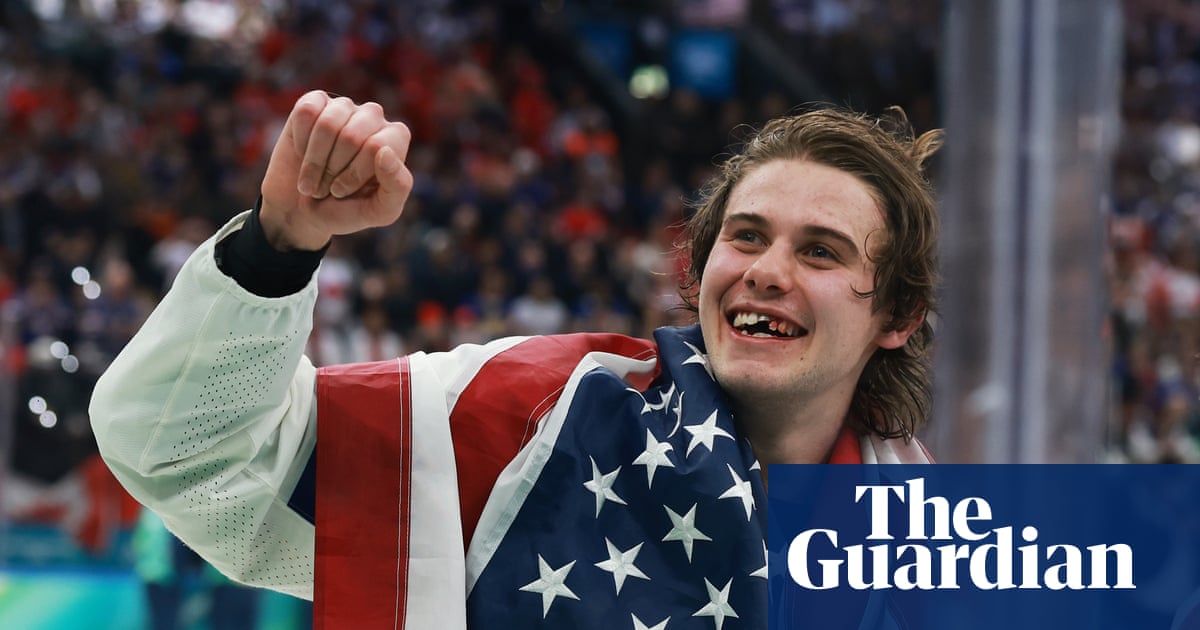
Liberal and conservative outlets converge in framing the win as a historic milestone that invites comparisons to the "Miracle on Ice" in 1980 and restores the United States to the top echelon of men's international hockey. They agree that this tournament, featuring NHL players, was a showcase for elite North American talent and that Hughes emerged as the defining figure, not only for his game-winner but also for playing through the loss of teeth during the match. Both sides situate the game within the long-running U.S.–Canada hockey rivalry, emphasizing the intensity and mutual respect between the teams and portraying the result as the latest chapter in a storied cross-border competition. Shared context also includes recognition of strong special-teams play such as the perfect U.S. penalty kill, the atmosphere in Milan, and the sense that this gold medal validates years of investment in American player development and coaching at the international level.
Areas of disagreement
Tone and symbolism. Liberal-aligned coverage leans into exuberant patriotic symbolism, spotlighting viral moments like the White House's bald-eagle meme at Canada's expense and Hughes shouting his love for the country as expressions of national pride. Conservative outlets are more restrained on overt symbolism, focusing on the spectacle of the game itself and locker-room reactions among NHL teammates rather than on meme culture or political figures. Liberal pieces frame these symbolic gestures as harmless, unifying fun that channels national euphoria, while conservative pieces tend to let the on-ice drama and professional commentary carry the emotional weight without as much emphasis on political or social media theatrics.
Political framing and the White House angle. Liberal sources treat the White House's online response as a central narrative beat, integrating it into the storyline of national celebration and suggesting a rare moment of bipartisan joy around a sports achievement. Conservative coverage generally sidelines the administration, mentioning it little or not at all, thereby separating the athletic feat from current political actors and focusing on players and coaches instead. Where liberal outlets imply that the victory briefly bridges partisan divides and reflects well on U.S. leadership engaging in lighthearted rivalry, conservative outlets implicitly resist politicizing the event, preferring to keep the spotlight on the team and the historical context of the win.
Character focus and narrative heroes. Liberal-aligned reports elevate Jack Hughes as the primary folk hero, emphasizing his missing teeth, gritty play, and emotional declarations of love for the country as emblematic of blue-collar toughness and patriotic sacrifice. Conservative pieces also praise Hughes but distribute attention more evenly among key contributors, repeatedly highlighting Hellebuyck's goaltending, Boldy's highlight-reel opener, and the overall depth of the roster. As a result, liberal coverage tends to frame the game through an almost cinematic narrative of one star's courage and passion, while conservative coverage stresses a more balanced, system-and-team-oriented story of collective excellence.
Rivalry framing and sportsmanship. Liberal coverage occasionally leans into the "USA crushes Canada" rhetoric and playful taunting, underscoring the emotional thrill of outdueling a traditional rival and amplifying the sense of long-awaited American vindication. Conservative outlets, while acknowledging the rivalry, place more emphasis on mutual respect and the game as an "instant classic," even spotlighting shared viewing among Canadian and American NHL teammates to underline camaraderie. Liberal sources thus emphasize the cathartic edge of beating Canada on a big stage, whereas conservative sources frame it more as a showcase of high-level North American hockey that transcends national grudges.
In summary, liberal coverage tends to spotlight patriotic emotion, political and meme-driven symbolism, and the near-mythic heroism of Jack Hughes, while conservative coverage tends to foreground the game’s technical quality, the collective performance of the roster, and a more apolitical celebration of a classic U.S.–Canada hockey clash.