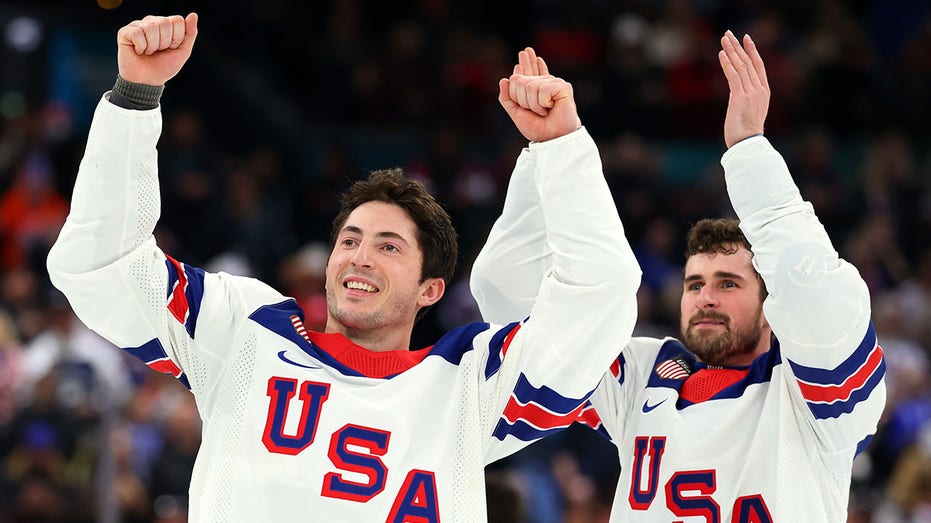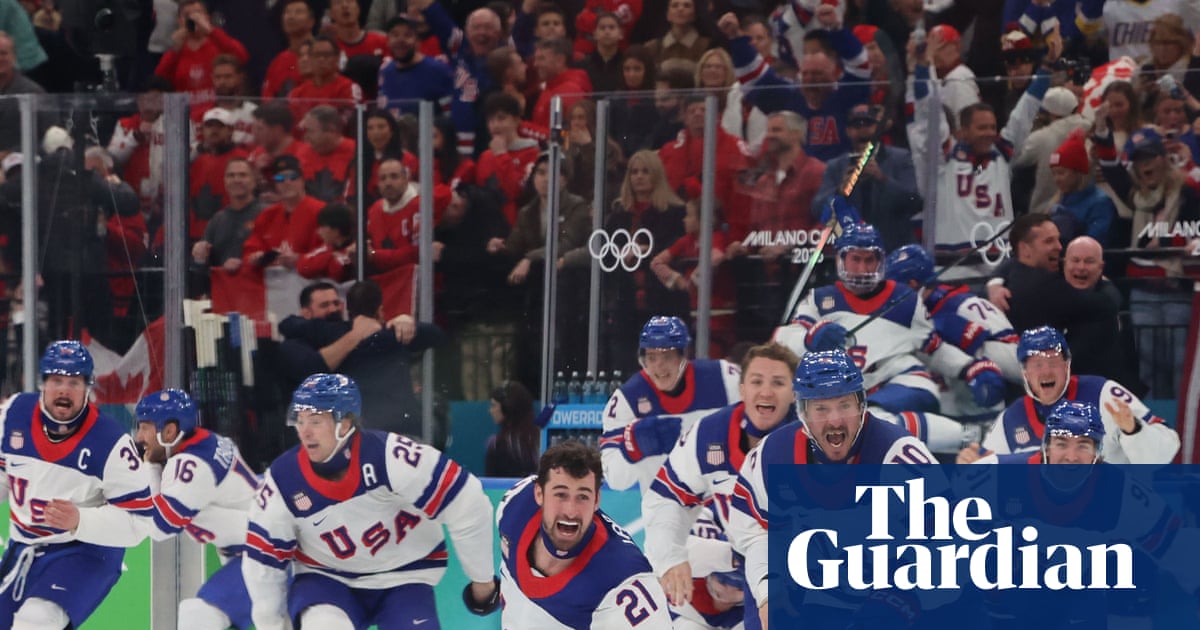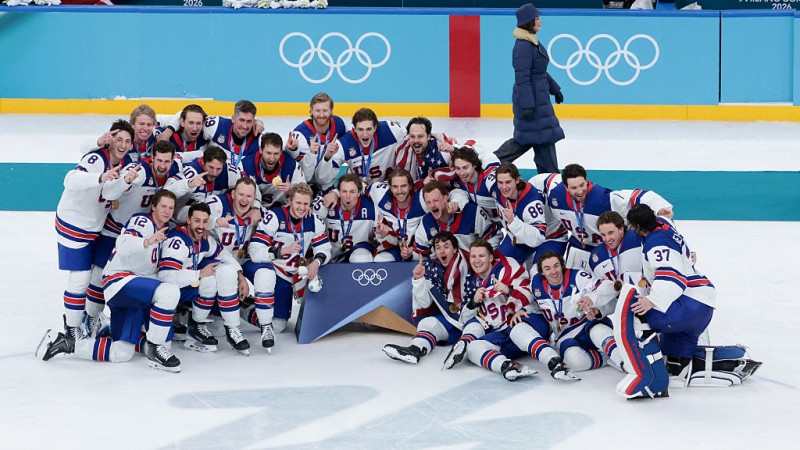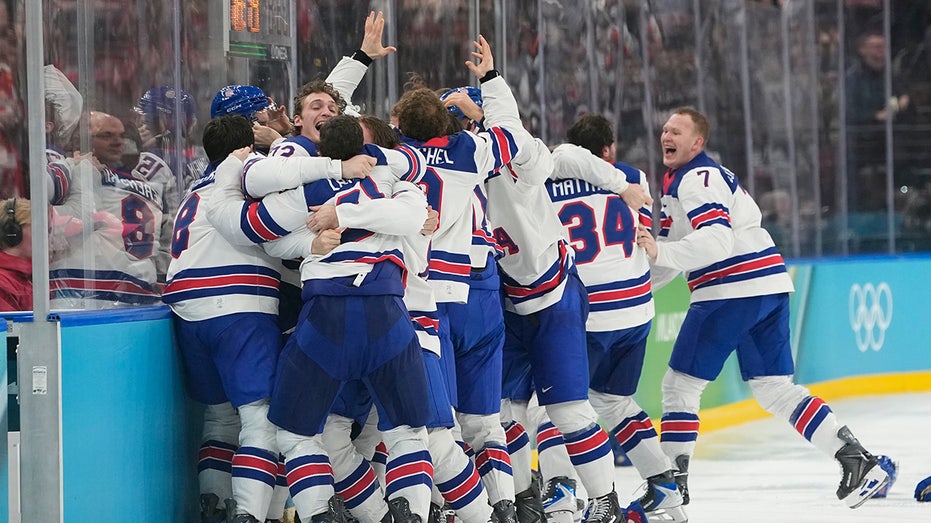



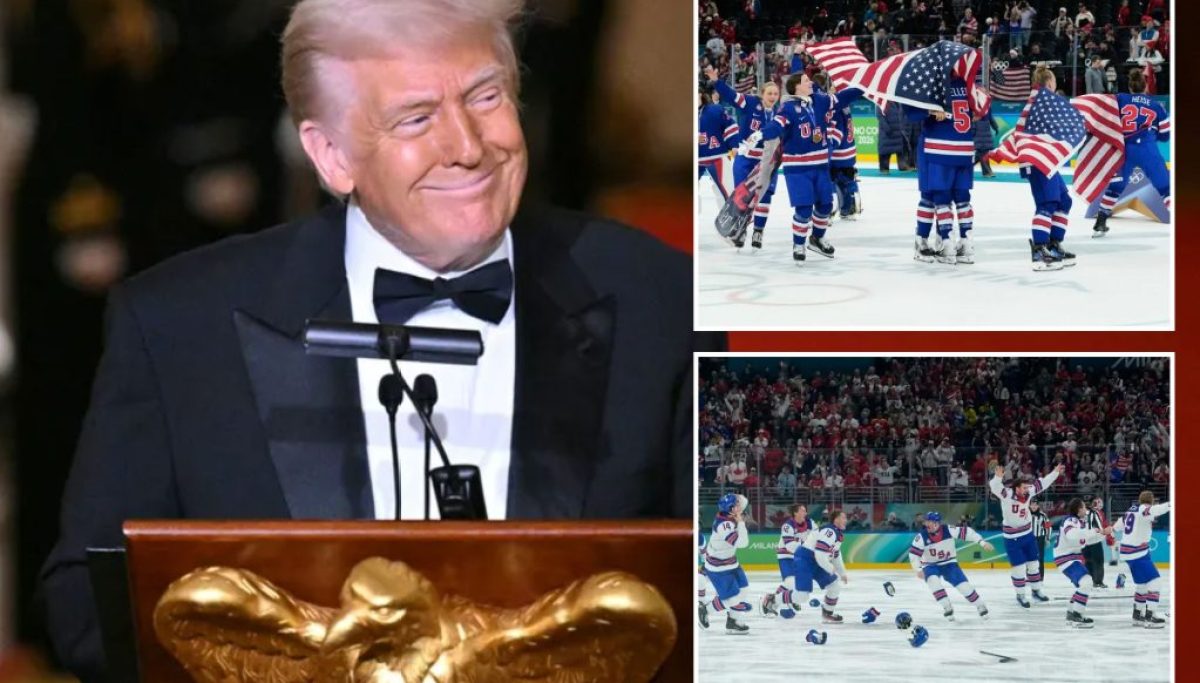
After the U.S. men's Olympic hockey team won gold against Canada with a 2-1 overtime victory, President Donald Trump called them in the locker room to congratulate them and invite them to attend his upcoming State of the Union address in Washington, D.C., as well as a White House celebration. Both liberal- and conservative-aligned outlets agree that Trump praised the team, highlighted goalie Connor Hellebuyck’s standout performance, and arranged government aircraft (described as a U.S. Air Force or military plane, sometimes specified as a 757 or vice-presidential plane) to bring the players to Joint Base Andrews and then to D.C., where they were greeted by fans and U.S. troops before traveling on to the Capitol. Coverage on both sides also notes that House Speaker Mike Johnson coordinated logistics for the team’s presence at the speech, that the players received a bipartisan standing ovation in the House chamber, and that Trump announced his intention to award Hellebuyck the Presidential Medal of Freedom. Both sides acknowledge that the U.S. women’s hockey team also won gold and that Trump extended a similar invitation, which the women declined, publicly citing pre-existing academic and professional commitments.
Across the spectrum, outlets describe players such as Jack and Quinn Hughes, Dylan Larkin, and Zach Werenski as expressing pride in representing the United States and emphasizing themes of patriotism, unity, and gratitude toward the military and first responders. Liberal and conservative sources alike frame the locker-room call and subsequent invite within the broader tradition of presidents honoring championship teams, and they agree that Trump and his allies portrayed the event as a way to celebrate national achievement and bring people together beyond politics. The shared context also includes acknowledgment that the men’s and women’s teams were both offered the chance to attend, that both are viewed domestically as symbols of American excellence on the international stage, and that players themselves often tried to downplay partisan angles by stressing they were focused on their sport, their country, and the once-in-a-lifetime nature of an Olympic victory and a State of the Union appearance.
Areas of disagreement
Motives and symbolism. Liberal-aligned coverage tends to treat Trump’s invitation and the men’s acceptance as laden with political symbolism, highlighting critics who argue the team risks being used as props in a polarizing presidency, while also quoting family members and some players who insist it is “about the country” rather than Trump personally. Conservative outlets frame the invitation as a straightforward patriotic honor, presenting the players’ participation as a celebration of American pride and a unifying moment in the Capitol, with little suggestion of ulterior political staging. Where liberal sources foreground the tension between sports and politics, conservative coverage mostly normalizes the event as part of a long, bipartisan tradition of White House and State of the Union recognition for champions.
Treatment of the women’s team. Liberal coverage spotlights the women’s team’s decision to decline the invitation, giving space to their explanation about school and work commitments while also elevating outspoken voices like Keith Olbermann, who lauds the women as patriots for staying away and castigates the men for attending. Conservative outlets generally report the women’s refusal briefly and neutrally, attributing it to scheduling conflicts without implying a political protest, and they devote far more attention to the men’s visit and ovation in Congress. The result is a liberal narrative in which the women’s choice is implicitly or explicitly interpreted as a principled stance against Trump, versus a conservative narrative that downplays ideological motives and treats the women’s absence as logistical rather than symbolic.
Characterization of the men’s team and critics. Liberal-aligned sources give significant oxygen to harsh criticism of the men’s team from progressive commentators, including language portraying them as misogynistic or self-absorbed for accepting Trump’s invitation, while also featuring players like Jack Hughes who push back by emphasizing pride and nonpartisanship. Conservative outlets either ignore these progressive attacks or portray them as evidence of unhinged, intolerant partisanship on the left, contrasting it with what they describe as the team’s genuine patriotism and respect for the presidency regardless of policy disagreements. Thus, liberal coverage tends to foreground intra-American conflict and gendered critique around the invite, whereas conservative coverage positions the players as unfairly maligned heroes and frames their critics, not the team, as the problem.
Framing of Trump’s role and benefits. Liberal coverage is more likely to imply that Trump is leveraging the hockey triumph to bolster his image and culture-war standing, stressing the optics of military planes, White House stagecraft, and a high-profile State of the Union cameo as part of his political brand. Conservative sources cast Trump as a generous, even humorous host—recounting quips about needing to invite the women’s team to avoid impeachment and praising the athletes’ patriotism—while depicting his actions as normal presidential recognition of national heroes, not self-serving spectacle. Where liberal pieces hint that the episode illustrates the politicization of sports in the Trump era, conservative outlets present it as a rare moment of bipartisan applause that reflects positively on both the president and the players.
In summary, liberal coverage tends to stress the political stakes, gender dynamics, and potential for the men’s team to be used as partisan symbols, while conservative coverage tends to highlight patriotism, tradition, and bipartisan celebration while dismissing or marginalizing criticisms from the left.
Story coverage