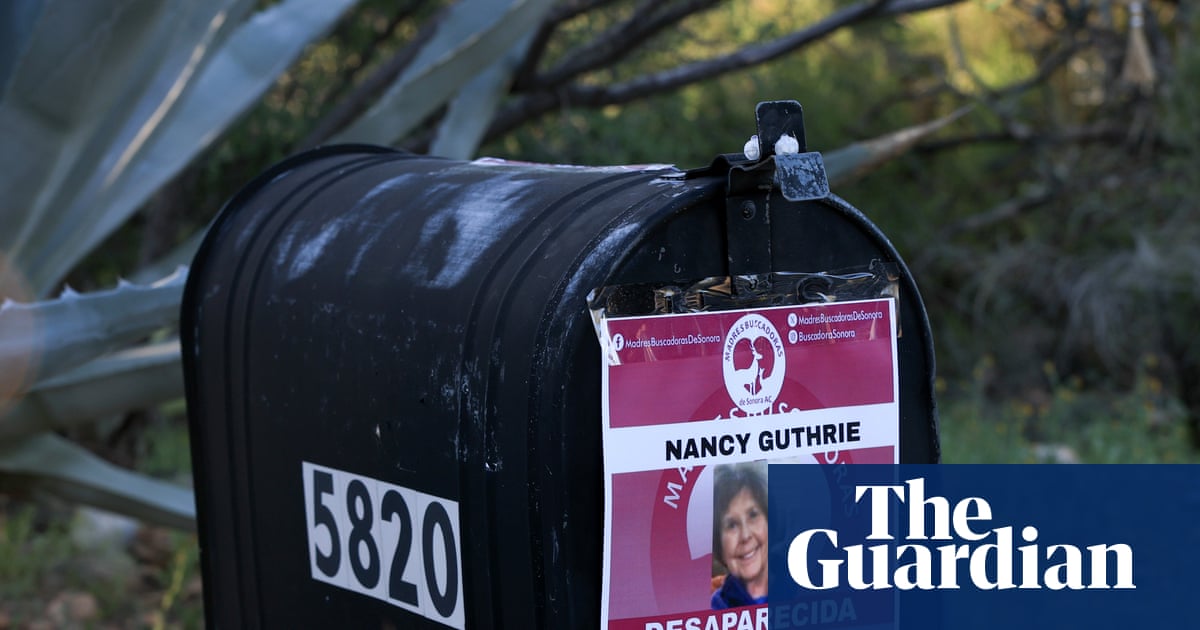





Savannah Guthrie’s family has announced a private reward of up to $1 million for information leading to the recovery or whereabouts of her missing mother, 84‑year‑old Nancy Guthrie, who disappeared from her home near Tucson, Arizona, around January 31–February 1. Liberal and conservative outlets agree that investigators believe she was likely abducted from her residence, with physical evidence including drops of blood on the front porch and DNA on a recovered glove, and both sides report that the FBI and local authorities are actively involved, with federal and local rewards supplementing the family’s offer.
Across the coverage, both sets of outlets emphasize the family’s dual focus on finding Nancy and helping others, highlighting a $500,000 donation to the National Center for Missing and Exploited Children and Savannah Guthrie’s public pleas for anyone with information to come forward. They also agree that law enforcement is still searching for an unidentified suspect, probing possible doorbell camera footage and urging tips to the FBI, and that the unusually large reward is intended to spur new leads in a case now stretching over weeks with no confirmed sightings.
Areas of disagreement
Framing of the abduction. Liberal-aligned coverage tends to describe Nancy Guthrie as “missing” and “believed to be kidnapped,” pairing that language with Savannah Guthrie’s hope for a miracle alongside the acknowledgement that her mother “may be lost.” Conservative outlets more bluntly frame the case as an abduction or kidnapping from the outset, at times giving firmer, less hedged time stamps about when she was taken from the Arizona home. While both accept the core evidence, liberal sources slightly stress uncertainty and emotional nuance, whereas conservative reports lean into the crime classification and timeline.
Emphasis on emotional narrative vs. procedural details. Liberal outlets give more space to Savannah Guthrie’s personal statements, her faith, and the family’s grief and hope, using quotes to humanize the victim and underscore the emotional stakes. Conservative coverage, while noting the family’s anguish, tends to devote more copy to law-enforcement procedure, clarification that the $1 million can be split among tipsters, and the mechanics of how to contact authorities. As a result, liberal pieces read more like a human-interest story wrapped around a crime, while conservative ones more closely resemble a crime bulletin with added family reaction.
Portrayal of institutions and broader implications. Liberal sources spotlight the donation to the National Center for Missing and Exploited Children as evidence of systemic concern, framing the Guthrie family’s response as part of a broader effort to strengthen institutions that help missing persons cases. Conservative outlets mention the donation but more briefly, situating it alongside references to the FBI and sheriff’s department rewards as part of a coordinated but case-specific law‑enforcement push. Thus liberals lean into institutional reform and support narratives, while conservatives focus on immediate investigative collaboration and practical incentives.
Treatment of uncertainty and rumors. Liberal reports generally stick to confirmed facts and avoid dwelling on unverified details like supposed doorbell footage, presenting the case as painfully unresolved and cautioning that “someone out there knows something” without speculating further. Conservative coverage is more willing to note that authorities are investigating claims about doorbell footage of a suspect and highlight that the suspect remains unidentified, using these angles to underscore both the mystery and the urgency. This creates a contrast in tone, with liberals opting for restraint around unconfirmed leads and conservatives more readily incorporating them as part of the investigative narrative.
In summary, liberal coverage tends to foreground the family’s emotional ordeal, the uncertainty around what has happened, and the case’s connection to broader missing-persons infrastructure, while conservative coverage tends to emphasize the kidnapping frame, procedural and investigative details, and the reward’s role as a tactical law-enforcement tool.
Story coverage