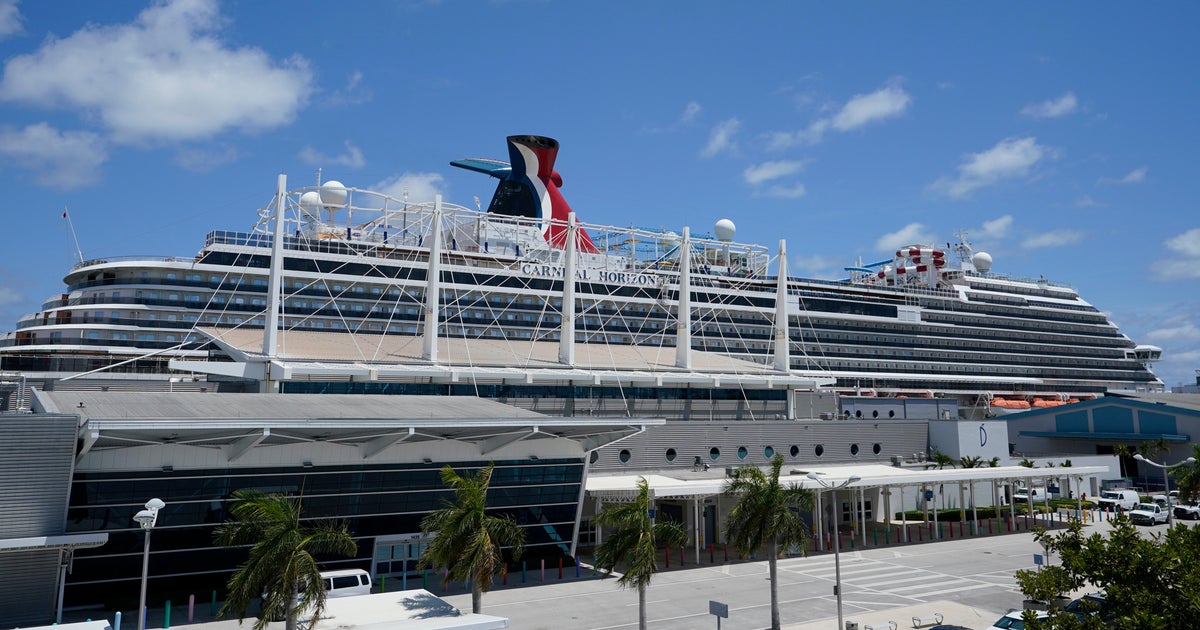


A 16-year-old Florida boy has been charged with homicide as a minor in the November death of his 18-year-old stepsister, Anna Kepner, aboard a Carnival cruise ship, according to sealed federal case documents referenced in family court filings. Both liberal and conservative outlets report that Kepner was found dead in a stateroom she shared with her stepbrother, that her death has been ruled a homicide caused by asphyxiation (described as a bar or mechanical hold), and that the charge was brought by the U.S. Attorney’s Office for the Southern District of Florida under federal jurisdiction, with a judge in Miami overseeing the sealed case. Coverage agrees that the case only came to light because of related custody litigation in family court, where the boy’s father cited the homicide charge and public social media posts by Kepner’s family as proof of a major change in circumstances.
Across outlets, there is shared emphasis that the FBI is handling the criminal investigation because the suspected killing occurred at sea on a U.S.-based cruise line, bringing it under federal maritime jurisdiction. Liberal and conservative sources alike underline that the teen is being prosecuted as a juvenile in a sealed proceeding, so many details of the incident and evidence are not publicly available, and that media are relying heavily on court documents and family communications rather than direct access to the criminal case. Both sides also note that the incident has prompted broader questions about safety and oversight on cruise ships, but they present these as background concerns rather than settled facts about this specific case.
Areas of disagreement
Framing of the crime and narrative focus. Liberal-aligned outlets tend to frame the story around the human tragedy and family dynamics, highlighting Kepner’s identity, the family’s grief, and the emotional impact revealed in custody filings. Conservative outlets more often foreground the legal mechanics of the homicide charge, emphasizing the role of the U.S. Attorney and the formal ruling of mechanical asphyxiation. While liberal coverage uses more space for the victim’s story and possible altercation circumstances, conservative coverage leans toward a concise crime-report style that centers on the existence of charges and official determinations over personal details.
Institutional accountability and systemic angles. Liberal sources more readily connect the case to broader issues such as gaps in cruise ship safety, oversight of young passengers, and the opacity of federal juvenile proceedings, suggesting the incident reflects possible institutional shortcomings. Conservative coverage, while acknowledging the federal role and sealed nature of the case, generally stops short of turning the story into a wider critique of the cruise industry or federal secrecy. As a result, liberal reporting invites readers to see the homicide as part of systemic patterns, whereas conservative accounts keep attention primarily on this single, discrete prosecution.
Use of family court and social media sources. Liberal-aligned outlets tend to give more descriptive weight to the custody dispute filings and family social media posts, using them not only to confirm the charge but also to sketch the family’s narrative about what happened on the ship. Conservative outlets reference those same documents more narrowly, largely as procedural evidence that a homicide charge exists and that a custody change is being sought. Liberals thus treat these secondary sources as windows into motive and relational context, while conservatives are more cautious, signaling them as allegations or background without expansive interpretation.
Speculation about events in the cabin. Liberal coverage is somewhat more willing to repeat or paraphrase claims that the death may have involved strangulation during an altercation, even while noting the case is sealed and details remain unproven. Conservative outlets are more restrained, usually limiting their description to the medical ruling of mechanical asphyxiation and avoiding narrative reconstruction of a struggle in the cabin. This leads liberal stories to feel more interpretive about the fatal encounter, whereas conservative pieces hew closer to what is explicitly stated in official determinations.
In summary, liberal coverage tends to humanize the case, foreground family narratives, and link the homicide to broader concerns about cruise safety and institutional opacity, while conservative coverage tends to emphasize the bare legal facts, official rulings, and procedural posture of the sealed federal juvenile case without extending it into a wider systemic critique.
Story coverage