

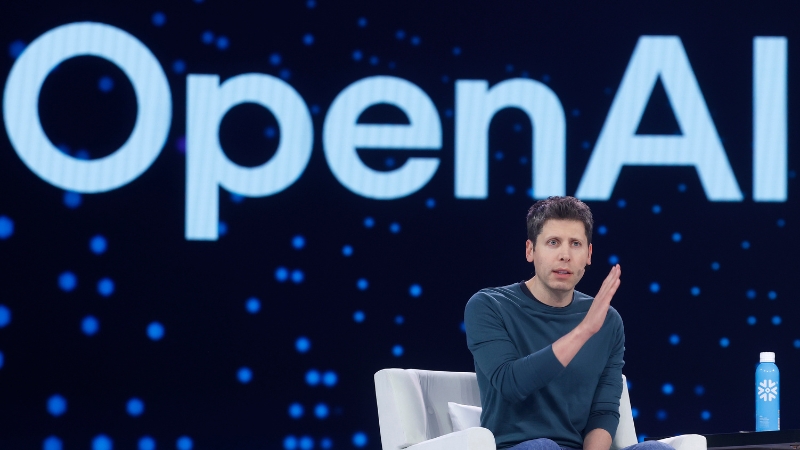
OpenAI and the U.S. Defense Department have reached an agreement for the Pentagon to use OpenAI’s models, with Sam Altman publicly confirming the deal and both sides emphasizing adherence to safety principles around surveillance and autonomous weapons. Coverage across outlets agrees that this announcement came shortly after the Trump administration ordered federal agencies to stop using Anthropic’s AI on the grounds of supply‑chain and national security risks, effectively blacklisting the rival firm from government networks, especially in classified environments. Anthropic has signaled it plans to challenge the designation through legal channels, arguing the move is unjustified, while OpenAI is moving ahead with integration of its tools inside secure government systems.
Liberal and conservative sources concur that these developments place OpenAI and Anthropic on sharply different trajectories in their relationships with the national‑security state, even as both companies publicly declare similar concerns about autonomous weapons and domestic surveillance. Both sides highlight that OpenAI employees have expressed solidarity with Anthropic’s stance on military AI limits, that Altman is trying to “de‑escalate” tensions with the Pentagon, and that the Defense Department is seeking to formalize AI partnerships within a framework of stated safety and oversight norms. There is also agreement that the episode reflects the growing centrality of large AI vendors to U.S. defense and intelligence planning, and that the outcome of Anthropic’s legal and policy pushback could shape future procurement rules, risk designations, and the balance between innovation, civil liberties, and national security.
Areas of disagreement
Motives and framing of the deal. Liberal‑aligned coverage tends to frame the OpenAI–Pentagon deal as a cautious, principles‑driven engagement in which Altman is trying to influence military AI use from the inside and prevent abuses, with the timing relative to Anthropic’s blacklisting treated as troubling but not necessarily conspiratorial. Conservative outlets more often portray the agreement as a pragmatic national‑security step that ensures the government retains advanced AI capabilities after justifiably cutting ties with a risky vendor, emphasizing continuity of defense operations over corporate or ethical drama.
Characterization of Trump’s blacklist of Anthropic. Liberal sources typically cast Trump’s directive as heavy‑handed, politicized, and potentially retaliatory, stressing the abruptness of the ban, its chilling effect on a safety‑oriented firm, and the risk that “supply‑chain risk” labels can be weaponized. Conservative coverage instead tends to justify the blacklist as a necessary security safeguard, presenting Trump’s move as a firm response to vulnerabilities and downplaying concerns that it unfairly targets Anthropic or undermines broader AI safety norms.
Assessment of AI safety and employee dissent. Liberal reporting gives substantial weight to OpenAI employees’ solidarity with Anthropic, treating internal dissent as evidence that workers fear military misuse of AI and want stronger binding constraints on surveillance and autonomous systems. Conservative outlets either minimize this employee backlash or portray it as an activist minority, arguing that real safety comes from robust vetting and secure deployment under government oversight rather than from unilateral corporate refusals to work with defense agencies.
Implications for corporate power and democracy. Liberal‑leaning coverage often warns that the Pentagon’s rapid embrace of one dominant vendor while blacklisting another concentrates too much power in a few private AI firms and risks eroding democratic oversight over military technology choices. Conservative coverage is more likely to see this concentration as an efficient alignment of cutting‑edge private innovation with state power, prioritizing strategic advantage and viewing debates over corporate dominance and civil‑liberties risks as secondary or speculative.
In summary, liberal coverage tends to emphasize the dangers of politicized blacklisting, the ethical risks of deepening Pentagon–AI vendor ties, and the importance of internal dissent and guardrails, while conservative coverage tends to spotlight national security imperatives, portray Trump’s actions and the OpenAI deal as prudent risk management, and downplay concerns about corporate concentration and democratic accountability.
Story coverage

