

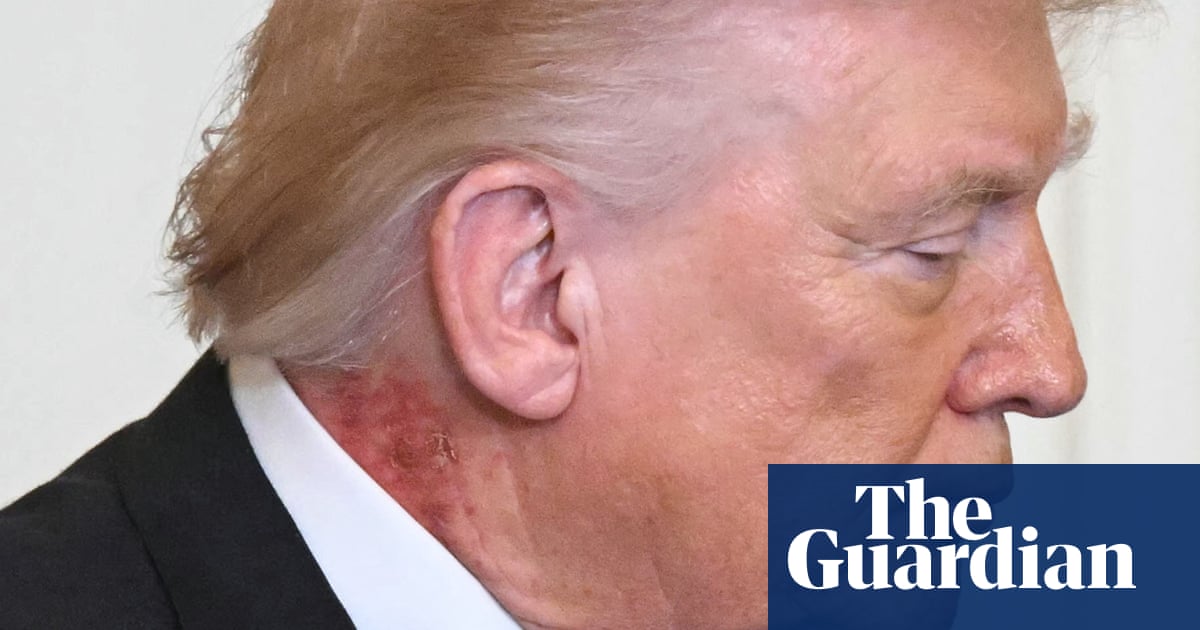
President Trump has developed a visible red rash on his neck, which the White House has attributed to a preventative skin treatment. Both liberal and conservative outlets report that the rash was noticed publicly and later explained by officials as being caused by a prescription or commonly used skin cream, with Trump’s personal doctor, Sean Barbarella, cited as the source of the explanation in at least one account. Coverage on both sides notes that the White House framed the condition as minor and cosmetic rather than a sign of serious illness, and that officials declined to provide further details about the specific cream or underlying dermatological issue.
Across the spectrum, outlets situate the story within the broader context of public scrutiny of presidential health disclosures and the White House’s efforts to manage visual signs of medical treatment. Both liberal and conservative reporting acknowledge that the cream is being used in a preventative manner, implying an attempt to address or stave off a potential skin condition rather than treat an acute emergency. They also agree that the episode underscores how even relatively minor medical issues can become subjects of media and public attention when they are visibly apparent on a sitting president, especially when official information is tightly controlled and limited.
Areas of disagreement
Transparency and detail. Liberal-aligned coverage emphasizes the lack of specifics about the cream and treatment, suggesting that the White House is offering a minimal, carefully worded explanation that leaves key medical questions unanswered. Conservative outlets generally treat the official statement as sufficient, presenting the mention of a prescription preventative cream as a straightforward medical clarification that closes the issue rather than opens new ones.
Framing of significance. Liberal reporting tends to frame the rash as a small but telling example of the administration’s broader opacity about presidential health, using the incident to highlight patterns of limited disclosure and tight message control. Conservative coverage typically portrays the rash as a minor, overblown curiosity, implying that extended focus on it reflects media sensationalism rather than any substantive concern about Trump’s condition.
Tone toward the White House narrative. Liberal sources often adopt a skeptical or questioning tone toward the White House’s account, implicitly inviting readers to consider whether the full story about the rash and its treatment is being shared. Conservative sources are more inclined to accept the narrative at face value, using neutral or reassuring language that reinforces the idea that the explanation is routine and that there is no underlying health scandal.
In summary, liberal coverage tends to treat the rash as a minor but symbolically important episode that raises questions about transparency and the completeness of White House health disclosures, while conservative coverage tends to accept the preventative-cream explanation as routine, downplay the story’s importance, and cast continued scrutiny as media overreach.
