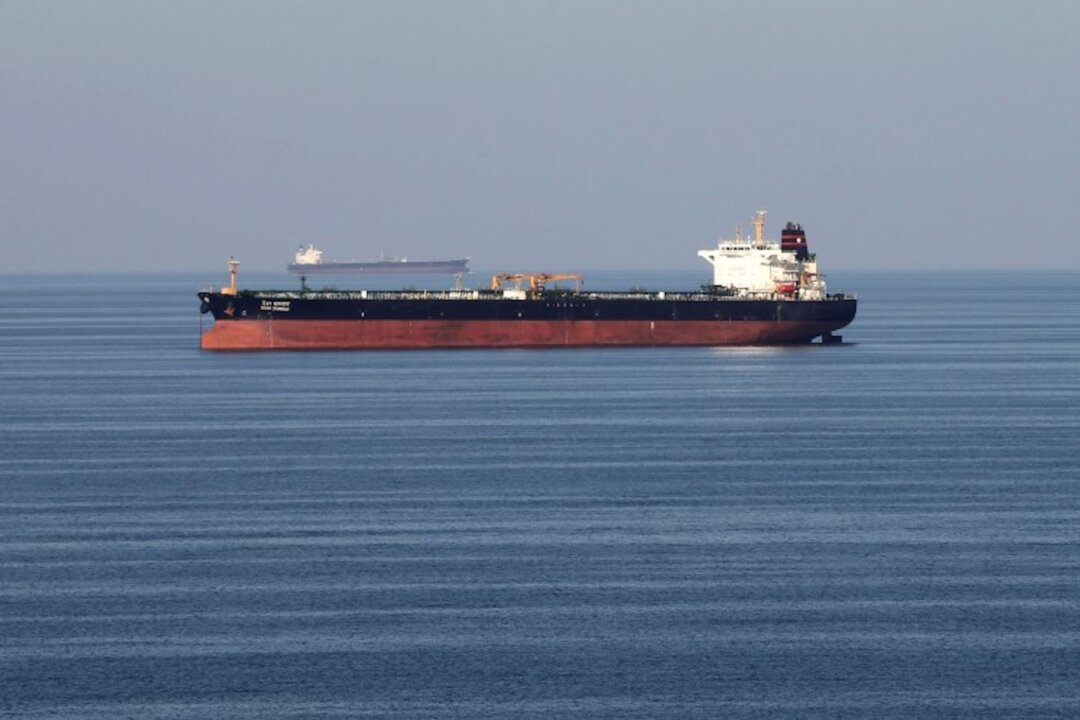


The Trump administration has announced a $20 billion federal reinsurance program to backstop insurance for commercial oil tankers and other maritime traffic operating in and around the Gulf, particularly the Strait of Hormuz, amid an ongoing war with Iran. Both liberal and conservative outlets agree that the program is being implemented through the U.S. International Development Finance Corporation, is intended to cover potential losses to ships up to a $20 billion cap on a rolling basis, and is explicitly aimed at restoring or maintaining tanker movements that have been sharply curtailed. Coverage on both sides notes that the disruption in shipping has contributed to a spike in U.S. crude oil prices and instability in global energy markets, and that the administration portrays the fund as a tool to reassure ship owners and insurers so that commercial traffic can resume.
Across the spectrum, reporting situates the reinsurance plan within the broader context of U.S.-Iran hostilities, recent attacks and threats against Gulf shipping, and heightened fears of retaliatory strikes on oil-rich Gulf states. Outlets describe the measure as an emergency financial backstop layered on top of private insurance markets, reflecting the role of state-supported risk management in wartime or near-wartime conditions. There is shared acknowledgment that financial guarantees alone may not fully resolve ship owners’ concerns, because the underlying issues include physical security risks, regional military escalation, and uncertainty stemming from U.S. and allied military operations against Iran. Both sides also situate the move within the Trump administration’s broader effort to stabilize energy supplies and signal support for Gulf partners and global markets.
Areas of disagreement
Motives and framing of the program. Liberal-aligned coverage tends to frame the $20 billion reinsurance fund as a reactive bailout for risks heightened by the Trump administration’s own escalation with Iran, questioning whether it primarily serves oil companies rather than the broader public. Conservative outlets, by contrast, present the program as a proactive, necessary step to safeguard global energy flows and protect commerce in the face of Iranian aggression. While liberals emphasize the program as a consequence of policy choices that inflamed the region, conservatives highlight it as evidence of strong leadership under crisis and a measured response to external threats.
Risk, accountability, and beneficiaries. Liberal sources stress that the fund socializes potential losses for private shipping and energy firms, placing U.S. taxpayers on the hook for dangers they argue were foreseeable results of hawkish U.S.-Israeli actions against Iran. They question whether sufficient safeguards exist to prevent moral hazard and whether the benefits to ordinary consumers justify the scale of the guarantee. Conservative coverage focuses instead on the downstream benefits to drivers, businesses, and allies from stabilizing oil prices and restoring trade, with less emphasis on taxpayer exposure and more on keeping energy markets functioning and jobs secure.
Security versus economic focus. Liberal reporting tends to argue that insurance backstops alone cannot fix the core problem, which they describe as inadequate physical security and an overstretched, militarized approach that leaves ships vulnerable regardless of coverage. Conservative outlets acknowledge security concerns but foreground the economic imperative of keeping tankers moving, portraying the reinsurance facility as a key lever to maintain confidence while military and diplomatic efforts manage the security side. The liberal narrative thus emphasizes the limits of financial tools without de-escalation, whereas the conservative narrative treats the fund as an efficient economic complement to a firm security posture.
Assessment of effectiveness and long-term implications. Liberal sources often express skepticism that the program will fully restore tanker flows, citing analysts who warn that ship owners remain wary of sailing into an active conflict zone, and they raise concerns about creating a precedent for large-scale federal guarantees to fossil fuel interests. Conservative coverage is more optimistic, suggesting the guarantee will meaningfully encourage the resumption of traffic and help steady global oil markets, and tends to downplay longer-term structural or climate-related critiques. Where liberals see a short-term patch for a self-inflicted crisis, conservatives describe a targeted, pragmatic tool that demonstrates U.S. commitment to energy security.
In summary, liberal coverage tends to portray the reinsurance program as an expensive, crisis-driven subsidy for oil and shipping interests born of an overly aggressive Iran policy, while conservative coverage tends to present it as a prudent, market-stabilizing instrument that protects consumers, allies, and global trade in the face of Iranian threats.
Story coverage