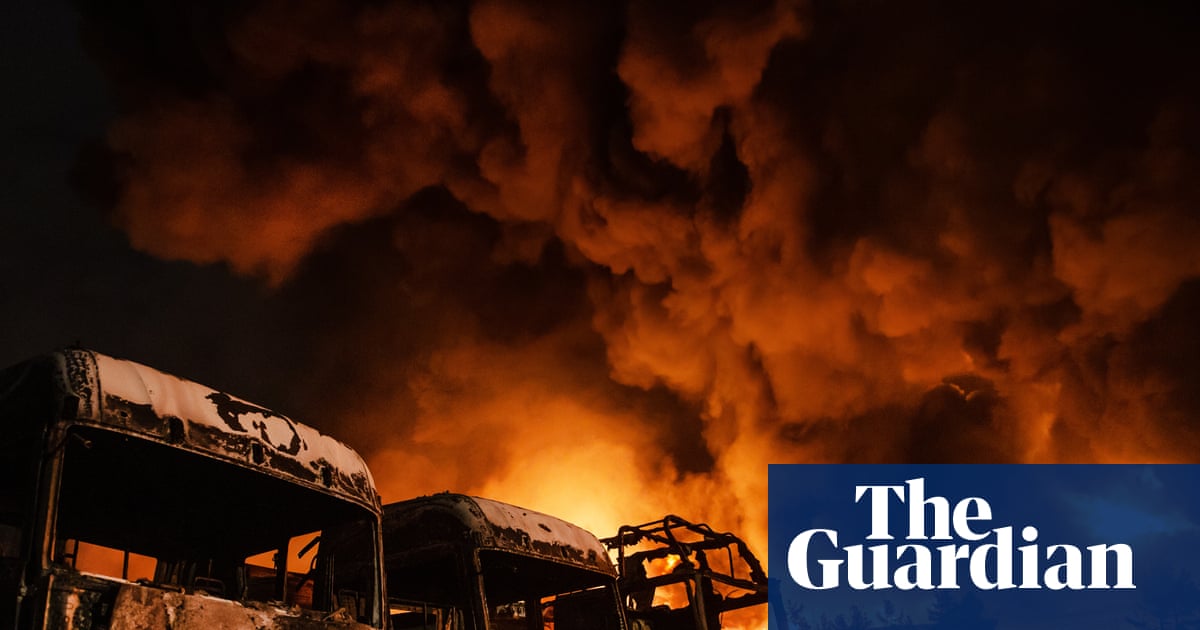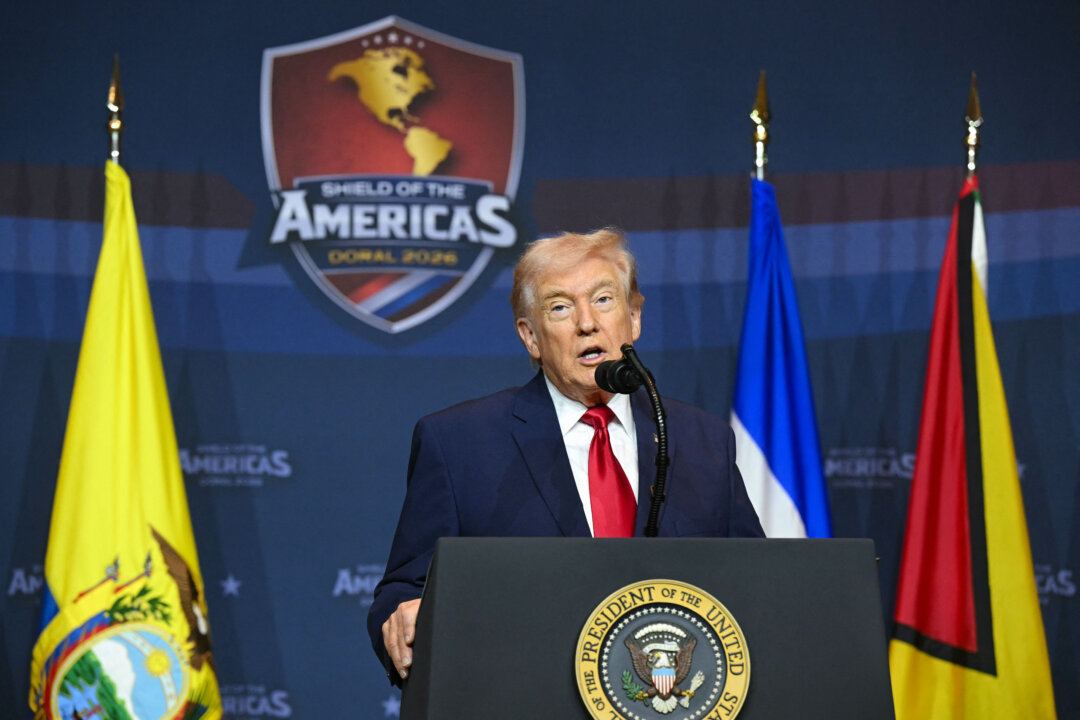

President Donald Trump has publicly described the ongoing war against Iran as “very complete” and significantly ahead of his original timetable, with both liberal and conservative outlets agreeing that he claims Iran’s navy, air force, and key communications infrastructure have been effectively neutralized. Coverage across the spectrum notes that Trump has framed the U.S. operation as nearly finished, that he offered no message to Iran’s new Supreme Leader, Mojtaba Khamenei, and that Israel is a central partner in U.S. decision‑making about when and how to conclude the campaign. Both sides also report that Russian President Vladimir Putin has floated proposals to Trump aimed at ending the war quickly, and that Trump has openly discussed the possibility of U.S. control over the Strait of Hormuz as part of the post‑conflict strategic picture.
Liberal and conservative reports converge on the broader context that the conflict has roiled global energy markets, briefly driving oil above $100 a barrel before prices retreated as Trump signaled the campaign was nearing its end. Both acknowledge that oil price volatility triggered sell‑offs in Asian and European markets and that U.S. markets later rebounded sharply as oil fell back to around $85, with major indices like the Dow, S&P, and Nasdaq all climbing. Outlets across the spectrum frame the Strait of Hormuz as a critical chokepoint for global oil shipments and agree that any lasting U.S. or allied control there would have major implications for international trade and security. There is also shared emphasis that the war’s trajectory, its rapid pace relative to expectations, and the involvement of Russia and Israel will shape both regional stability and broader geopolitical alignments.
Areas of disagreement
Characterization of the campaign. Liberal-aligned outlets tend to stress the severity and scale of U.S. strikes, using language like “annihilates” to underscore how thoroughly Iran’s navy and air force have been destroyed and raising implicit concerns about escalation and regional fallout. Conservative outlets, while echoing Trump’s “very complete” phrasing, more often emphasize operational efficiency and precision, portraying the campaign as a decisive, near-clinical neutralization of Iran’s capabilities. Liberals frame Trump’s talk of being ahead of schedule as potentially reckless triumphalism, whereas conservatives more often present it as evidence of effective planning and military competence.
Strategic aims and the Strait of Hormuz. Liberal sources highlight Trump’s stated plan to take over or control the Strait of Hormuz as an aggressive, expansionist move that risks entrenching U.S. military dominance over a vital global trade route. Conservative coverage tends to treat the same proposal as a logical extension of victory, aimed at ensuring freedom of navigation and deterring future Iranian threats. Where liberals dwell on the potential for blowback, legal challenges, and friction with other major powers, conservatives focus on deterrence, energy security, and reinforcing U.S.-Israel leverage in the region.
Economic and market impacts. Liberal coverage foregrounds the spike in oil prices above $100, the initial global market turmoil, and the vulnerability of the world economy to U.S.-Iran conflict, implicitly questioning the wisdom of policies that created this shock. Conservative reports are more inclined to stress the subsequent normalization of prices to around $85 and the rebound in U.S. stock indices, crediting Trump’s assurances about the war’s completeness for calming markets. Liberals tend to link the volatility to broader concerns about Trump’s foreign policy unpredictability, while conservatives emphasize resilience and argue that the swift military success mitigated longer-term economic risks.
Diplomacy and alliances. Liberal outlets draw attention to Putin’s proposals to end the war and to Trump’s close coordination with Israel, often framing these dynamics as evidence of an ad hoc, personality-driven diplomacy that sidelines multilateral institutions. Conservative outlets mention Russian outreach and Israeli coordination but frame them more as pragmatic power politics, with Trump leveraging great-power channels and a key regional ally to lock in gains. Liberals are more likely to hint at the dangers of sidelining traditional diplomatic processes and ignoring Iran’s internal politics, while conservatives stress that dealing from a position of overwhelming strength improves the chances of a favorable postwar order.
In summary, liberal coverage tends to cast Trump’s claim that the Iran war is “very complete” as an alarming demonstration of overwhelming force, risky strategic overreach, and destabilizing economic shock, while conservative coverage tends to portray the same developments as a proof of rapid, effective military success that stabilizes markets, strengthens U.S. and Israeli security, and opens space for power-based bargaining.
Story coverage