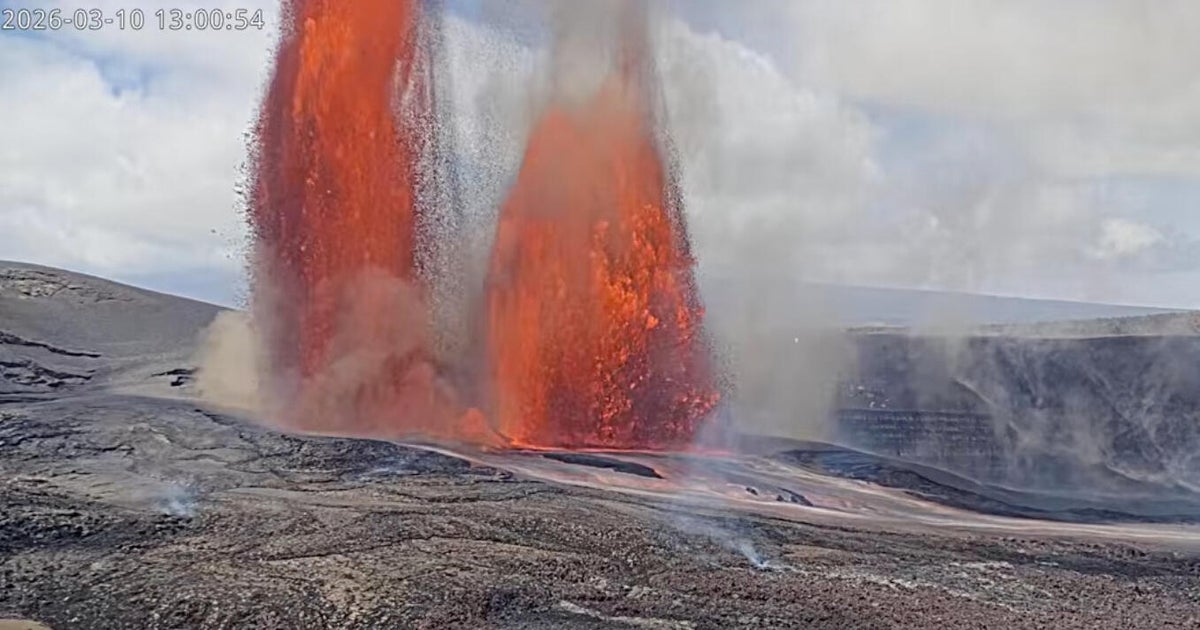


Kilauea volcano on Hawaii’s Big Island produced a dramatic nine-hour eruption featuring lava fountains reportedly reaching about 1,000 feet high from the summit crater, with molten rock remaining confined to the caldera and not directly threatening homes or populated areas. Both liberal and conservative sources agree that the eruption prompted temporary closures inside Hawaii Volcanoes National Park and a section of Highway 11 because of falling tephra and ash, and that the National Weather Service issued ashfall warnings and advisories for nearby communities, with at least one shelter opened as a precaution.
Coverage from both sides situates this event within Kilauea’s long history as one of the world’s most active volcanoes and underscores the role of federal and state institutions, including the US Geological Survey’s Hawaiian Volcano Observatory, Hawaii Volcanoes National Park, and local emergency management agencies. Outlets across the spectrum describe the eruption as part of an ongoing pattern of intermittent activity rather than a singular catastrophic event, noting that monitoring networks and alert systems are well established and that closures and advisories follow established safety protocols designed to protect visitors, residents, and infrastructure while allowing a relatively rapid reopening once conditions are deemed safe.
Areas of disagreement
Risk and severity framing. Liberal-aligned outlets tend to foreground the ashfall warnings, shelter opening, and potential health risks from fine particles, casting the eruption as a serious but managed public safety situation. Conservative sources more often emphasize the limited duration of the eruption, the lack of damage to homes, and the swift reopening of the national park, presenting it as a contained natural spectacle rather than an escalating emergency.
Government and institutional performance. Liberal coverage more frequently highlights the work of agencies like the US Geological Survey, the National Weather Service, and park officials, framing the closures and alerts as examples of proactive government management and science-based decision-making. Conservative coverage acknowledges these institutions but tends to mention them briefly and focuses instead on outcomes, such as how quickly the park and highway segments can safely reopen to restore normal activity.
Economic and tourism implications. Liberal sources are more likely to stress public safety over visitor access, treating tourism impacts as secondary to protecting local residents, park staff, and vulnerable groups from ash and air-quality issues. Conservative outlets give relatively more attention to the reopening of Hawaii Volcanoes National Park and the restoration of road access, implicitly framing the event in terms of preserving tourism, travel convenience, and economic stability once immediate danger passes.
Sensationalism versus normalization. Liberal-leaning reporting often uses vivid imagery of thousand-foot lava fountains and ash plumes but then pivots to emphasize ongoing monitoring, health guidance, and environmental impacts, suggesting a cautious respect for volcanic hazards. Conservative reporting likewise highlights the dramatic visuals yet more quickly normalizes the eruption as part of Hawaii’s routine volcanic life, underscoring that such events are expected, manageable, and not a cause for broader alarm.
In summary, liberal coverage tends to stress the eruption’s public-safety, environmental, and institutional-management dimensions, while conservative coverage tends to frame it as a dramatic but contained natural event, focusing on limited damage, swift reopening, and a return to normal activity.
Story coverage