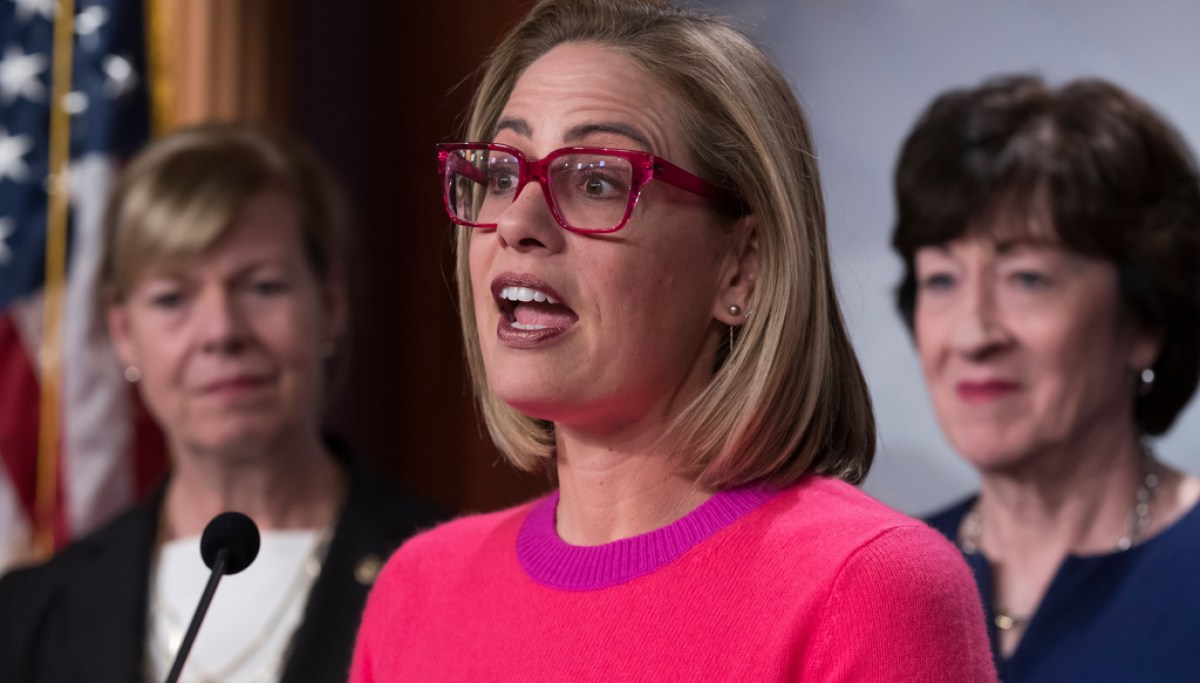


Former Arizona senator Kyrsten Sinema has acknowledged in court filings that she had a “romantic and intimate” relationship with a member of her security detail, identified in some reports as Matthew Ammel, while she was still in office in 2024. Both liberal and conservative outlets agree that the admission comes in the context of a lawsuit filed by Ammel’s estranged wife, Heather Ammel, in North Carolina under the state’s “alienation of affection” or “homewrecker” law, and that Sinema’s team is seeking to have the case dismissed. Coverage across the spectrum notes that Sinema concedes the affair was sexual and took place in multiple states, that the bodyguard was married at the time, and that Sinema did not publicly disclose the relationship until it was detailed in this recent court motion.
Outlets across the ideological spectrum also converge on the basic legal and institutional context: the case hinges on whether North Carolina courts have jurisdiction over a relationship that Sinema’s filing says occurred entirely outside the state, and whether that relationship can be tied to the breakdown of the Ammels’ marriage. They agree Sinema is a former Democratic (later independent) senator from Arizona who left office at the end of her term and has since transitioned into post-Senate work while facing ongoing scrutiny over ethics and campaign practices. Both liberal and conservative reports describe North Carolina’s alienation-of-affection statute as a relatively unusual, older-style law that allows spouses to sue third parties for undermining a marriage, and they present the current fight mainly as a procedural battle over venue and the reach of that law rather than an immediate criminal or ethics proceeding.
Areas of disagreement
Moral framing and scandal level. Liberal-aligned coverage generally treats Sinema’s admission as a personal and legal issue, describing the affair in neutral language and emphasizing the technicalities of the lawsuit rather than portraying it as a sweeping moral scandal. Conservative outlets more often headline the story as an “explosive” or “fesses up” admission, stressing that the bodyguard was married and that the relationship occurred while Sinema was in office, thereby framing it as a serious ethical lapse. While liberal sources may acknowledge the impropriety, they tend to avoid sensational language, whereas conservative sources lean on the salacious aspects and timing to heighten perceptions of misconduct.
Legal legitimacy and focus of coverage. Liberal coverage tends to foreground Sinema’s jurisdictional argument, explaining how her lawyers claim the relationship and relevant communications happened outside North Carolina and questioning the scope of “homewrecker” laws. Conservative coverage also notes the jurisdictional argument but devotes more space to the alienation-of-affection claim itself, implicitly validating the ex-wife’s attempt to hold Sinema accountable for the marriage’s breakdown. In liberal reporting, the lawsuit can appear somewhat antiquated or opportunistic, while conservative pieces treat it more as a plausible avenue for redress against a powerful former senator.
Political and ideological context. Liberal outlets typically situate the story within Sinema’s complicated political trajectory—her break with Democrats, centrist positioning, and post-Senate career—without heavily using the affair to symbolize broader partisan decay. Conservative sources more readily stress that Sinema is an ex-Democrat and tie the episode to a narrative of hypocrisy or ethical failings among Democratic or establishment political elites. Where liberal coverage treats her conduct as personal misjudgment by a once-maverick lawmaker, conservative coverage is more likely to fold the episode into long-running critiques of political insiders’ entitlement and rule-breaking.
Ethics and power dynamics. Liberal-aligned reporting is somewhat more inclined to mention questions about professional boundaries and the ethics of a sitting senator having an intimate relationship with a security staffer, but often in a procedural tone tied to campaign or workplace norms. Conservative reporting emphasizes those same power and ethics questions to argue that Sinema abused her position or at least showed disregard for standards expected of public officials. Liberals tend to couch those ethics concerns in institutional terms, while conservatives frame them as evidence of personal character flaws and systemic rot.
In summary, liberal coverage tends to present Sinema’s affair with her bodyguard as a personal failing filtered through legal technicalities and institutional context, while conservative coverage tends to heighten the scandal, stress marital and ethical wrongdoing, and fold the episode into a broader critique of political elites, especially on the left.
Story coverage