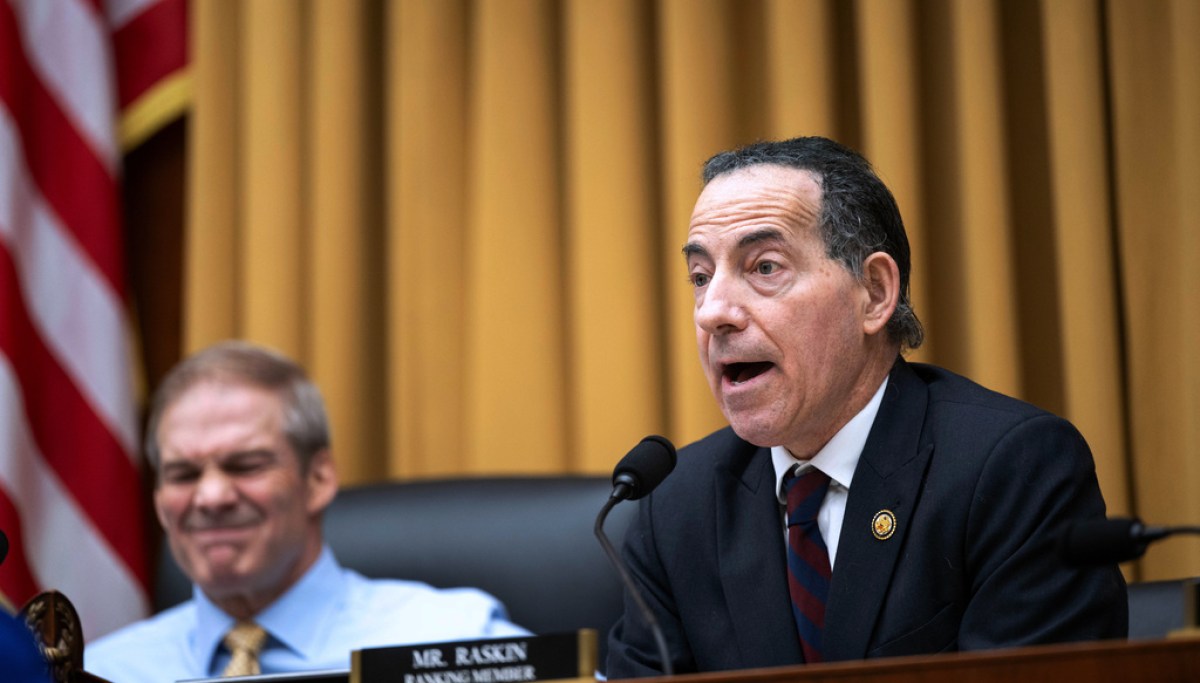

Federal reporting across the spectrum agrees that Representative Jamie Raskin, the top Democrat on the House Oversight Committee, sent a detailed letter to the Justice Department alleging that Donald Trump displayed at least one classified map and other sensitive materials to passengers on his private plane after leaving office. Both liberal and conservative outlets describe the allegation as stemming from Justice Department interview records and other materials, which indicate that longtime Trump adviser Susie Wiles purportedly witnessed Trump showing a classified map during a 2022 flight and that the underlying record was so sensitive that only a handful of people—about six—would have had authorized access while he was president. Coverage on both sides notes that these claims relate to the broader federal investigation into Trump's handling of classified documents, and that the episode allegedly occurred after his term ended, when he was a private citizen.
Across outlets, there is shared acknowledgment that Raskin’s letter raises questions about why this specific incident did not lead to additional charges beyond those already brought in the classified documents case. Both liberal and conservative reporting references Justice Department records indicating the documents were among the most highly protected in the federal system and potentially connected to Trump’s post‑presidency business or political interests, which could help prosecutors establish motive. There is agreement that Raskin is asking the Justice Department to explain its decision-making, including who was present on the plane, what documents were shown, and why no separate prosecution was pursued, situating the episode within ongoing institutional debates over national security safeguards, prosecutorial discretion, and oversight of former presidents’ access to sensitive information.
Areas of disagreement
Framing of the allegation. Liberal-aligned coverage tends to treat Raskin’s account as a significant, credible new detail within the already documented pattern of Trump’s alleged mishandling of classified information, emphasizing the specificity of the map, the limited authorized access, and corroborating DOJ records. Conservative outlets, while reporting the core claim, are more likely to foreground that it remains an allegation by a partisan actor rather than a proven fact, highlighting the absence of additional charges and suggesting the episode could be overblown or selectively presented. This leads liberals to frame the plane incident as a serious potential breach, while conservatives frame it as an unproven story being leveraged in a partisan fight.
Significance for national security. Liberal sources generally stress that showing a highly restricted map and related documents to plane passengers after leaving office represents a grave national security concern, underscoring how even a single exposure could reveal sources, methods, or operational details. Conservative coverage typically acknowledges the documents were classified but more often questions whether the alleged disclosure caused any concrete harm, noting that prosecutors did not bring a specific count tied to this incident. As a result, liberals depict the story as another example of systemic security risks posed by Trump’s behavior, whereas conservatives depict it as a possibly technical violation being weaponized rhetorically.
Interpretation of DOJ conduct. Liberal outlets largely imply that the Justice Department may have been overly cautious or deferential in not pursuing additional charges over the alleged plane episode, and they present Raskin’s demands for an explanation as part of necessary congressional oversight. Conservative reporting more often suggests that DOJ has already scrutinized Trump extensively and that the lack of further charges indicates either insufficient evidence or a prosecutorial judgment that the incident did not warrant separate action. Thus, liberal narratives emphasize potential under-enforcement and unanswered questions about accountability, while conservative narratives stress prosecutorial discretion and the risk of political interference with DOJ.
Political motives and timing. Liberal-leaning coverage tends to describe Raskin’s intervention as a transparency and rule-of-law effort, tied to broader concerns about protecting classified information regardless of political status. Conservative sources are more apt to highlight Raskin’s partisan role and the timing of the letter, portraying it as part of an ongoing Democratic effort to keep Trump’s legal troubles in the headlines and influence public opinion. Consequently, liberals cast the episode as a governance and oversight issue, whereas conservatives frame it as a politically timed escalation in a long-running campaign against Trump.
In summary, liberal coverage tends to treat Raskin’s letter as a credible and serious warning about an under-addressed national security breach that raises new accountability questions for both Trump and the Justice Department, while conservative coverage tends to treat it as an unproven, politically driven allegation that DOJ has already weighed and that is being revived mainly to damage Trump.