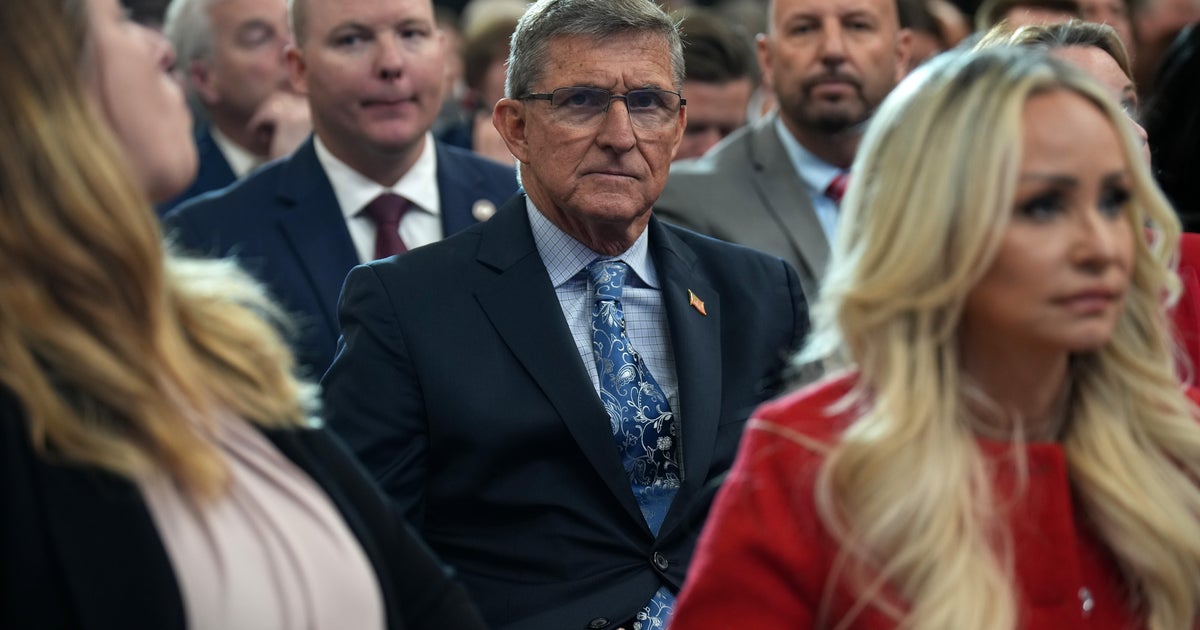



The Justice Department has reached a financial settlement with former Trump national security adviser Michael Flynn to resolve his civil lawsuit over his prior criminal prosecution. Across outlets, reports agree that Flynn had been charged with making false statements to the FBI about his communications with the Russian ambassador, that he later pleaded guilty before attempting to withdraw his plea, and that the Justice Department under the Trump administration ultimately moved to dismiss the case, after which he received a presidential pardon. Coverage also generally converges that Flynn had sought tens of millions of dollars in damages (around $50 million), that the government will pay him a seven-figure sum in the low-million range (around $1.2–$1.25 million) as settlement funds, and that the agreement stipulates each side will cover its own legal fees rather than the government paying Flynn’s attorneys separately.
Reporting from both liberal and conservative outlets situates the settlement within the larger arc of the Trump-Russia investigations and the institutional role of the FBI and Justice Department. They concur that the case grew out of the broader federal inquiry into Russian interference in the 2016 election and contacts between Trump associates and Russian officials, and that Flynn’s brief tenure as national security adviser was cut short over his misleading statements about those contacts. Both sides describe the settlement as a civil resolution by the current Justice Department of decisions and conduct that occurred under previous administrations, without reopening Flynn’s underlying criminal liability in light of his prior pardon. There is shared acknowledgment that the payout represents a small fraction of Flynn’s original demand but is nonetheless a notable concession by the government in a politically charged, high-profile case.
Areas of disagreement
Framing of the investigation. Liberal-aligned coverage tends to describe Flynn’s criminal case as a product of the broader and legitimate Russia interference investigation, portraying the FBI inquiry as an outgrowth of institutional efforts to assess national security risks. Conservative outlets, by contrast, frequently label the matter a discredited Russia “collusion” or “hoax” prosecution and characterize it as part of a politicized campaign against Trump allies. While liberal reports emphasize the technical false-statement charges and process aspects, conservative pieces stress themes of “Russiagate,” “Deep State” operations, and systemic abuse of investigative powers.
Characterization of Flynn’s conduct. Liberal sources underscore that Flynn admitted in court to lying to the FBI about his contacts with the Russian ambassador, and frame the prosecution as a response to clear violations involving false statements. Conservative coverage, however, tends to downplay or contextualize the guilty plea as the product of pressure and flawed procedures, citing Flynn’s own claims of political persecution and improper tactics by investigators. Where liberal articles focus on the official record of the plea and subsequent dismissal motion, conservative pieces highlight Flynn’s narrative that he was targeted for his role in the Trump administration and foreign policy views.
Meaning of the settlement. Liberal reporting generally casts the settlement as a pragmatic decision by the Justice Department to avoid the costs, risks, and distractions of extended civil litigation, without conceding that the original prosecution was wrongful or malicious. Conservative outlets often present the payout as implicit validation of Flynn’s long-standing claims that he was wronged, describing it as the government “forking over” money in acknowledgment of past bad acts by partisan officials. The liberal lens frames the sum as relatively modest compared with the damages sought, whereas conservative narratives portray it as a tangible admission that the Russia-related pursuit of Flynn went too far.
Implications for DOJ and reforms. Liberal-aligned pieces tend to treat the episode as a closed chapter of the Trump-Russia era with limited forward-looking institutional change, emphasizing continuity in DOJ’s current role as simply settling inherited disputes. Conservative coverage uses the settlement to argue for deeper reform or purging of politicized elements within the FBI and DOJ, presenting Flynn’s case as evidence of systemic bias requiring accountability. While liberal outlets emphasize the importance of insulating current DOJ decision-making from partisan battles, conservative outlets see the settlement as a step—but not a complete one—toward exposing and correcting past politicization.
In summary, liberal coverage tends to portray the Flynn settlement as a narrow, cost-avoidance resolution of a legally grounded but politically fraught case arising from the Russia interference investigation, while conservative coverage tends to frame it as vindication of Flynn’s claims that he was the victim of a politicized, illegitimate “Russia hoax” campaign that underscores the need for sweeping institutional accountability.
Story coverage