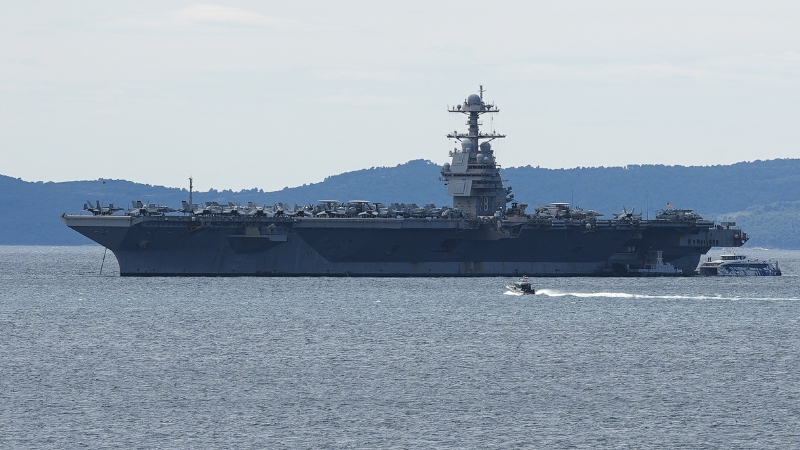
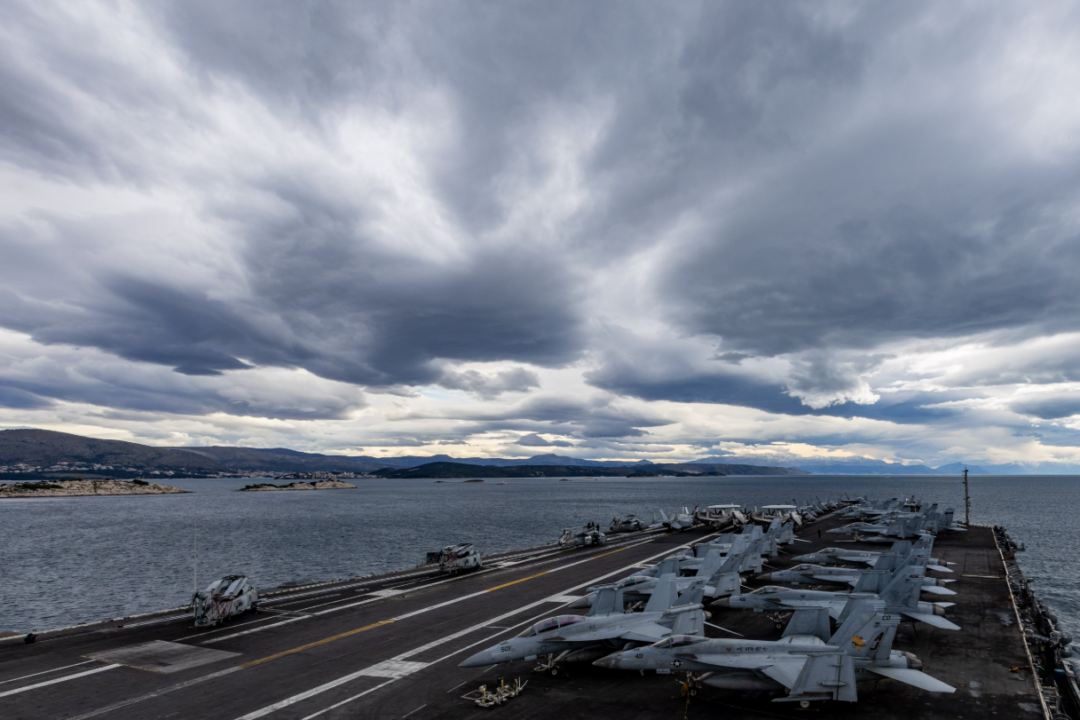
Federal law enforcement is investigating a fire that broke out aboard the USS Gerald R. Ford aircraft carrier on March 12 while it was deployed for combat operations related to Iran in or near the Red Sea. Across the spectrum, outlets agree that the incident was serious enough to force the carrier to halt its mission, depart the operating area, and head to port for repairs; public reporting also aligns that the ship first went to Greece around March 23 for maintenance and later moved on to Croatia after initial repair work.
Liberal and conservative outlets alike frame the carrier as a central asset in ongoing U.S. military posture toward Iran and regional security, noting that any disruption to its operations has operational and strategic implications. Coverage broadly concurs that federal agencies have not publicly confirmed whether the fire was accidental or intentional, that the Navy is cooperating with law enforcement, and that both institutional reviews and standard safety procedures are underway to assess damage, determine cause, and ensure the ship can safely return to full operational status.
Areas of disagreement
Cause and characterization of the incident. Liberal-aligned outlets tend to emphasize the lack of confirmed findings, stressing that investigators have not determined whether the fire was an accident, maintenance issue, or potential misconduct, and they often describe it as an onboard incident under routine scrutiny. Conservative outlets more frequently highlight that federal law enforcement is involved, that the blaze occurred during combat operations against Iran, and that investigators have not ruled out serious possibilities such as arson, framing the fire as a potentially consequential security event rather than just a technical mishap.
Operational impact and readiness. Liberal coverage generally notes that the carrier temporarily left the region for repairs but stresses continuity of broader U.S. force posture, suggesting that other assets can mitigate the operational gap and that the deployment remains part of a larger, resilient regional presence. Conservative coverage, by contrast, focuses on how the Ford’s withdrawal from combat operations may weaken deterrence against Iran and underscores the vulnerability of relying on key high-value platforms, portraying the episode as a significant hit to immediate readiness and U.S. projection of power.
Accountability and institutional competence. Liberal-leaning reports tend to frame the investigation as a normal part of military oversight, highlighting procedural reviews, safety culture, and the complexity of operating advanced carriers, with less overt focus on assigning fault before findings are released. Conservative outlets more often link the fire to broader concerns about leadership and discipline in the Navy, raising questions about whether current policies, training, or priorities have degraded standards, and hinting that senior decision-makers may ultimately bear responsibility if negligence or systemic issues are revealed.
Broader political framing. Liberal sources, where they touch on politics at all, usually keep the incident within a technical and institutional frame, discussing procurement, maintenance burdens on advanced ships, and the challenges of extended deployments, without directly tying the fire to partisan narratives. Conservative sources are more apt to situate the event within a critique of the current administration’s defense and Iran policies, suggesting that mismanagement, strained resources, or misplaced priorities could be contributing to vulnerabilities that incidents like the Ford fire expose.
In summary, liberal coverage tends to emphasize the preliminary nature of the investigation, institutional process, and the broader resilience of U.S. military posture, while conservative coverage tends to highlight the potential severity of the incident, its impact on readiness, and the possibility that it reflects deeper problems in military leadership and policy.