liberal
CPAC Canceled For Lack Of ... Oh Wait, That *Was* CPAC?
Dom was there, whatever it was!
14 days ago
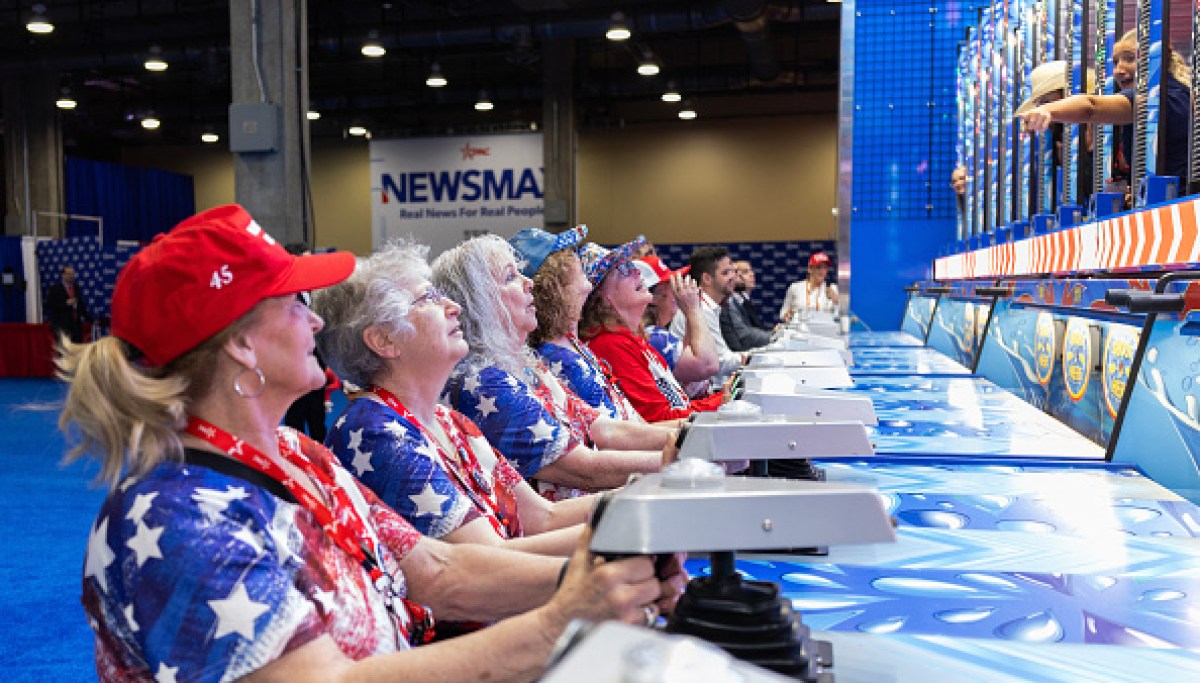
Coverage from both liberal-aligned and conservative-aligned outlets agrees that the latest Conservative Political Action Conference drew visibly smaller crowds and lacked the packed, high-energy atmosphere of its peak years, with reporters noting empty seats and a muted buzz. Both sides acknowledge that Donald Trump chose not to attend this year while simultaneously signaling, through White House press secretary Karoline Leavitt, that he still sees CPAC as relevant, and they describe the event as dominated by older attendees, including prominent pro-Trump and international or expatriate groups such as “Persians for Trump.” They also concur that rival conservative organizations, especially Turning Point USA, are attracting younger activists, and that this competition, along with internal debates over foreign policy and the Republican presidential field, has raised questions about CPAC’s current influence on the broader right.
Both liberal and conservative coverage situate CPAC as an institution that once served as a central gathering for the conservative movement, setting agendas and showcasing rising Republican stars, but now faces structural challenges. They describe a changing ecosystem in which younger, more non-interventionist conservatives are less tied to legacy conferences, and where new organizations, media ecosystems, and issue coalitions fragment attention and fundraising. The reports agree that generational divides—illustrated by differing views on the war in Iran and foreign operations—signal a broader realignment within the right, and that CPAC’s attendee base has become more self-selecting and less representative of the full Republican coalition. Both sides frame CPAC’s trajectory as a test of whether long-established political conferences can adapt to a more decentralized, personality-driven, and digitally mediated conservative movement.
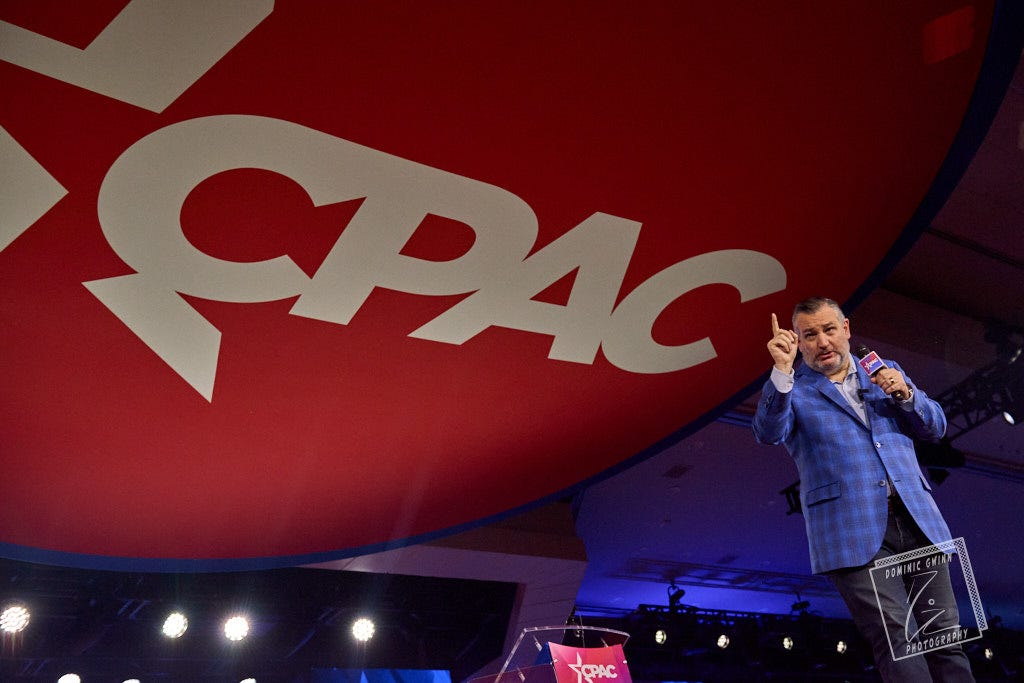
Relevance and decline. Liberal-aligned outlets portray CPAC as clearly past its prime, emphasizing the empty rooms, aging stagecraft, and lack of energy as evidence that the conference has lost real political clout. Conservative-aligned outlets, while acknowledging the softer turnout and changed atmosphere, lean on Trump’s public insistence that CPAC remains relevant and often frame the issues as growing pains rather than terminal decline. Liberals tend to describe CPAC in near-satirical terms as a hollowed-out spectacle, whereas conservatives present it as a still-important but evolving forum whose influence is being questioned rather than written off.
Role of Trump’s absence. Liberal coverage highlights Trump’s decision to skip CPAC as a central reason for the weak attendance and diminished buzz, treating his absence as both symptom and accelerant of the group’s waning status within the movement. Conservative coverage mentions his absence but downplays it as a fatal blow, emphasizing instead his spokesperson’s reassurance that he still considers CPAC significant and suggesting that his non-appearance does not equate to a formal break. Liberals cast the situation as CPAC being sidelined by the very figure it helped elevate, while conservatives tend to depict it as a tactical choice by a busy president that does not fundamentally negate the conference’s relevance.
Interpretation of generational and foreign-policy divides. Liberal-aligned outlets use the generational split over Iran and foreign interventions to argue that CPAC is out of step with younger conservatives and increasingly anchored to an older, more hawkish base, which undercuts its claim to speak for the future of the right. Conservative-aligned pieces recognize these divisions but more often emphasize them as evidence of healthy internal debate, noting that straw polls and emerging figures like Marco Rubio show that CPAC can still capture shifting preferences. Liberals treat the splits as proof that CPAC’s constituency is narrow and shrinking, while conservatives frame them as part of a wider ideological recalibration inside an evolving movement.
Competition within the conservative ecosystem. Liberal coverage stresses the rise of organizations like Turning Point USA as a direct indictment of CPAC’s failure to attract younger activists and maintain organizing relevance, framing TPUSA’s success as a transfer of energy and legitimacy away from CPAC. Conservative coverage is more ambivalent, acknowledging competition but presenting it as diversification rather than displacement, suggesting that multiple conferences and groups can coexist and that CPAC still retains name recognition and institutional memory. Liberals see the shifting loyalties as a zero-sum game that CPAC is losing decisively, while conservatives tend to describe a more pluralistic landscape in which CPAC remains one important node among several.
In summary, liberal coverage tends to depict CPAC as a dwindling, somewhat out-of-touch institution whose low turnout, aging base, and Trump’s absence underscore a steep loss of influence, while conservative coverage tends to concede challenges but emphasize continuity, internal debate, and Trump’s verbal support to argue that CPAC remains a meaningful—if no longer singular—pillar of the conservative movement.