
conservative
Xi Invites Taiwan’s Opposition Party Leader to Visit China
The Nationalist Party chairwoman's visit would occur a month before Trump travels to Beijing to meet with Xi Jinping.
14 days ago
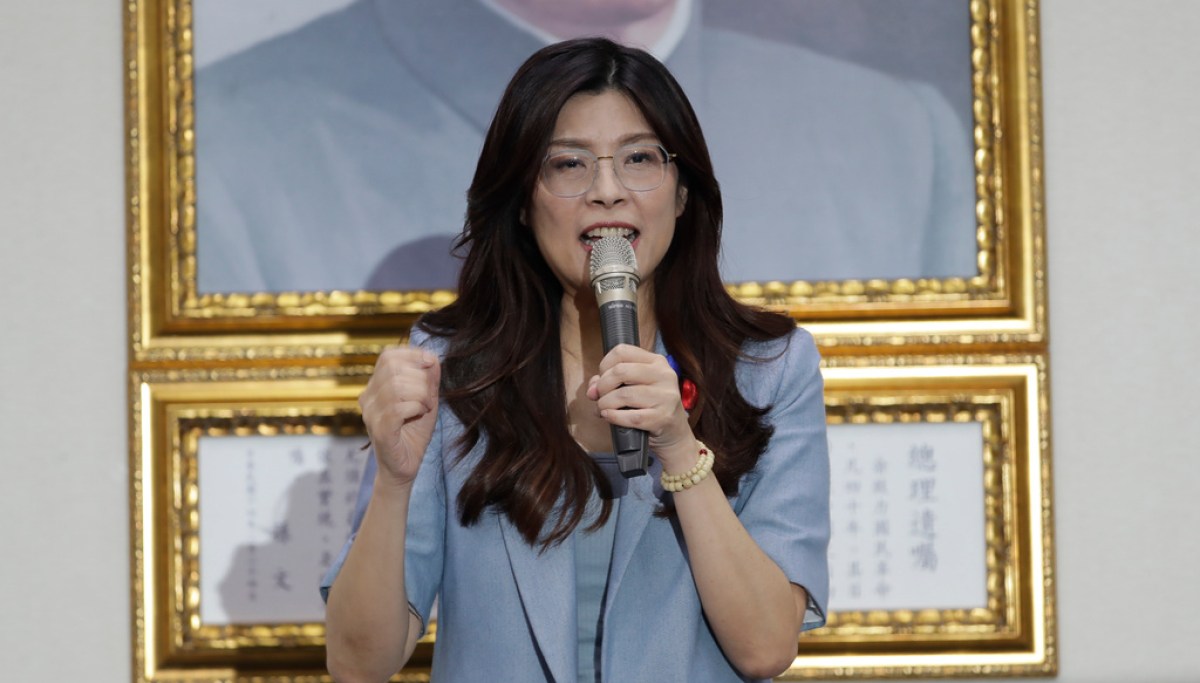
Taiwan’s opposition leader Cheng Li-wun, chair of the Kuomintang (KMT), has agreed to travel to China from April 7 to April 12 to meet Chinese leader Xi Jinping in Beijing. Both liberal and conservative outlets report that the trip is framed by the KMT as a peace-oriented mission focused on cross-strait dialogue, while Taiwan’s presidential office has said it will closely monitor the visit and any interactions with Xi. Coverage across the spectrum notes that the meeting is taking place against a backdrop of tense cross-strait relations and heightened regional attention, with Beijing presenting the KMT as a willing interlocutor in contrast to Taiwan’s current ruling party.
Across outlets, there is broad agreement that the KMT historically maintains a more engagement-focused stance toward Beijing, rooted in longstanding party-to-party channels with the Chinese Communist Party, even as it officially supports the status quo of no formal unification or independence. Liberal and conservative sources alike acknowledge that Xi is using institutional mechanisms, such as formal invitations and structured talks, to signal preference for Taiwan factions open to dialogue, and that the timing of Cheng’s visit—coming just before a high-profile Xi meeting with the US president—gives it additional diplomatic weight. Both sides also concur that this episode fits into a longer pattern of Beijing leveraging cross-strait exchanges to shape perceptions of stability and to influence Taiwan’s internal political dynamics.
Motives and framing of the visit. Liberal-aligned coverage tends to frame Cheng’s trip as part of Beijing’s broader strategy to divide Taiwan’s electorate and undercut the authority of the current government by elevating a more China-friendly opposition figure. Conservative coverage more often describes the visit as an exercise in pragmatic diplomacy, emphasizing Cheng’s stated goal of maintaining peace and reducing the risk of military confrontation. While liberals highlight the optics of Xi hosting an opposition leader as potentially undermining Taiwan’s democratic mandate, conservatives stress the value of keeping communication channels open regardless of which party is in power.
Implications for Taiwan’s sovereignty. Liberal sources generally warn that the meeting could normalize Beijing’s narrative that Taiwan is an internal Chinese matter and present the KMT as acquiescing to that framing, with potential long-term erosion of Taiwan’s de facto independence. Conservative outlets instead tend to downplay sovereignty risks, arguing that dialogue does not equal capitulation and can be used to safeguard Taiwan’s current status by lowering tensions. As a result, liberals portray the encounter as strategically asymmetric in Beijing’s favor, whereas conservatives cast it as one of the few realistic tools Taipei has to manage an inherently dangerous relationship.
Relationship to domestic politics in Taiwan. Liberal coverage usually stresses how Xi’s outreach may interfere with Taiwan’s internal political balance by implicitly favoring the KMT over the ruling party, potentially pressuring the government to adjust its China policy or risk being painted as obstructionist. Conservative coverage is more inclined to present the visit as a legitimate opposition initiative that reflects a substantial segment of public opinion favoring stability and economic ties with the mainland. Thus, liberals focus on the risk of Beijing shaping Taiwan’s party competition, while conservatives highlight democratic pluralism and the right of the opposition to pursue its own cross-strait agenda.
International signaling and U.S. angle. Liberal-leaning outlets are likelier to interpret the timing before a Xi–U.S. president summit as evidence that Beijing is staging the meeting to claim that “peaceful unification” has support inside Taiwan, potentially complicating Washington’s support for Taipei. Conservative outlets tend to see the timing as offering Washington a view of an alternative, more negotiation-ready interlocutor in Taiwan, which they argue could stabilize regional dynamics. This leads liberal coverage to stress the risk of Xi using the KMT meeting as diplomatic theater, while conservative coverage emphasizes potential benefits in reducing miscalculation among the major powers.
In summary, liberal coverage tends to cast the meeting as a high-risk maneuver that advances Beijing’s narrative at the expense of Taiwan’s sovereignty and democratic mandate, while conservative coverage tends to portray it as pragmatic engagement that could ease tensions, reflect legitimate opposition views, and offer additional channels to preserve regional stability.