liberal
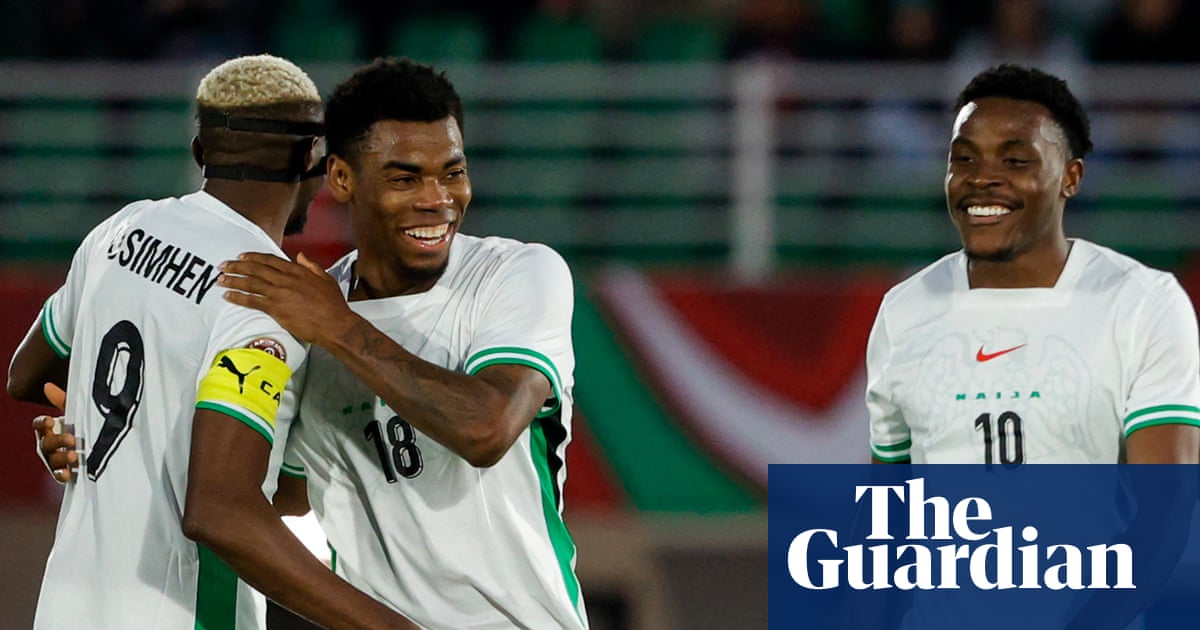
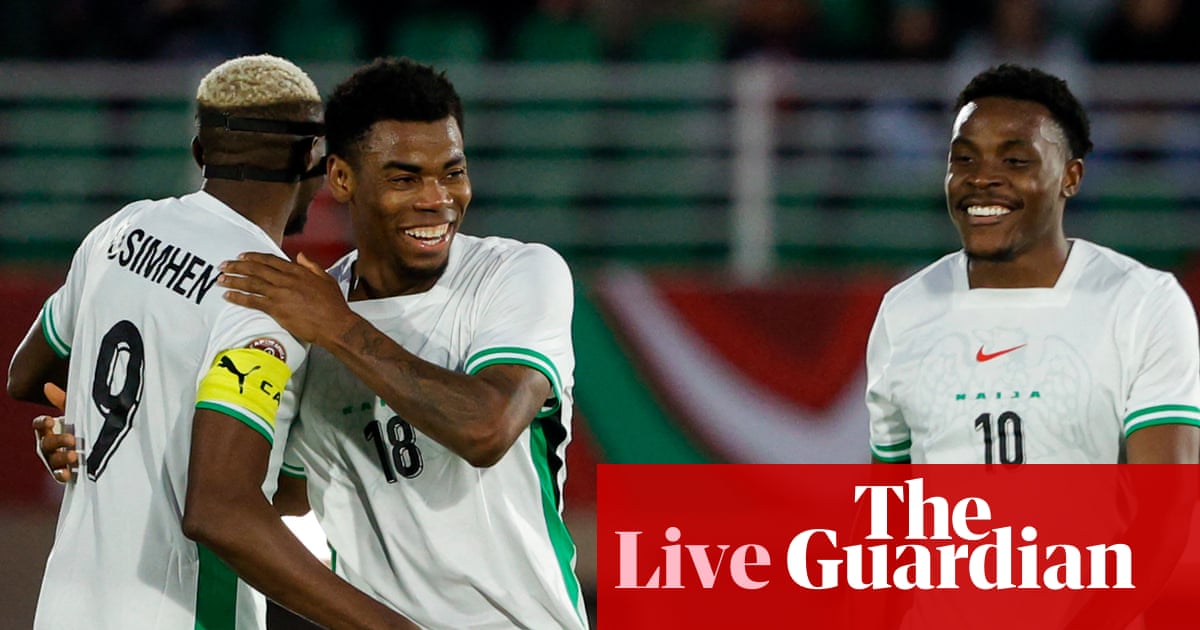
Afcon roundup: Nigeria stay perfect as 10-man Uganda use three goalkeepers
Uganda knocked out after 3-1 defeat by Super Eagles
3 months ago
Nigeria’s 3-1 victory over Uganda in their Africa Cup of Nations group-stage match is described consistently across liberal-leaning coverage as a comfortable, professional win that kept Nigeria’s record in Group C perfect. Reports agree that Raphael Onyedika scored twice and Paul Onuachu added a third, his first international goal in four years, while Uganda were reduced to ten men and forced to use three different goalkeepers over the course of the match. The match is placed within the same tournament frame, with outlets noting that this result confirmed Nigeria’s status as group leaders and came on a night when another Group C fixture saw Tanzania draw 1-1 with Tunisia, affecting the final configuration of the round of 16.
Liberal sources also converge on contextual points: this fixture is part of the broader Africa Cup of Nations group phase, with implications for seeding and knockout-round opponents, and the narrative that Nigeria, despite rotating their starting lineup heavily, maintained a high standard of professionalism and tactical discipline. They discuss Uganda’s numerical disadvantage and goalkeeper disruptions as important but not sole factors, emphasizing Nigeria’s depth and composure as emblematic of a well-organized footballing institution. Both the match and related Group C outcomes are presented as shaping the tournament’s competitive landscape, with Tunisia and Tanzania’s positions in the last 16 also noted as part of the same evening of decisive results.
Framing of the result’s significance. Liberal-aligned reports tend to frame the 3-1 win mainly as evidence of Nigeria’s consistency and depth in a long tournament, downplaying any broader political or cultural symbolism. In the absence of explicit conservative coverage, it is likely that right-leaning outlets, where they cover the game at all, would treat the result more briefly and may emphasize national pride or individual star performances over tactical evolution. Liberal accounts stress Nigeria’s perfect record and how squad rotation worked, while a conservative angle would more likely highlight the scoreline and heroic moments rather than structural analysis.
Emphasis on professionalism versus passion. Liberal coverage highlights Nigeria’s “professional” performance, focusing on coaching decisions, system coherence, and how the team managed the game after Uganda went down to ten men. A conservative treatment, by contrast, would be more inclined to spotlight emotional narratives such as resilience, fighting spirit, or a return to form for specific players like Onuachu. Thus, while liberals use the match as a case study in organized, modern football, conservatives would likely present it as a story of hunger, mentality, and seizing opportunity.
Context within African football politics. Liberal sources situate the match within the institutional framework of the Africa Cup of Nations, referencing qualification pathways, the implications for knockouts, and the fortunes of other teams like Tunisia and Tanzania in the same round of fixtures. A conservative framing, where it diverges, would tend to strip out broader tournament politics and regional development angles, instead centering on immediate competitive stakes, bragging rights, and straightforward win-loss narratives. Consequently, liberals more often link the game to discussions about African football growth and governance, whereas conservatives likely keep such context minimal.
Treatment of Uganda’s struggles. Liberal coverage notes Uganda’s red card, reliance on three different goalkeepers, and the resulting tactical scramble, often casting these issues as structural challenges for a developing side in African football. Conservative outlets, if they differ, would more likely treat these as unlucky breaks or dramatic twists rather than as windows into resource gaps or institutional limitations. As a result, liberal narratives lean toward empathy and analysis of systemic disadvantages, while conservative narratives would instead emphasize Uganda’s grit under adversity and the inevitability of Nigeria’s superior quality.
In summary, liberal coverage tends to present Nigeria’s 3-1 win as a professional, system-driven performance embedded in the wider structure and development of African football, while conservative coverage tends to (when it appears) simplify the match into a story of national pride, individual moments, and straightforward competitive success.