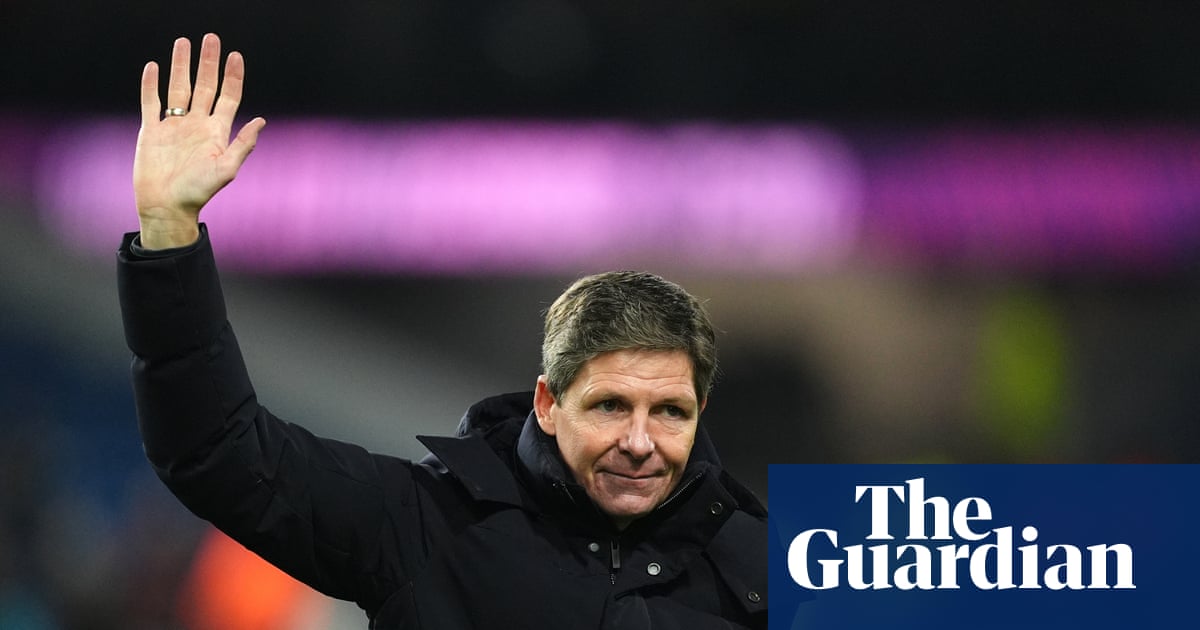
Oliver Glasner has confirmed that he will leave his role as Crystal Palace manager at the end of the current season, having informed the club’s chairman back in October that he wanted a new challenge. Liberal-aligned reports consistently state that he publicly announced his decision in the build-up to Palace’s next fixture and, at the same time, confirmed that club captain Marc Guéhi is in the final stages of a transfer to Manchester City and will not be available for the upcoming match. Those reports also agree that Manchester City are close to a £20 million deal for Guéhi, who has not signed a contract extension and had been tracked by other top clubs, and that leading scorer Jean-Philippe Mateta may also depart if a suitable bid arrives.
Liberal coverage further agrees that Glasner’s exit lands during one of Crystal Palace’s most difficult weeks, marked by the looming departure of their captain and uncertainty surrounding other key players. Across these reports, the shared context is that Palace have recently generated substantial income through player sales but, according to sources around the club, have not significantly reinvested those funds into the squad. The institutional backdrop is a club needing to recruit a new manager, potentially reshape its playing staff, and respond to growing pressure from supporters concerned about ambition and direction. Both the managerial change and the probable departure of Guéhi are framed as part of a broader transition phase for Crystal Palace, with structural decisions by ownership and the board seen as pivotal to what happens next.
Areas of disagreement
Cause of Glasner’s departure. Liberal-leaning outlets attribute Glasner’s decision primarily to dissatisfaction with Crystal Palace’s lack of reinvestment despite major player sales, casting it as a principled response to limited backing in the transfer market. In the absence of direct conservative reporting, one can infer that more right-leaning sports commentary would be likelier to spread responsibility between Glasner’s personal career ambitions and normal managerial turnover, downplaying a single-issue protest narrative. Liberal accounts therefore stress structural failings at board level, while a conservative-leaning frame would more probably emphasize professional pragmatism and the routine nature of such exits.
Responsibility of club ownership and board. Liberal sources focus heavily on the role of the club hierarchy, arguing that ownership’s reluctance to reinvest proceeds from sales has undermined squad development and contributed to both Glasner’s frustration and player departures. A conservative-oriented treatment would likely balance this by highlighting financial prudence, pointing to profitability, wage control, or long-term sustainability as defensible reasons for cautious spending. This leads liberal coverage to highlight mismanagement and lack of ambition, while a conservative view would tend to portray the board’s approach as disciplined stewardship with unintended sporting side effects.
Framing of player exits and competitive ambition. Liberal reporting links Guéhi’s imminent sale and Mateta’s potential departure to a broader narrative of Palace failing to match the ambitions of their best players and manager, suggesting an erosion of competitive intent. A more conservative framing would be inclined to treat Guéhi’s transfer to Manchester City, and any future sale of Mateta, as rational business decisions and natural steps for players moving up the competitive and financial ladder. Thus liberals use the transfers as evidence of a troubling talent drain tied to underinvestment, while conservatives would more likely describe them as market realities that a mid-table club must navigate.
Impact on club stability and future direction. Liberal sources tend to argue that Glasner’s exit, combined with high-profile player sales, plunges Crystal Palace into instability at a crucial moment and increases pressure on the board to articulate a convincing long-term plan. Conservative-aligned analysis would more readily suggest that managerial changes and player turnover are cyclical, that a clear recruitment strategy can offset those losses, and that the current turbulence does not necessarily signal systemic crisis. As a result, liberals emphasize risk, fan anxiety, and potential decline, whereas conservatives would stress adaptability, the opportunity for reset, and the possibility of improved alignment between manager, squad, and ownership.
In summary, liberal coverage tends to present Glasner’s departure and the associated player moves as symptoms of deeper structural failings and underinvestment by Crystal Palace’s hierarchy, while conservative coverage tends to be inferred as more inclined to normalize the changes as part of football’s usual managerial and transfer churn, emphasizing financial realism and long-term stability over immediate alarm.
Story coverage